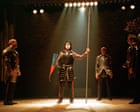
William Shakespeare wrote most of Edward III, and Christopher Marlowe helped him do it. That might sound like a neat headline from a dusty archive, yet it blows up a lazy habit readers have had for centuries. We love imagining Shakespeare locked alone in a room, conjuring thirty-eight plays out of pure solitary genius. In reality, early 1590s London theater was a scrappy, shared workshop where writers traded scenes, borrowed plots, and wrote side by side.
In October 2026, textual scholars Rory Loughnane at the University of Kent and Brett Greatley-Hirsch at the University of Leeds made waves when they reported that computational analysis puts Shakespeare's authorship of Edward III "beyond any reasonable doubt". Even better, their work points to Marlowe as a co-author on the play, likely written around 1592. Notice the nuance right away. Main author does not mean solo author. If you liked this post, you should look at: this related article.
Why Edward III authorship stayed messy for so long
When The Reign of King Edward III hit print anonymously in 1596, nobody slapped Shakespeare's name on the cover. Anonymous quartos were standard business in Elizabethan London, even for plays we now know belong to Shakespeare, like Titus Andronicus and Richard III. Then came the big omission. The 1623 First Folio left Edward III out entirely, leaving it to drift on the edges of the canon for generations. For another look on this event, check out the latest coverage from E! News.
Once a play sits outside the First Folio, arguments multiply fast. Over the past century-plus, critics and researchers have thrown all kinds of names into the ring—Thomas Kyd, George Peele, Michael Drayton, Thomas Nashe, and Marlowe—alongside arguments for Shakespeare alone or Shakespeare sharing duties with another writer. Some scholars spotted Shakespeare's fingerprints in the royal seduction plot, while others argued Kyd or Peele handled chunks of the text.
Honestly, that confusion happens because early modern drama wasn't built like modern publishing. A company needed scripts fast. If two playwrights split scenes or revised material, style shifts across the script. Humans reading by gut instinct easily get tripped up by uneven tone, shifts between courtly romance and battlefield rhetoric, or unfamiliar phrasing.
How stylometry reads a play without guessing
Computational stylometry looks at the tiny habits an author repeats without thinking about them. Instead of relying solely on big dramatic speeches or obvious plot echoes, researchers measure things like how often specific function words show up and how words are arranged inside sentences. Think of it like fingerprints on a page. You can fake a signature once or twice, yet keeping the exact same micro-habits across hundreds of lines is brutally hard.
In the study reported in October 2026 ahead of publication in Shakespeare Quarterly, Loughnane and Greatley-Hirsch compared Edward III against works by ten Renaissance playwrights. In one test, twenty-three sections of the play aligned with Shakespeare while nine aligned with Marlowe. That split is a big deal. It doesn't just say Shakespeare dipped in for a cameo scene; it puts him at the center of the play while giving Marlowe a substantial slice of the action.
Still, let's keep our heads on straight. Stylometry is a sharp tool, not a magic wand. Sample sizes in Renaissance drama can be tight, early printed texts carry compositor quirks, and different statistical methods sometimes argue over borderline passages. Good scholarship welcomes scrutiny rather than treating any computer readout as infallible scripture.
Rivals and collaborators in the same room
The juiciest part of the finding isn't just who gets top billing. It's who shares the credit. For decades, pop culture has framed Shakespeare and Marlowe as fierce rivals locked in a zero-sum battle for London's stages. Both were born in 1564, weeks apart, and both helped define explosive theatrical language in the late 1580s and early 1590s.
Yet the evidence keeps pointing toward partnership alongside competition. According to the researchers' findings, Shakespeare's hand shows up prominently in the scenes where King Edward III pursues a married countess who refuses him, while Marlowe's hand appears in parts of the later military action, including the surrender at Calais. Put those two threads together and you get a play torn between private moral obsession and public imperial ambition.
Marlowe died in 1593 at age twenty-nine after a brawl in a lodging house. Cut that timeline short and you see why this collaboration matters so much. If Edward III dates to around 1592, it captures two towering writers working together right before Marlowe's sudden exit changed English theater forever.
What actually happens in Edward III
If you haven't read or seen Edward III, don't picture a dry history lecture. The play has two distinct engines pulling against each other, and both hit hard.
First, there's the Countess of Salisbury subplot. After Scottish forces threaten her castle and King Edward arrives to drive them off, the king becomes fixated on the married countess. She holds her ground with fierce moral clarity, pushing back against royal pressure and forcing him to confront his own lack of self-command. It's tense, psychological drama—sharp enough to sit right next to Shakespeare's best work on power and desire.
Second, there's the campaign in France. Edward's son, the Black Prince, steps onto the war stage, faces overwhelming odds at Poitiers, weighs the cost of war, and wins through grit before capturing the French king, while Calais faces a grim surrender. That shift from bedroom obsession to high-stakes warfare is one reason critics used to wonder whether one writer could have built the whole thing alone. With co-authorship on the table, the seams make a lot more sense.
Where skeptics push back and why the debate stays alive
Whenever a headline says "beyond doubt," I get skeptical—and you should too. Literary history rarely gives us a clean receipt signed in ink. Even when linguistic tests cluster strongly around Shakespeare and Marlowe, critics can ask fair questions about how text segments were drawn, how collaborative revisions blur individual habits, or how earlier attributions to writers like Kyd or Peele compare.
There's also a practical publishing angle nobody likes to admit out loud. Major anthologies have had to navigate shifting canon boundaries for years, sometimes including Edward III in specialist or digital editions while holding back in standard print runs. Every new study forces editors and teachers to decide whether to treat the play as core Shakespeare, co-authored canon, or a fascinating case study in collaborative authorship.
Here is the real takeaway for anyone who loves literature. Calling Edward III a collaboration doesn't shrink Shakespeare. It makes the play's energy—and the early London theater scene—feel much more alive.
How to read or watch Edward III right now
You don't need an academic paywall to form your own opinion on this play. Grab a reliable text edition—such as the New Oxford Shakespeare or an annotated quarto/modern edition—and read Act I and Act II straight through first. Pay close attention to how the dialogue shifts when the focus moves from political maneuvering to the Countess of Salisbury.
Next, read the later war sequences, especially around Poitiers and Calais. Notice where the verse feels tight, rhetorical, and martial versus where it turns inward and psychological. Comparing those stretches side by side is the fastest way to see why scholars have argued over the play for decades—and why computer-assisted stylometry has given that argument fresh teeth.
Finally, look up stage productions or recorded readings from companies like the Royal Shakespeare Company. Plays written for the Elizabethan stage were built to be spoken aloud, not silently scanned on a screen. Once you hear the cadence of the lines in performance, the debate stops feeling abstract and starts sounding like two ambitious writers pushing each other on a crowded London stage.