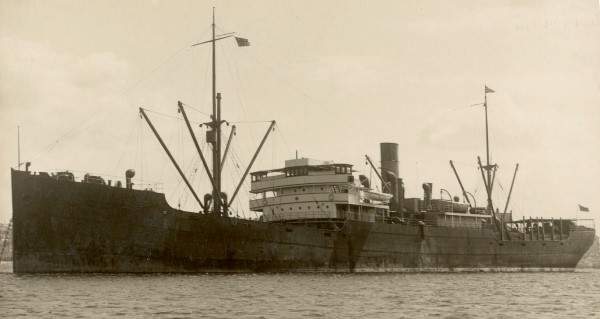
You see a headline like "Wartime mystery solved as divers find wreck of ship torpedoed by German U-boat" and picture an instant Eureka moment. A diver shines a flashlight through murky green water, spots a brass nameplate, and eighty years of naval history suddenly snaps into focus.
That's not how it happens. Not even close. You might also find this connected story interesting: Anatomy of a Pretrial Release Violation and the Mechanics of Federal Electronic Monitoring.
When divers locate a vessel sunk by a German U-boat during World War I or World War II, finding the hull is actually the easy part. Proving which ship sits on the seabed—and verifying what actually happened on the night it went down—takes months of archival cross-referencing, hull measurement, and cold detective work. Most people assume the ocean hides ships until someone stumbles across them. In reality, maritime historians have known roughly where thousands of torpedoed merchant ships and naval vessels sank for decades. The mystery isn't usually where the boat went down. It's matching a twisted pile of steel to the right name in the archives.
Why Identifying a German U-Boat Wreck Takes Years
Let's get one thing straight about submarine warfare during both World Wars. German U-boat commanders kept meticulous war diaries, known as Kriegstagebücher, logging coordinates, torpedo spreads, ship silhouettes, and estimated tonnage. Meanwhile, the British Admiralty, the U.S. Navy, and Allied shipping authorities kept their own loss records. As reported in recent coverage by NPR, the implications are significant.
You'd think matching those two lists would be simple arithmetic. It isn't.
Navigation in the 1910s and 1940s relied on celestial sights, dead reckoning, and radio direction finding. During a night attack in rough Atlantic or North Sea swells, a U-boat captain peering through a periscope or from a wave-swept conning tower could easily misjudge his own position by ten or twenty nautical miles. Worse, ships sailed under strict radio silence and blacked-out conditions. Convoys scattered when torpedoes hit. A merchant vessel struck after midnight might limp along for hours before slipping beneath the waves miles away from where the attack started.
When technical divers descend on a wreck today, they aren't looking at an intact museum piece. Saltwater corrosion, fishing trawler nets, and violent torpedo blasts tear hulls apart. A ship's bell—the gold standard for positive identification—often vanishes under silt or gets salvaged decades earlier without anyone reporting it.
The Forensics of Twisted Steel
So how do dive teams actually solve a wartime shipwreck mystery? They act like underwater forensic investigators.
First, they measure everything. Beam width, hull plating thickness, rivet patterns, and deck layout narrow down the shipyard and era. A British-built tramp steamer from 1917 looks completely different under a sonar scan than an American Liberty ship welded together in 1943.
Next, divers look at the machinery. Triple-expansion steam engines, Scotch marine boilers, and propeller shaft dimensions tell an unmistakable mechanical story. Even if the bow is blown off, the engine room usually stays heavy and intact at the center of the wreck site. By counting boiler furnaces or measuring cylinder diameters, researchers can match the propulsion plant against Lloyd's Register of Shipping records.
Cargo provides the final smoking gun. If wartime manifests show a missing freighter carried Welsh steam coal, locomotives, or specific munitions, finding those exact items spilled across the seabed seals the case.
What Happens When Divers Find a Torpedoed Hull
The public loves the romance of shipwreck discovery, yet the reality on the bottom is brutal, technical, and tightly regulated. Most U-boat victims don't rest in warm, shallow tourist waters. They lie in cold, dark currents anywhere from 150 to over 400 feet deep.
At those depths, recreational scuba gear will kill you. Divers rely on closed-circuit rebreathers, helium-rich breathing gases called trimix, and decompression schedules that keep them hanging in open water for hours after a thirty-minute look at the bottom. Visibility often drops to a few feet. You don't see the whole ship. You see a rusted bulkhead, a collapsed davit, or the jagged inward curl of steel plate where a G7a or G7e torpedo detonated against the hull.
That inward curl matters. Internal boiler explosions blow metal outward. Torpedo strikes punch metal inward. Seeing that deformation confirms the vessel didn't just founder in a storm or strike a drifting mine—it took a direct hit from a submarine.
The Legal and Ethical Reality of War Graves
Here's something mainstream news stories frequently gloss over. When divers confirm a wreck was sunk in wartime action, that site isn't an underwater flea market.
If military personnel or merchant mariners died when the torpedo struck, the wreck is a maritime war grave. Under laws like the UK's Protection of Military Remains Act 1986 and international UNESCO conventions, disturbing human remains or looting artifacts from recognized war graves is illegal and deeply frowned upon by the diving community.
Responsible wreck hunters follow a strict rule. Take photos, take measurements, leave the artifacts on the bottom. Even recovering a ship's bell for conservation requires formal permits from naval authorities and maritime heritage agencies. The real prize isn't a brass souvenir on a mantel. It's closing an open file for the families of crew members who vanished without a trace eighty or a hundred years ago.
The Technology Changing Wreck Hunting Today
For decades, finding a lost U-boat victim meant dragging a magnetometer behind a fishing boat or snagging a net on an uncharted obstruction. Today, commercial survey tools and citizen-science dive teams work together in ways that would have shocked maritime historians twenty years ago.
Multibeam echosounders paint the seafloor in high-resolution 3D. Instead of a fuzzy blip on paper, hydrographers get a crisp digital model showing whether a wreck sits upright, lies broken in two, or carries deck guns fore and aft. National hydrographic offices, offshore wind farm surveyors, and private research vessels routinely map huge stretches of the continental shelf, uncovering anomalies nobody knew existed.
Once a multibeam scan flags a promising target, technical divers step in to put eyes on the steel. Cameras mounted on underwater scooters and remotely operated vehicles capture photogrammetry datasets—thousands of overlapping photographs stitched into a millimeter-accurate 3D replica of the wreck. Historians on dry land can then examine the hull from every angle without ever putting on a drysuit.
How to Follow and Verify Shipwreck Discoveries Yourself
If you want to track real maritime archaeology instead of falling for recycled clickbait headlines, skip the sensationalist tabloids and go straight to the primary records.
Start by checking the official wreck databases maintained by national heritage bodies, such as Historic England's Heritage List, the U.S. National Oceanic and Atmospheric Administration (NOAA) Wrecks and Obstructions database, or the wreck registry at uboat.net. These archives cross-reference U-boat attack logs with confirmed seabed locations.
When a news outlet claims divers just solved a wartime mystery, look for three specific details in the report:
- Physical identifiers: Did the team document the bell, builder's plate, engine dimensions, or specific cargo, or are they just guessing based on location?
- Archival cross-checks: Does the report cite both the Allied shipping loss record and the German U-boat war diary entry?
- Heritage oversight: Are maritime archaeologists, naval historians, or official wreck receivers involved in verifying the claim?
If those three elements are missing, the mystery isn't solved yet—it's just a working theory sitting in the dark.