Don't fall for the headlines suggesting a permanent breakthrough is just around the corner in the Middle East. Right now, relations between Washington and Tehran are balancing on a razor-thin edge, or what Donald Trump calls "right on the borderline." After weeks of a fragile ceasefire, the United States has delivered a fresh proposal to Iran via Pakistani mediators. Tehran says it's reviewing the terms, but the public posturing from both sides reveals how close this entire situation is to completely collapsing back into open warfare.
The real question driving this standoff isn't just about whether a piece of paper gets signed. It's about who blinks first under the pressure of a devastating naval blockade and the immediate threat of renewed airstrikes. If you want to understand what's actually happening behind closed doors, you have to look past the standard political theater and focus on the brutal economic and military leverage dictating the terms.
The Reality Behind Trump Borderline Ultimatum
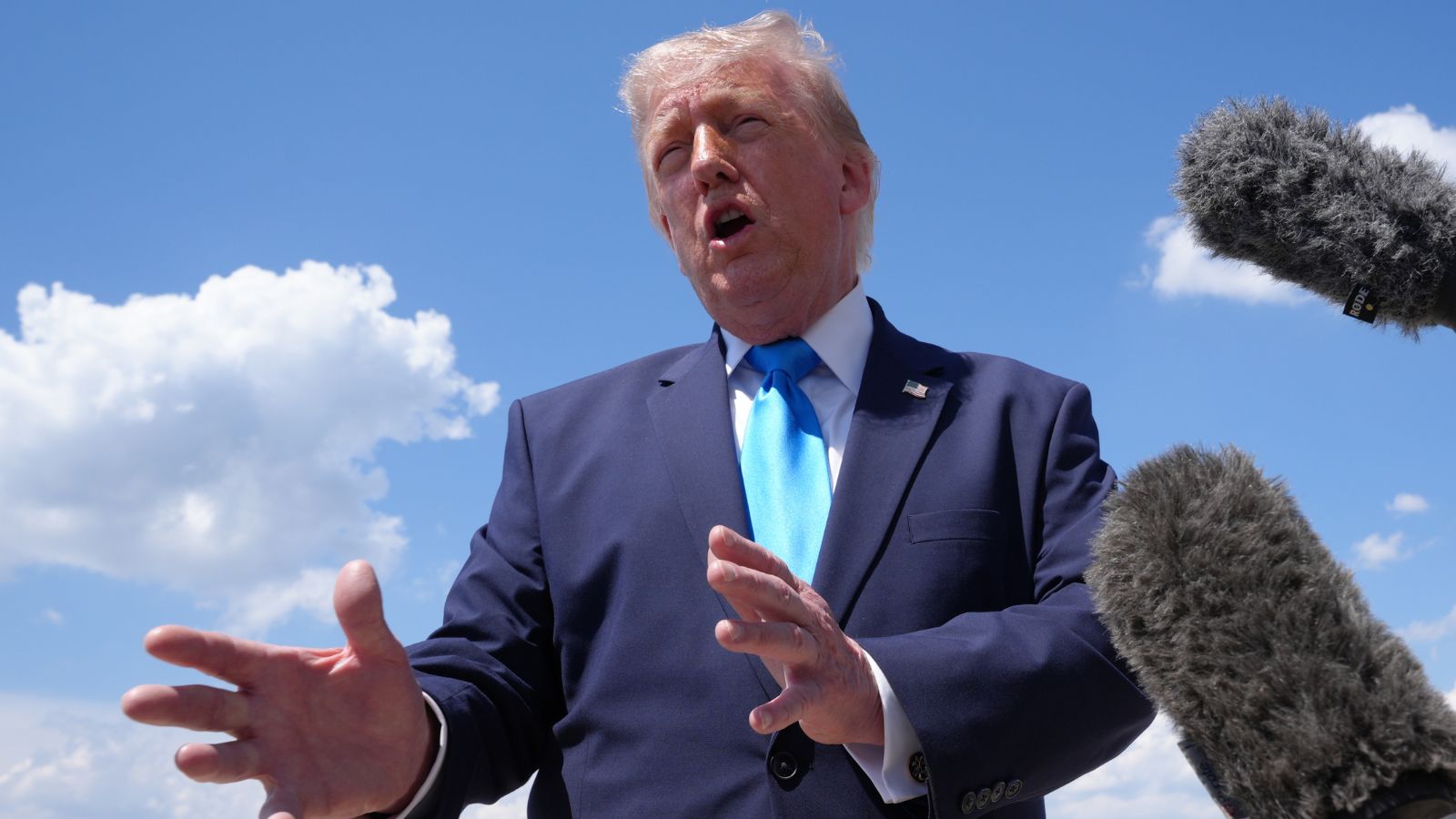
Trump didn't mince words when addressing reporters at Joint Base Andrews. He made it clear that while he's willing to wait a few days for Iran to respond, the American military is fully prepared to relaunch its bombing campaign. The administration is demanding what Trump calls "100 percent good answers." If Tehran fails to deliver, the transition back to military action will happen very quickly.
This isn't empty rhetoric. Just days ago, Trump was within an hour of authorizing fresh strikes against Iranian targets before Gulf allies intervened. Leaders from Saudi Arabia and the United Arab Emirates explicitly asked the US to hold off, arguing that serious diplomatic channels were opening up. Trump agreed to a temporary pause, but he has publicly noted that the window will close by the weekend if negotiations stall.
US Diplomatic Window: 48 to 72 Hours
Key Intermediary: Islamabad, Pakistan
Core US Military Stance: Bombers on high alert
The underlying strategy here relies on maximum economic asphyxiation. The US naval blockade on Iranian ports has turned away dozens of commercial ships, effectively choking off Tehran's remaining oil revenue. US Central Command has reinforced this position, warning shipping companies that any attempt to pay Iran for passage through local waters—whether via cash, digital assets, or informal swaps—will trigger severe secondary sanctions.
What Is Actually Inside the New US Proposal
The core friction in these talks stems from what the US is demanding in exchange for lifting its blockade. While Iran wants its frozen assets released and immediate war compensation, Washington's new framework takes a far more aggressive stance.
According to diplomatic leaks, the US proposal requires Iran to hand over roughly 400 kilograms of enriched uranium, transferring the material directly out of the country. This demand aims to address a critical security gap left by previous military operations. Although six weeks of joint US-Israeli airstrees earlier this year heavily damaged Iranian infrastructure, the exact location and status of Tehran's near-weapons-grade uranium stockpile remained unaccounted for.
Beyond the nuclear material, the US terms are exceptionally strict. Washington is offering to release less than a quarter of Iran's frozen overseas assets. The remaining funds would stay blocked until a final, comprehensive treaty is fully executed. Furthermore, the US has flatly rejected paying any form of war compensation for the damage inflicted during the spring hostilities.
Tehran Response and the Hormuz Dilemma
The political leadership in Tehran faces an existential dilemma. Accepting these terms looks like outright surrender, a narrative Iranian President Masoud Pezeshkian is desperate to avoid. Pezeshkian shot back publicly, stating that forcing Iran to yield through coercion is a total illusion.
Meanwhile, hardliners within the Islamic Revolutionary Guard Corps (IRGC) are actively preparing for a breakdown in talks. Chief negotiator Mohammad Bagher Ghalibaf accused Washington of using diplomacy as a smokescreen to map out its next round of targets. The IRGC issued a blunt warning: if the US or Israel resumes the bombing campaign, Iran will expand the conflict far beyond the borders of the Middle East, targeting regional energy infrastructure and Western assets.
Iran Negotiation Redlines:
- No forced transfer of uranium stockpiles to Western custody
- Mandatory lifting of the US naval port blockade
- Retaining sovereign regulatory oversight of the Strait of Hormuz
To counter the US naval blockade, Iran is attempting to implement its own rules at the Strait of Hormuz. Tehran recently publicized a map outlining a "controlled maritime zone" at the mouth of the Persian Gulf. Their plan involves charging transit fees and granting safe passage exclusively to countries they deem friendly, such as China.
This chokehold on Hormuz is exactly why global markets are watching these borderline talks so anxiously. The strait is the transit point for a fifth of the world's oil and nearly a third of global fertilizer shipments. The United Nations Food and Agriculture Organization has already warned that a prolonged closure will trigger a systemic global food price crisis.
Why Both Sides Are Stuck on a Knife Edge
The domestic political pressure on both leaders makes a compromise incredibly difficult to secure. Trump faces pressure at home to lower global energy prices and wrap up foreign hostilities ahead of the upcoming US midterm elections. Yet, he cannot afford to look weak or accept a deal that leaves Iran's nuclear capabilities intact.
Across the table, the Iranian regime is dealing with severe internal strains. The economy is buckling under the twin weight of war damage and the naval embargo, sparking intense domestic dissatisfaction. However, giving up the nuclear program entirely removes Tehran's primary geopolitical leverage.
Israel remains a wild card in this equation. While not directly at the negotiating table because host nation Pakistan doesn't recognize its sovereignty, Israeli Prime Minister Benjamin Netanyahu has expressed deep skepticism about the diplomatic pause. US officials report that Netanyahu is pushing for a resumption of strikes to permanently degrade the regime's military infrastructure, viewing any delay as a strategic error.
The Immediate Next Steps
The next 48 hours will decide whether this standoff shifts toward a formal peace framework or escalates into a broader regional war. Because the situation is moving so quickly, watching the right indicators is crucial.
- Monitor Pakistan diplomatic shuttles: Watch for additional unannounced arrivals by Pakistani officials in Tehran. They are the only active communication link between Trump and the Iranian leadership.
- Track shipping data in the Gulf of Oman: Check whether US forces continue to board and redirect commercial tankers. Increased boardings mean the blockade is tightening despite the talks.
- Watch the price of Brent Crude: Global oil markets are highly sensitive to these negotiations. A sudden spike above recent baselines will tell you that Wall Street believes a military escalation is imminent.
The diplomatic window is closing fast. If Tehran does not offer a significant concession regarding its uranium stockpile by the end of the weekend, the current ceasefire will expire, and the region will face a much larger, more destructive round of conflict.