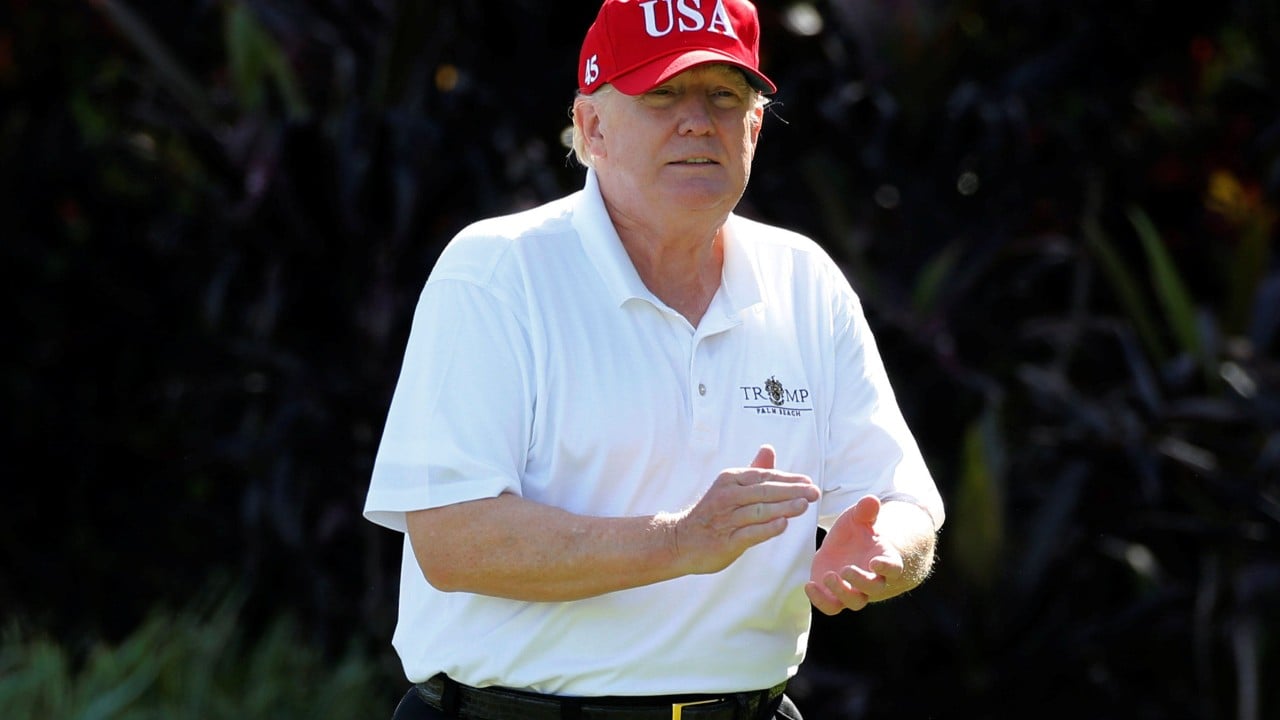
Camp David has been the official presidential retreat for over eighty years, tucked away in the wooded hills of Catoctin Mountain Park in Maryland. Now, reports and political chatter around Donald Trump's desire to transform one of his Florida golf properties—most notably Trump National Doral Miami or a course near Mar-a-Lago—into a southern presidential retreat have sparked a massive debate in Washington. Most people assume a president can simply declare a private resort an official retreat with the stroke of a pen. They're wrong.
Turning a commercial golf course into a secure, taxpayer-supported presidential retreat involves a tangled web of constitutional law, Secret Service logistics, federal procurement rules, and congressional oversight. It isn't just about adding a helipad and a few extra security gates. It's about whether a sitting president can permanently blur the line between private business assets and federal government infrastructure.
Why Florida Keeps Coming Up as a Presidential Retreat
During his first term, Donald Trump famously dubbed Mar-a-Lago the "Winter White House." He spent dozens of weekends at the Palm Beach estate and frequently visited Trump National Golf Club in Bedminster, New Jersey, during the summer months. Camp David, by contrast, saw far fewer visits from him than from predecessors like Ronald Reagan, George W. Bush, or Barack Obama.
Trump was never shy about why he preferred his own properties. Camp David is rustic, isolated, and deliberately devoid of commercial luxury. In a 2017 interview with European journalists, Trump remarked that Camp David is "very rustic, it's nice, you'd like it," before adding that he thought people would get bored there after about thirty minutes.
A Florida golf resort offers the exact opposite environment. You get warm weather year-round, championship golf courses, high-end hospitality infrastructure already in place, and proximity to major international airports. When Trump hosted world leaders like Japanese Prime Minister Shinzo Abe at Mar-a-Lago or attempted to pitch Trump National Doral as the host venue for the 2020 G7 summit, the pitch was always the same. Why use cramped, outdated government facilities when a sprawling private resort already has the rooms, security perimeter potential, and amenities ready to go?
The Massive Difference Between Visiting a Club and Creating an Official Retreat
There is a massive legal and operational chasm between a president visiting a private club on weekends and designating a Florida golf course as an official presidential retreat.
Camp David—officially known as Naval Support Facility Thurmont—is owned by the federal government and operated by the U.S. Navy and Marine Corps. Every square inch of the 125-acre compound is controlled by the Department of Defense. There are no paying club members walking past sensitive briefings. There are no foreign nationals booking banquet halls down the corridor from the Situation Room.
If you try to convert a functioning Florida golf resort into an official retreat, you immediately hit three brick walls.
1. The Emoluments Clause and Conflict of Interest Rules
The U.S. Constitution's Domestic Emoluments Clause prohibits a president from receiving any compensation from the federal government or individual states beyond their fixed salary. During Trump's first term, watchdog groups like Citizens for Responsibility and Ethics in Washington (CREW) and multiple state attorneys general sued over federal spending at Trump-owned properties.
Whenever the Secret Service, White House staff, or military aides stayed at Mar-a-Lago or Bedminster, the government had to pay market or government rates for rooms, golf cart rentals, and facility usage. According to records obtained by congressional investigators and reported by The Washington Post, the Secret Service spent hundreds of thousands of dollars on room rentals at Trump properties during his first presidency.
Making a Trump-owned Florida golf course an official presidential retreat would institutionalize that financial arrangement. Unless the property were donated outright to the federal government or purchased through an act of Congress, federal taxpayers would essentially be subsidizing the maintenance, security upgrades, and operations of a private family business. Even if the Trump Organization waived profit margins, the permanent federal improvements made to the land—hardened communications bunkers, blast-resistant glass, radar systems—would dramatically increase the underlying real estate value of a private asset.
2. The Secret Service Nightmare of Commercial Golf Courses
I've followed federal protective operations for years, and one thing security experts always emphasize is that commercial resorts are a nightmare to lock down. Camp David sits inside a restricted military zone surrounded by federal parkland. Nobody wanders onto the property by accident.
A Florida golf course like Doral or Trump International Golf Club in West Palm Beach sits in the middle of dense suburban sprawl, surrounded by major highways, commercial plazas, and public flight paths.
To make a Florida golf course function like a true presidential retreat, the federal government would need to establish:
- Permanent airspace restrictions: Right now, a Temporary Flight Restriction (TFR) pops up over Palm Beach only when the president is physically in town, which disrupts local aviation and costs small businesses at nearby Lantana Airport thousands of dollars per weekend. An official retreat requires permanent, around-the-clock restricted airspace.
- Sensitive Compartmented Information Facilities (SCIFs): Presidents don't stop working on vacation. They need secure rooms shielded against electronic eavesdropping to review classified intelligence and conduct nuclear command-and-control calls. Building a permanent, military-grade SCIF inside a private commercial resort raises thorny questions about who guards the facility when the president isn't there.
- Vetting every single employee and guest: At Camp David, every cook, grounds-keeper, and technician is active-duty military with high-level security clearances. At a commercial golf club, hundreds of seasonal hospitality workers, landscapers, and club members cycle through the gates every week. You cannot run a true presidential retreat alongside a public tee-sheet.
3. Congressional Approval and the Power of the Purse
A president cannot unilaterally buy a golf course with taxpayer money or force the Department of Defense to take over a private resort. Under Article I of the Constitution, Congress holds the power of the purse.
Any permanent acquisition, lease agreement, or major military construction project (MILCON) required to turn a Florida property into a federal facility would require explicit legislative authorization and funding from both the House and the Senate. In a polarized political climate, passing a bill to purchase or federally outfit a Trump-owned golf resort is practically dead on arrival. Even fiscal conservatives who normally support the administration balk at spending tens of millions of taxpayer dollars on real estate projects that look like personal perks.
Why Doral Keeps Entering the Conversation
Whenever this topic surfaces in political news, Trump National Doral Miami is almost always at the center of the speculation. Located just minutes from Miami International Airport, Doral is an 800-acre resort featuring four championship golf courses, including the famous Blue Monster, alongside over 600 guest rooms and massive conference facilities.
Trump bought the bankrupt property in 2012 for $150 million and poured tens of millions more into renovations. Back in 2019, when his administration announced that Doral would host the 2020 G7 summit, Trump argued that the resort was uniquely suited for high-level diplomacy because each foreign delegation could have its own separate building, eliminating logistical bottlenecks.
The backlash was immediate and bipartisan. Within days, the administration reversed course and scrapped the Doral G7 plan. That episode revealed both Trump's genuine enthusiasm for using Doral as a diplomatic hub and the hard political limits of mixing official statecraft with private real estate holdings.
Unlike Mar-a-Lago—which is a relatively compact 20-acre historic estate squeezed between the Atlantic Ocean and the Intracoastal Waterway—Doral actually has the physical footprint to accommodate large delegations, press corps briefings, and security staging areas. That's why insiders continue to float Doral whenever the idea of a southern presidential retreat comes up.
What History Tells Us About Presidents and Private Retreats
Trump isn't the first president to skip Camp David in favor of his own turf. Almost every modern president has had a personal getaway that functioned as an unofficial retreat.
- Lyndon B. Johnson spent nearly a quarter of his presidency at his LBJ Ranch in Stonewall, Texas, turning it into the "Texas White House" complete with a military communications center and an airstrip capable of landing Air Force One's smaller support planes.
- Richard Nixon bought La Casa Pacifica in San Clemente, California, and a compound in Key Biscayne, Florida. The federal government spent millions on security upgrades, including a wall and a helipad, which sparked major congressional investigations into whether taxpayer money was improperly enriching Nixon's private real estate.
- Ronald Reagan spent over 300 days at Rancho del Cielo in Santa Barbara, California, while George W. Bush famously hosted foreign leaders like Vladimir Putin and Tony Blair at his Prairie Chapel Ranch in Crawford, Texas.
Here is the crucial difference. None of those properties were commercial, revenue-generating resorts. They were private family ranches or residential homes. When LBJ or George W. Bush went to Texas, they weren't stepping onto a property that simultaneously sold memberships, hosted corporate conventions, or marketed the president's brand to paying customers.
Even in those non-commercial cases, federal spending on private presidential homes led directly to the Presidential Protection Assistance Act of 1976. Congress passed that law specifically to cap how much taxpayer money the Secret Service could spend on permanent security improvements at a president's private residence, requiring the president to reimburse the government if those upgrades added market value to the property.
Could It Actually Happen?
If the goal is literally to convert a Trump-owned Florida golf course into an official, taxpayer-owned presidential retreat like Camp David, the odds are close to zero. The legal hurdles under the Presidential Protection Assistance Act, constitutional friction over the Emoluments Clause, and the sheer impossibility of getting congressional funding make an official transfer nearly unworkable.
What can happen—and what has already happened in practice—is the informal version. A sitting president can spend as many weekends as they want at a private club, bring foreign leaders along for informal rounds of golf, and have the Secret Service set up temporary command posts every Friday afternoon.
If you're tracking this story to separate political theater from actual policy, watch three specific indicators rather than cable news speculation:
- Federal procurement filings on SAM.gov: Any real move to establish permanent federal infrastructure at a Florida property will show up first in Department of Defense or General Services Administration (GSA) construction contracts, not in campaign speeches.
- FAA permanent airspace notices: Look at Federal Aviation Administration docket filings around Palm Beach or Miami-Dade County. Shifting from temporary weekend TFRs to permanent restricted airspace requires formal federal rulemaking.
- House Oversight and Appropriations Committee hearings: Without a line-item appropriation passed by Congress, no private golf course can legally become a federal facility.
Until those concrete bureaucratic gears start turning, talk of turning a Florida golf course into the next Camp David remains a political talking point rather than a realistic federal real estate project.