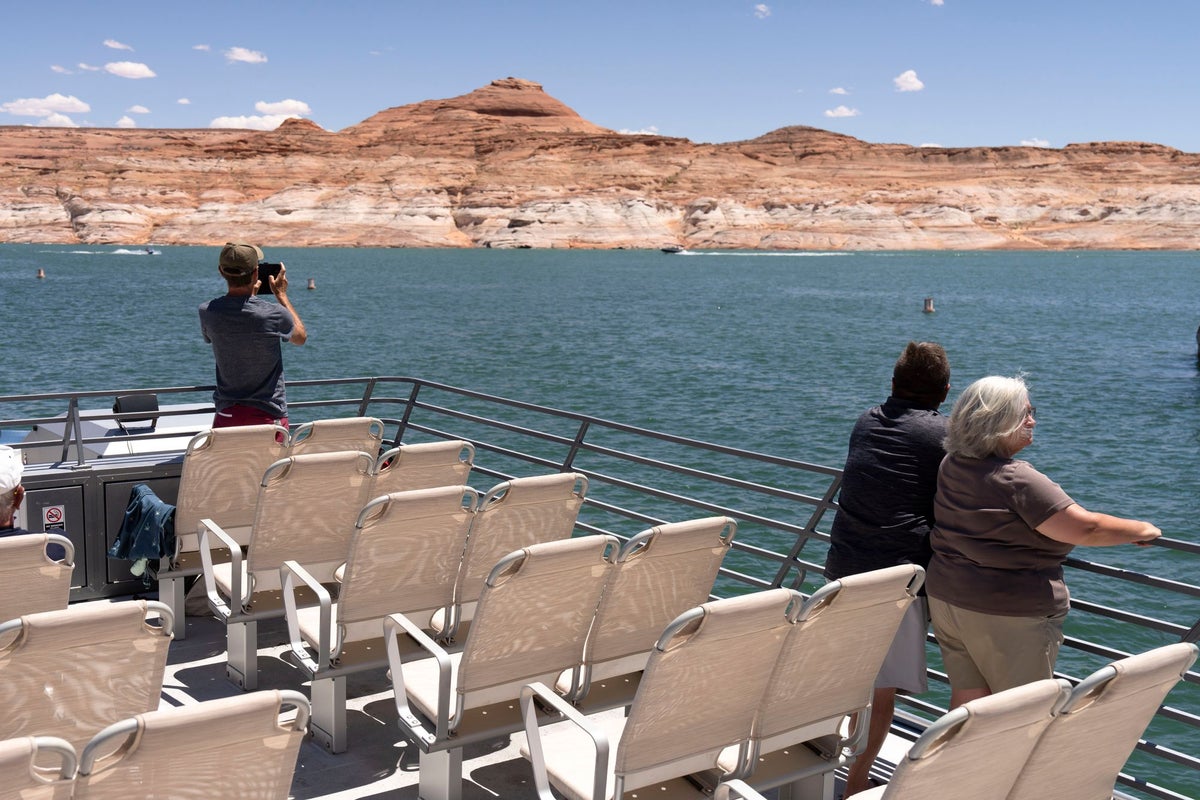
The water is gone. Walk out onto the cracked, white expanse of the Great Salt Lake or stand along the stark bathtub rings of Lake Mead, and the reality hits you like a physical blow. When news broke that a major US lake lowest summer level record was shattered, the internet reacted with the usual brief cycle of shock and shrugs. Most people think it's just a localized bummer for boaters or a sad day for some local ducks.
They are completely wrong.
This isn't an isolated environmental quirk. It's a flashing red siren for the entire American economy. When a massive body of water in the West dries up to unprecedented lows, it triggers a domino effect that lands directly on your dinner table, your lungs, and your wallet. We aren't just talking about less water for lawns. We are talking about systemic collapse.
The cascading fallout of a major US lake lowest summer level contraction
To understand why this matters, you have to look at what happens when millions of gallons of water simply vanish. Take the Great Salt Lake in Utah. When it hit its lowest recorded level, dropping to an average elevation of 4,188.5 feet, it exposed hundreds of square miles of dry lakebed.
That lakebed isn't just harmless sand.
For decades, industrial runoff, mining waste, and agricultural chemicals settled at the bottom of the lake. The water kept those toxins safely submerged and heavy. Now that the water has evaporated, the wind sweeps across the exposed flats. It kicks up massive, blinding dust storms packed with arsenic, antimony, copper, and zirconium.
This toxic dust blows straight into the Salt Lake City metropolitan area. It creates a massive public health crisis. It worsens asthma, increases cancer risks, and shortens lifespans for millions of residents. If you think you're safe because you live in a different state, think again. The dust travels for hundreds of miles, polluting regional air sheds and settling on mountain snowpacks. When dark dust coats snow, the snow absorbs more sunlight and melts too fast. This ruins the spring runoff that cities rely on for clean drinking water.
The economic shockwave hits agriculture and industry
The collapse of these lake levels destroys entire supply chains. Let's talk about food. The declining water levels in major Western reservoirs like Lake Mead and Lake Powell directly threaten the flow of the Colorado River. This river system irrigates more than five million acres of farmland in the American West.
This region grows most of the winter vegetables consumed across the United States.
When water levels drop too low, federal shortages trigger mandatory supply cuts. Farmers have to fallow their fields. They leave millions of acres of fertile soil unplanted because there simply isn't enough water to keep the crops alive. You see the result of this at your local grocery store. Prices for lettuce, broccoli, alfalfa, and beef skyrocket. It's a simple equation of less water leading directly to higher grocery bills.
Beyond farming, major industries rely on these lakes to survive. The Great Salt Lake supports a massive brine shrimp industry. These tiny organisms are harvested and shipped globally as essential feed for commercial shrimp and fish farms. When the lake shrinks, salinity levels spike to toxic thresholds. The brine shrimp die off. The global aquaculture industry suffers an immediate supply shock.
Mineral extraction operations also rely on these waters. Companies extract magnesium, solar salt, and potash from the lake. Magnesium is a vital component in aluminum alloys used to build cars and airplanes. If the lake dries up, American manufacturing faces a massive bottleneck.
Power grids on the brink
Hydroelectric power is another massive casualty of dropping water levels. Hoover Dam and Glen Canyon Dam rely on the sheer weight and volume of water in Lake Mead and Lake Powell to spin their massive turbines.
As water levels plummet toward a terrifying threshold known as dead pool, the turbines can't function. Dead pool means the water level drops below the outlet pipes, stopping the flow completely. Millions of people across Nevada, Arizona, and California rely on this clean, cheap electricity. Losing it forces utility companies to buy expensive, dirty power from fossil fuel plants. This strains the western power grid and causes rolling blackouts during peak summer heatwaves.
Why traditional solutions are failing
Politicians love to talk about conservation pipelines, cloud seeding, and desalination plants. Most of these ideas are expensive illusions. They don't fix the underlying math.
The American West has been operating on a water deficit for decades. The Colorado River Compact was signed back in 1922. It allocated water based on an unusually wet period that didn't reflect reality. We've been over-allocating a dwindling resource ever since.
Climate change is accelerating this imbalance. Rising temperatures mean a thirstier atmosphere. The air literally sucks more moisture out of the soil and the lakes. Less winter snowpack means less water trickling down into the reservoirs during the spring. We are trying to pay off a massive water debt with an empty bank account.
The misconception about residential water use
A common mistake is blaming everyday citizens for watering their lawns or taking long showers. While municipal conservation matters, it's a drop in the bucket. Around 80 percent of the water consumed in the West goes toward agriculture. Specifically, it goes toward growing incredibly thirsty crops like alfalfa and forage hay in the middle of the desert.
Alfalfa is grown to feed dairy cows and beef cattle. A significant portion of it is exported overseas to countries like Saudi Arabia and China. We are essentially exporting our precious, dwindling water supplies in the form of compressed hay bales. Until policy leaders address this systemic agricultural issue, no amount of low-flow showerheads will save these lakes.
Practical steps to take right now
You can't personally refill a massive geographic basin, but you aren't completely helpless either. Shifting the trajectory of this crisis requires a mix of economic awareness and political pressure.
- Vote with your grocery cart. Reduce your consumption of beef and dairy products that rely heavily on desert-grown alfalfa. Support local farmers who practice regenerative agriculture and utilize drip irrigation systems rather than wasteful flood irrigation.
- Push for agricultural water rights reform. Write to your representatives and demand changes to use-it-or-lose-it water laws. Current laws penalize farmers who conserve water by stripping away their future water rights. This outdated policy must change.
- Invest in localized water security. If you live in an affected western state, transition your property to xeriscaping immediately. Install rainwater harvesting systems where legal and advocate for municipal graywater recycling programs.
- Support dust suppression initiatives. Advocate for state funding directed toward stabilizing exposed lakebeds. This includes planting native vegetation and applying organic soil binders to prevent toxic dust from becoming airborne.
The era of cheap, abundant water in the American West is officially over. The record-low summer levels we are seeing now aren't temporary anomalies. They are a permanent reality check. Act now, adapt your consumption, and force structural policy changes before the taps run completely dry.