Everyone assumes Beijing wants the yuan to replace the US dollar overnight. That’s wrong.
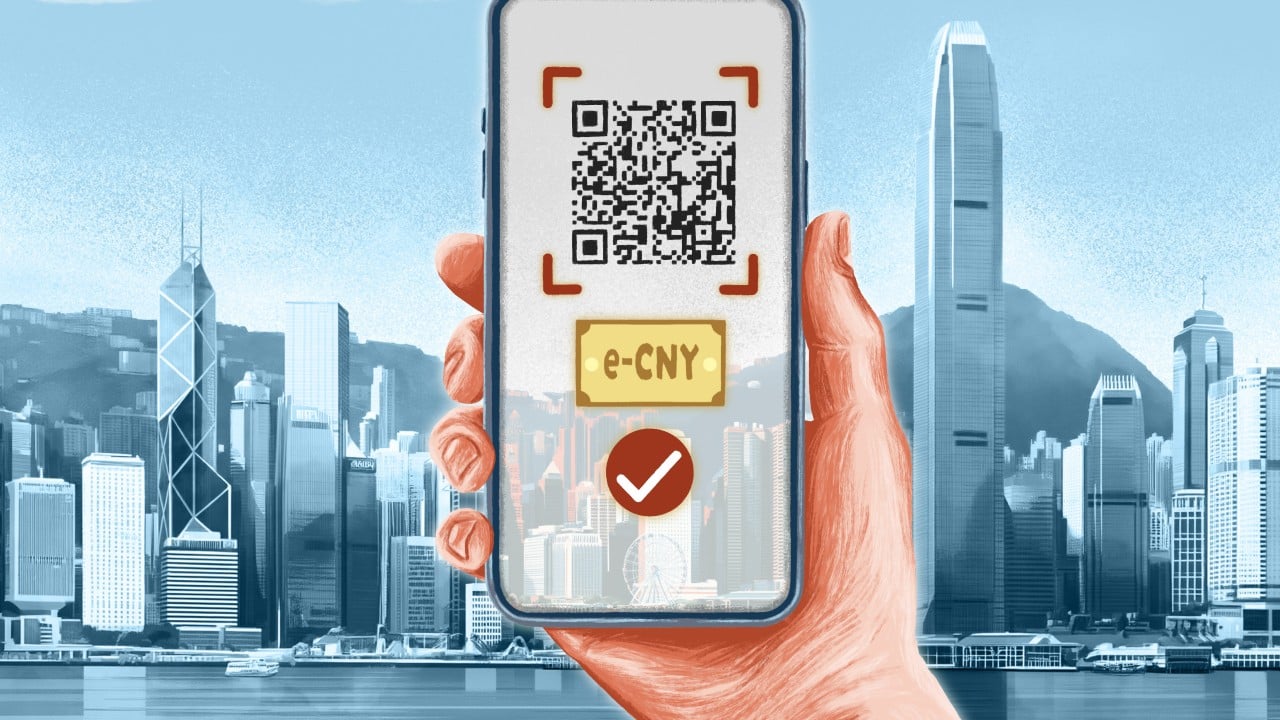
If you look closely at Hong Kong’s wider yuan push, the actual strategy is much quieter, far more methodical, and honestly a lot smarter than the sensational headlines suggest. Beijing isn't trying to blow up the global financial system this week. Instead, it's using Hong Kong as an offshore pressure valve—a controlled testing ground where international investors can hold, trade, and settle in renminbi without China having to open its domestic capital account to sudden, destabilizing money flows.
Yes, Hong Kong is acting as a gateway to the world for the Chinese currency. Yet the city isn't just passive infrastructure sitting at the mouth of the Pearl River. It's the primary engine keeping offshore yuan liquidity alive while mainland capital controls remain firmly bolted down.
Why Hong Kong Is the Only Real Game in Town
London clears plenty of yuan. Singapore handles a massive slice of foreign exchange volume too. Neither comes close to Hong Kong when you look at the structural plumbing connecting international money to mainland assets.
According to data from SWIFT, Hong Kong consistently processes over 70% to 80% of all offshore renminbi payments globally. That isn't an accident of geography. It comes down to the Connect schemes—Stock Connect, Bond Connect, and Swap Connect—which allow foreign institutions to buy mainland Chinese equities, government debt, and interest rate derivatives directly through Hong Kong accounts.
Think about what that means in practice. If you're a pension fund manager in Toronto or Frankfurt and you want exposure to Chinese onshore bonds, you don't fly to Shanghai to open a local bank account and navigate mainland regulatory filings. You route the trade through Hong Kong. Your compliance team understands Hong Kong common law, your custodians already operate there, and the settlement infrastructure is built specifically to bridge the gap between offshore CNH and onshore CNY.
Without Hong Kong, yuan internationalization stalls out at basic trade invoicing. With Hong Kong, the currency gets actual investment utility. People don't hold a global currency just to buy widgets; they hold it because they can park it in liquid, yield-bearing assets when they aren't spending it.
The Dual Counter Model and Everyday Liquidity
For years, a major complaint among international investors was simple. Holding yuan in Hong Kong meant dealing with shallow product pools compared to US dollar markets. You could buy dim sum bonds or leave cash in a time deposit, and that was roughly the extent of your options.
That changed noticeably when the Hong Kong Exchanges and Clearing Limited (HKEX) rolled out the HKD-RMB Dual Counter Model. Under this setup, investors can buy and sell shares of major Hong Kong-listed companies—think tech giants and state-owned enterprises—in either Hong Kong dollars or offshore yuan, with market makers bridging the price gap between the two counters.
Here is why that matters more than most commentators realize:
- It eliminates immediate foreign exchange conversion friction for investors who already hold offshore yuan pools from trade settlements.
- It creates natural demand for yuan-denominated brokerage accounts in Hong Kong.
- It lays the groundwork for integrating yuan counters directly into Southbound Stock Connect, meaning mainland Chinese investors will eventually be able to buy Hong Kong-listed stocks using their own onshore yuan without converting into Hong Kong dollars first.
That third point is huge. When mainland investors can deploy domestic yuan directly into Hong Kong equities, currency conversion risk disappears for them, and Hong Kong's stock market gets a permanent, structural liquidity boost.
Trade Settlement Is Driving the Real Volume
Financial markets get all the media attention, yet boring corporate invoicing is what actually moves the needle day to day.
Over the past few years, the share of China's cross-border goods and services trade settled in yuan climbed past 25%, and in several bilateral corridors—particularly with Russia, ASEAN nations, and parts of the Middle East—it runs much higher. Whenever a Brazilian soy exporter or a Saudi energy firm accepts yuan instead of dollars, that money doesn't just vanish into thin air. It has to sit somewhere, earn a return, or get swapped back into local currency.
Most of that liquidity flows straight into Hong Kong’s banking system.
I’ve spoken with corporate treasurers operating out of Kowloon and Central who used to treat yuan receivables as an annoying compliance headache they had to convert into USD immediately. Today, many keep working capital in CNH. Why? Because the Hong Kong Monetary Authority (HKMA) expanded its RMB Business Facility and cross-border repo arrangements, making it dramatically cheaper and easier for commercial banks in Hong Kong to lend yuan to corporations at competitive rates.
When borrowing costs in yuan sit noticeably lower than US dollar interest rates—as they have throughout the Federal Reserve's higher-for-longer rate cycle—multinational companies suddenly find a compelling financial reason to borrow and settle in renminbi. Geopolitics gets people talking about currency diversification; cheaper financing is what actually makes CFOs sign the paperwork.
The Structural Limits Nobody Likes to Mention
Let’s be completely honest about the ceiling here. Anyone telling you that Hong Kong’s yuan push will dethrone the US dollar within the next decade is either selling you something or ignoring basic macroeconomics.
The dollar still accounts for roughly 88% of one side of all global foreign exchange transactions, according to the Bank for International Settlements. The yuan sits in the single digits. There are three stubborn reasons why Hong Kong can only push yuan adoption so far:
1. The Closed Capital Account Problem
As long as Beijing restricts how freely money can move in and out of mainland China, the offshore yuan pool in Hong Kong remains finite. Deep, truly global reserve currencies require massive, unrestricted pools of safe assets that anyone can buy or sell at 3:00 AM without needing a quota or an approved channel. The Connect schemes are brilliant engineering, yet they are still managed pipelines, not an open ocean.
2. Currency Peg Friction
Hong Kong’s own currency, the Hong Kong dollar, remains strictly pegged to the US dollar through the Linked Exchange Rate System. That creates an interesting tension. Hong Kong’s monetary policy is effectively imported from Washington, while its biggest economic growth driver is financial integration with Beijing. The HKMA has managed this balancing act remarkably well for forty years, though operating as the premier offshore hub for a rival currency while maintaining a USD peg requires constant liquidity management.
3. Geopolitical Risk Pricing
Western institutional investors aren't blind to sanctions risk or regulatory unpredictability. Some European and North American asset managers have trimmed their direct China exposure over the past few years, choosing to route regional capital through Tokyo or Singapore instead. Hong Kong has countered this aggressively by courting sovereign wealth funds and family offices in the Middle East and Southeast Asia—regions that view yuan diversification as a practical hedge against Western financial sanctions rather than a political liability.
How Hong Kong Is Building the Digital Plumbing
While traditional banking channels do the heavy lifting, Hong Kong is also quietly wiring itself into the next generation of cross-border settlement through Project mBridge.
Developed alongside the BIS Innovation Hub and central banks from mainland China, Thailand, the United Arab Emirates, and Saudi Arabia, mBridge tests multi-central bank digital currency (mCBDC) transfers directly between commercial banks. Instead of routing a cross-border payment through a chain of correspondent banks in New York—which takes days and racks up fees—a bank in Abu Dhabi can settle a transaction directly with a bank in Hong Kong using wholesale digital currency in seconds.
This bypasses the traditional SWIFT messaging bottleneck entirely. Even if mBridge stays focused strictly on wholesale corporate trade rather than retail consumers, it gives Hong Kong a massive first-mover advantage in digital yuan clearing across Asia and the Gulf.
What Businesses and Investors Should Actually Do Now
If you run a cross-border business in Asia or manage regional capital, ignoring Hong Kong’s yuan infrastructure means leaving money on the table. You don't need to make a ideological bet on the future of global currencies to benefit from the plumbing that already exists.
Start by auditing your supplier and customer contracts across Greater China and ASEAN. Ask your mainland suppliers what kind of price discount they will offer if you pay them directly in offshore yuan through a Hong Kong account rather than forcing them to absorb USD conversion costs and currency hedging fees. In manufacturing and wholesale trade, suppliers routinely shave 1% to 3% off invoice totals just to receive clean yuan settlement.
Next, talk to your commercial bank in Hong Kong about dual-currency treasury accounts and CNH trade finance facilities. Compare the all-in borrowing cost of a yuan working capital line against your current USD or EUR credit facilities, factoring in the cost of forward hedging contracts. Even after hedging out currency fluctuation risk, the interest rate differential often works in your favor.
Keep an eye on Swap Connect and offshore dim sum bond issuances if you manage corporate cash reserves. High-grade supranational and corporate issuers regularly tap Hong Kong’s offshore yuan debt market, offering short-duration paper that beats sitting in zero-yield operational accounts. Hong Kong built the bridge between mainland liquidity and global capital; you might as well walk across it while the incentives are still tilted toward early adopters.