Global economists have spent years waiting for Chinese consumers to start buying big-ticket items again. They are looking at the wrong things. While smartphone sales and luxury car purchases might look sluggish, a quiet revolution is happening in how people spend their money.
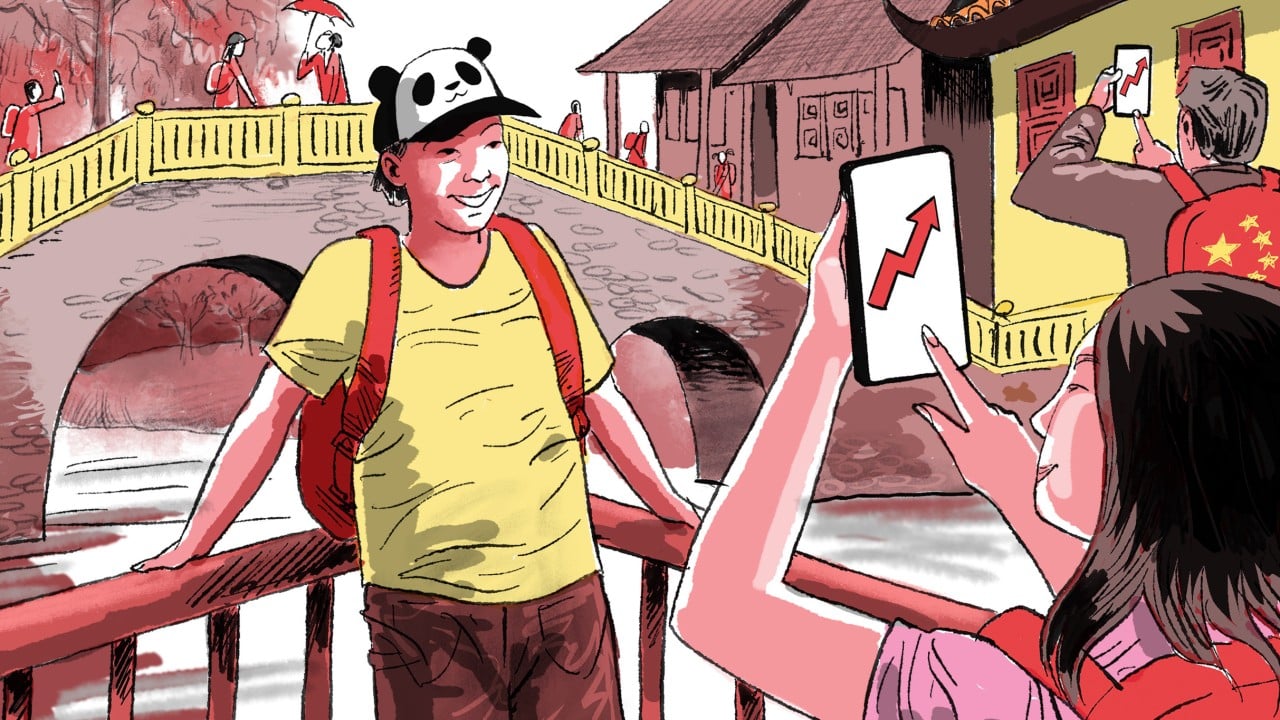
Domestic tourism is no longer just a weekend distraction. It has become the primary engine keeping China's consumption story alive.
If you look at the raw data, the scale of this shift is staggering. In 2025, Chinese residents made 6.52 billion domestic trips, a massive 16.2% increase from the previous year. Those travelers spent 6.3 trillion yuan (roughly $906 billion) on their journeys, a 9.5% jump from 2024. In the first half of 2026, the national railway network alone handled a record 2.348 billion passenger trips. People are moving, and they are spending.
But foreign analysts frequently misunderstand what this trend actually means. They see falling per-capita spending and scream "consumption downgrade." They are entirely missing the point.
The Myth of the Consumption Downgrade
When tourist numbers rise faster than total spending, standard economic models assume consumers are getting poorer. That is a lazy interpretation of China's current economic state.
What we are actually seeing is a shift toward value-conscious, rational spending. Travelers do not want to blow their savings on overpriced five-star hotels in overhyped gateway cities anymore. They want authenticity. They want unique, localized experiences that do not feel manufactured.
This trend is pulling money out of Tier-1 cities and pumping it directly into county-level economies. Instead of traveling to Shanghai or Sanya, urbanites are taking high-speed trains to lower-tier cities and rural villages. High-speed rail makes these short-distance trips incredibly cheap and fast. You do not need to spend thousands on flights when a 100-yuan train ticket can take you to an ancient village with incredible food.
Rural residents are also driving this transition. In 2025, tourism trips made by rural residents surged by 22.6%, and their travel spending jumped 21.4%. Rural areas are no longer just sources of cheap labor; they are active consumption centers.
The Rise of the Experience Economy
If Chinese consumers are not buying designer bags, what are they spending money on?
They are paying for memories, local culture, and community. The traditional model of sightseeing—riding a tour bus, taking a photo in front of a monument, and leaving—is dead. Today’s travelers want to step into local lives.
We are seeing a massive boom in niche, culture-first travel. Think of lantern parades in historic towns, viral folk traditions, and local food tours. Look at the sports tourism sector. In places like Jiangsu, grassroots football leagues (dubbed the "Suchao") have drawn millions of non-local visitors, driving billions of yuan in local payment transactions. In Hainan's Wanning, youth-driven sports tourism has turned the city into a major revenue generator, bringing in over 9 billion yuan in tourism revenue in 2025.
This is not a downgrade in consumption. It is a maturing of demand. People are shifting their priorities from physical goods to personal enrichment.
Beijing Makes It Official
If you still doubt the long-term viability of this shift, look at policy. In July 2026, China released its first-ever five-year plan dedicated exclusively to expanding consumption. This is a major structural change in how Beijing views economic growth.
Historically, local governments focused almost entirely on building factories, infrastructure, and real estate. The new plan forces a pivot. It prioritizes services consumption—specifically targeting culture, sports, tourism, and elderly care.
Beijing knows that manufacturing-led growth has its limits, especially in a hostile geopolitical climate. Turning domestic travel into a highly efficient consumption machine is the country's best defense against external economic shocks.
How Businesses Must Adapt
If you are trying to capture a share of this market, you cannot rely on the old playbook. The era of mass marketing to generic tourists is over.
First, focus on the niche. Travelers are planning trips around specific interests, whether that is surfing in Hainan, hiking in Yunnan, or attending a regional food festival. Your marketing needs to speak directly to these subcultures.
Second, optimize for digital platforms. Over 70% of Chinese travelers now use mobile apps not just to book, but to actively plan and share their itineraries. If your business does not have a highly interactive, content-driven presence on platforms like Xiaohongshu or Douyin, you do not exist to this demographic.
Finally, build for flexibility. The popularity of short-distance, spontaneous weekend trips means that booking windows are shrinking. Offer flexible cancellation policies, last-minute deals, and packages that can be customized on the fly. The businesses that survive are the ones that recognize Chinese consumers are not spending less—they are simply spending differently.