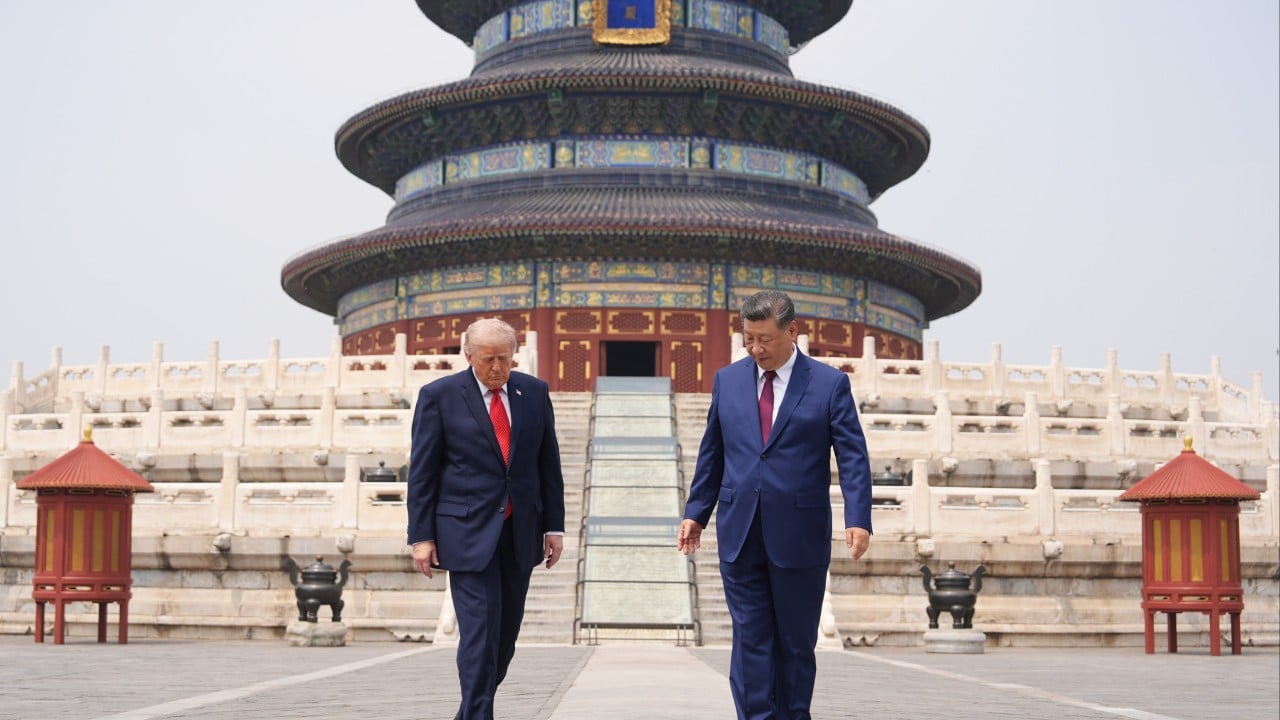
Washington has a massive thinking problem when it comes to Beijing. For decades, American policymakers operated on a comfortable myth. They believed that if you invited China into the global economic club, gave them a seat at the World Trade Organization, and flooded their cities with capitalism, they would naturally morph into a Western-style democracy.
It didn't happen. It was never going to happen.
The current political establishment acts shocked that Beijing didn't follow the script. Instead of looking inward and realizing their framework was flawed from day one, American leaders doubled down on a new, equally broken assumption. They now view the entire relationship through a black-and-white lens of ideological warfare, assuming every move Beijing makes is part of a grand master plan to destroy the West. This misunderstanding is dangerous. It drives terrible policy, wastes billions of dollars, and pushes two nuclear-armed powers closer to an avoidable conflict.
To fix American foreign policy, you have to look at how Washington completely misreads its biggest competitor.
The Myth of State Capitalism and the Private Sector Reality
American politicians love to talk about Chinese state capitalism as if the entire economy is run by a few bureaucrats in a dark room. You hear it on every Sunday news show. They claim that state-owned enterprises control everything and that the market isn't real.
That is factually wrong.
Look at the actual numbers. The private sector drives the vast majority of China's economic engine. Private companies generate roughly 60 percent of China’s GDP. They are responsible for 50 percent of the nation's total tax revenue. If you look at innovation, the numbers skew even further. Private firms account for 75 percent of technological innovation and 80 percent of new product development. They also provide 90 percent of urban jobs.
When Washington treats every Chinese company as an arm of the state, it misses the internal dynamics at play. Private tech founders in Shenzhen or e-commerce giants in Hangzhou face brutal, cutthroat domestic competition. They are trying to survive in a hyper-competitive market, not just taking orders from the Communist Party. By treating the entire economy as a monolith, U.S. sanctions often hit the very private entrepreneurs who push back against state monopolies, inadvertently strengthening the state's grip on the economy.
Reading Ideology into Transactional Realism
A massive disconnect happened during recent trade negotiations. The Trump administration viewed tariffs and trade restrictions primarily as economic leverage. For Washington, it was a transactional negotiation technique. The goal was to force Beijing to buy more American goods, protect intellectual property, and reduce the trade deficit.
Beijing read those exact same actions through an existential, ideological lens.
To the leadership in Beijing, American economic pressure looks like a coordinated strategy to contain their country's rise and force regime change. When the U.S. restricts semiconductor exports, Washington sees a targeted national security measure to protect defense tech. Beijing sees an attempt to permanently cripple their economic development and keep 1.4 billion people from achieving a modern standard of living.
This misinterpretation creates a dangerous escalation cycle. Because Beijing thinks the U.S. goal is total destruction, they have zero incentive to make minor structural concessions. They dig in. Every U.S. tariff or export control validates the hardliners in Beijing who argue that cooperation with the West is a sucker's game.
The Stability Obsession that Washington Ignores
American analysts tend to frame China as an aggressive, expansionist power looking to conquer global territory. They focus heavily on external moves while ignoring the massive internal pressures that keep China's leaders awake at night.
As experts like Ling Chen from the Johns Hopkins School of Advanced International Studies have pointed out, Beijing's biggest concerns are almost entirely domestic. The top priority for the leadership is stability at home.
Managing a country of 1.4 billion people with deep regional economic disparities is an administrative nightmare. The government faces a rapidly aging population, a real estate market under severe strain, and millions of university graduates struggling to find high-paying jobs every single year. The leadership knows their legitimacy relies heavily on providing economic growth and social order.
When the U.S. projects aggressive global ambitions onto every single domestic policy move Beijing makes, it miscalculates where the actual red lines are. Washington reacts to ghosts while missing opportunities to cooperate on areas where stability aligns with global interests, like preventing regional financial collapses or managing supply chain shocks.
The Broken Mirror of Historical Trade Wars
American strategists frequently compare the current tension to the Cold War or the U.S.-Japan trade disputes of the 1980s. These comparisons fail completely.
During the 1980s, Japan was entirely dependent on the United States for its security. The U.S. nuclear umbrella and military bases meant that no matter how tense trade negotiations got over cars or electronics, Tokyo ultimately had to play by Washington's rules. There was a hard ceiling on the conflict.
The Soviet Union was a military giant but an economic ghost. The West could isolate the Soviet economy because there was almost no integration.
China is different. It is a massive nuclear power with its own independent security architecture, completely integrated into the global economy. It is the top trading partner for over 120 countries, including many core U.S. allies in Europe and Asia. You cannot isolate an economy that is the primary manufacturing hub for the planet.
The political economy of protectionism makes trade conflicts easy to start but incredibly difficult to end. Once tariffs are in place, domestic lobbies form to protect those tariffs. Politicians get terrified of looking "soft." Without the security guardrails that existed with Japan or Europe, the current trade conflict lacks an off-ramp.
How to Fix the Strategic Disconnect
Stop assuming Beijing thinks like Washington. The U.S. foreign policy establishment needs to stop projecting its own historical experiences onto a civilization with an entirely different political structure and history.
Diversify intelligence and analysis pipelines. Right now, Washington relies on a narrow group of defense-oriented think tanks that look at every issue through a military lens. Bring in economic historians and analysts who understand the local municipal government debt structures in China, the regional dynamics of its private sector, and its actual resource constraints.
Establish clear, unambiguous red lines instead of using sweeping, ideological rhetoric. If everything is a national security threat—from social media apps to electric vehicle batteries—then nothing is a national security threat. Focus on protecting truly critical technologies, like high-end lithography and defense infrastructure, while allowing normal commercial trade to function. This signals to Beijing that the goal is defense, not total economic suppression.
Open consistent, low-level diplomatic channels that operate away from the media spotlight. Grandstanding in front of cameras for domestic political points makes real negotiation impossible. Hard diplomatic work happens in quiet rooms, focusing on transactional, predictable rules of the road rather than demanding total structural reform that the other side will never accept. Realism works. Ideological posturing fails. Focus on what can actually be managed.