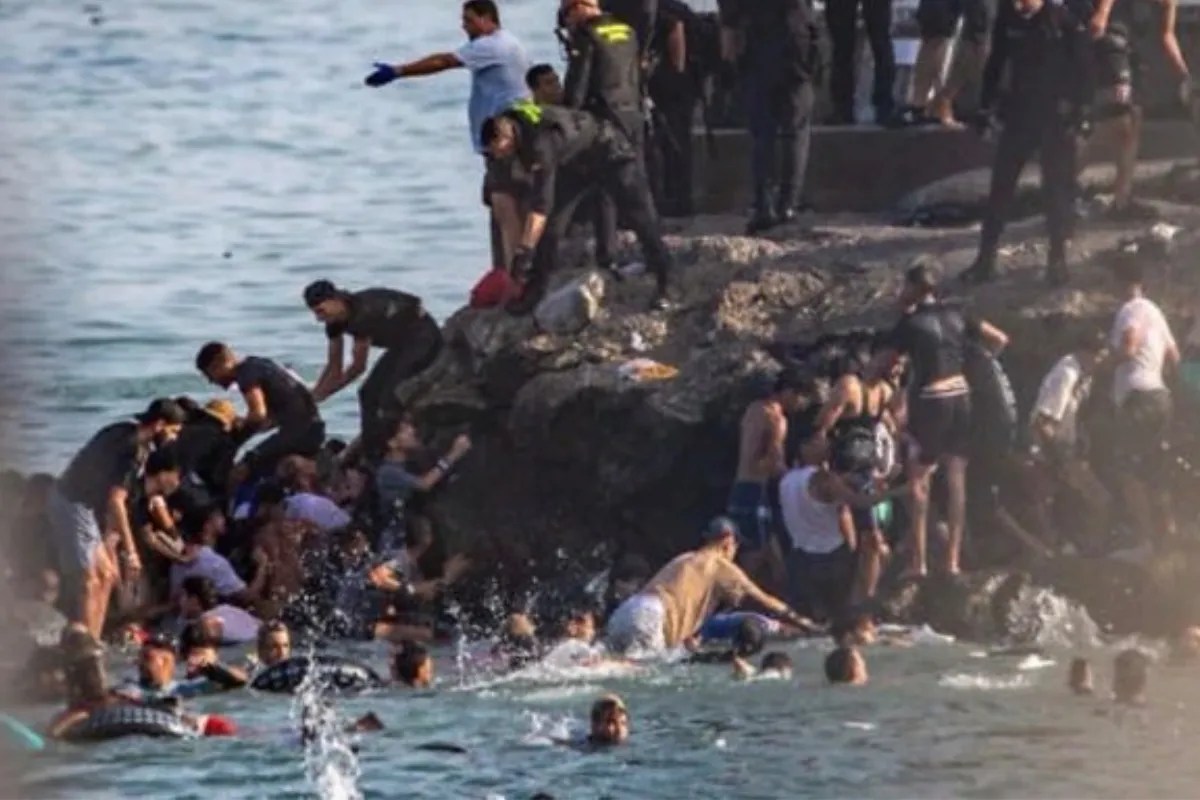
Imagine standing at a border where thousands of desperate people suddenly appear overnight, choosing to swim across cold ocean water rather than stay where they are. That is exactly what happened at the Spanish enclave of Ceuta in North Africa. Around 60,000 individuals poured past boundaries in a massive wave, triggering a crisis that shocked European leaders and left at least 57 people dead.
Most headlines focus entirely on the chaotic numbers. They miss the deeper structural failures driving these events. Let's look past the surface noise and break down what actually happened during this border emergency, why people risked everything, and how governments are reacting.
The Reality Behind the Ceuta Border Rush
Ceuta and Melilla are unique. They represent the European Union's only direct land borders with the African continent. Because of this geography, they act as magnets for individuals seeking a path into Europe.
The recent surge wasn't a random accident. Social media networks and human trafficking rings heavily fueled false hopes and coordinated the rush. When word spread about potential legal loopholes or relaxed enforcement, tens of thousands rushed to the coast. They swam around breakwaters, scaled fences, and overwhelmed local resources in a matter of hours.
- The enclave's total baseline population is roughly 85,000.
- An influx of 60,000 people means the local infrastructure was completely swamped.
- Sleeping in parks, wandering streets without food, and severe overcrowding quickly became the norm.
The Human Cost and Immediate Fallout
Tragically, the rush turned deadly. At least 57 people lost their lives, mostly due to drowning or getting crushed against the rocky breakwaters and security barriers at Tarajal beach.
Spanish Prime Minister Pedro Sánchez labeled the mass crossing an unacceptable violation of territorial sovereignty. Yet, the situation shifted almost as quickly as it began. Lacking food, shelter, and long-term prospects within the tiny enclave, a large portion of the people who crossed began returning voluntarily to Morocco within days. The Spanish Interior Ministry coordinated repatriations while security forces locked down coastal zones.
Political Shockwaves Across Europe
The incident did not stay local. It ignited fierce debates inside the European Union regarding migration policies and border controls.
Countries like France tightened checks along their borders with Spain, while other regional leaders questioned the viability of open-movement agreements under such extreme pressure. Critics pointed fingers at human smuggling rings that profit off desperation, while defense officials rushed to install physical deterrents—including a 1,600-foot maritime barrier designed to prevent future mass swims.
You cannot look at this crisis simply as a security failure. It is a complex mix of economic despair, social media manipulation, and geopolitical friction between Spain and North African transit points. Until systemic economic pressures change, these coastal borders will remain flashpoints for human tragedy and political friction.