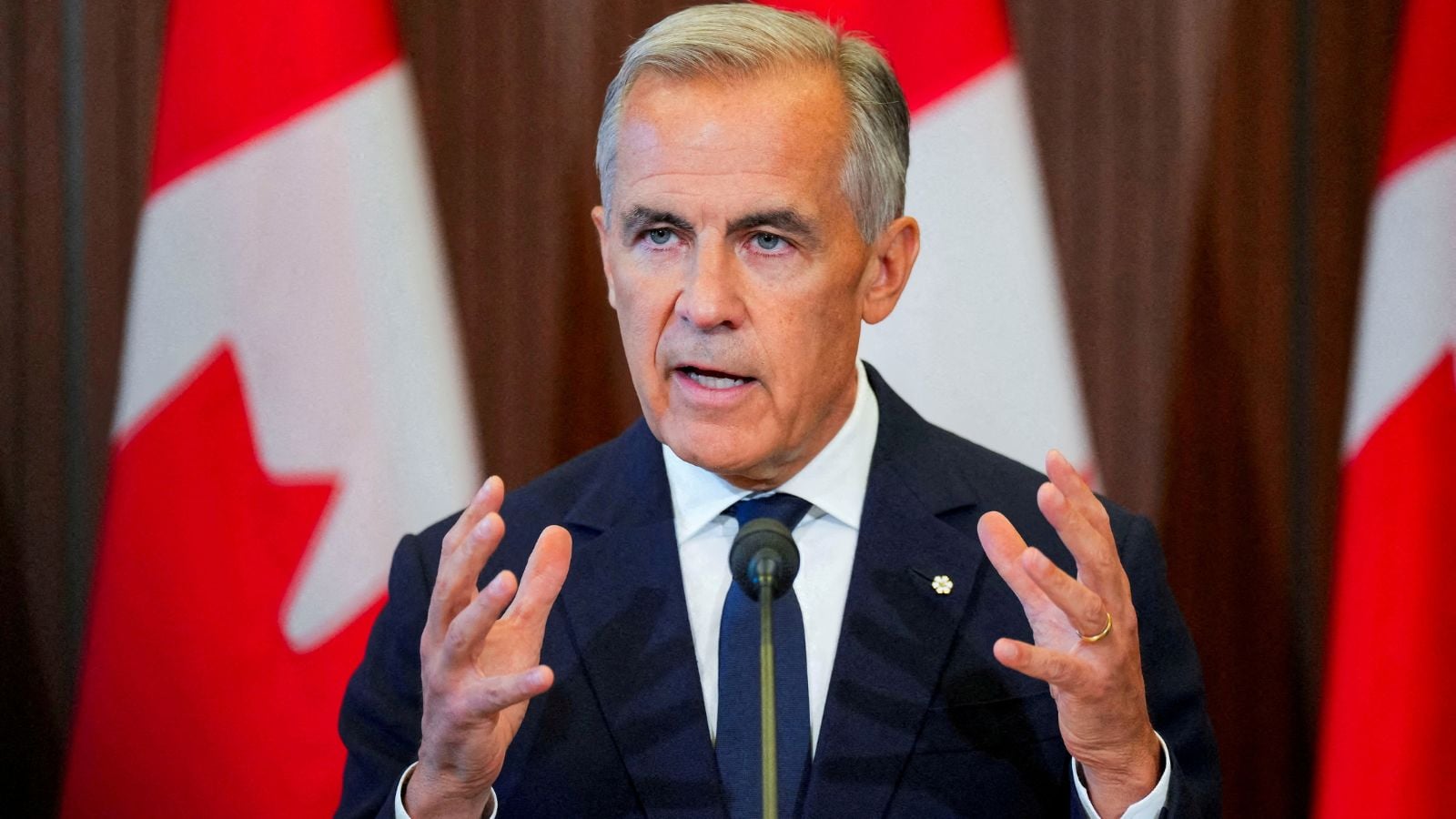
Canada isn't joining the European Union. Let's get that straight right away, because the headlines floating around Ottawa and Brussels have caused plenty of confusion.
When Prime Minister Mark Carney signaled that he expects to wrap up negotiations in June to make Canada the EU's first associate member, the internet reacted as if Canadians were about to trade the loonie for the euro and dismantle border checkpoints at Pearson Airport. That's not happening. Not even close.
What's actually on the table is a massive strategic pivot that reshapes how Canada trades, defends itself, and partners with Europe in an increasingly fractured global economy. If you're trying to understand what Carney's June timeline really means for Canadian businesses, travelers, and foreign policy, you need to look past the buzzwords and examine the mechanics of European association agreements.
What EU Associate Membership Actually Means for Canada
In European diplomatic circles, "associate member" isn't a single, off-the-shelf legal status. It's a broad umbrella term covering bilateral agreements under Article 217 of the Treaty on the Functioning of the European Union.
Historically, Brussels used these agreements as a waiting room for neighboring countries hoping to join the bloc—think Ukraine, Georgia, or countries in the Western Balkans. Other deals, like the European Economic Area (EEA) agreements with Norway and Iceland, grant near-total access to the EU single market in exchange for accepting EU regulations and budget contributions.
Canada doesn't fit either mold. Ottawa isn't applying for full EU membership—Article 49 of the EU Treaty restricts full membership to European states anyway. Instead, Carney's push for associate status is about creating a custom-built institutional partnership that goes far beyond a standard free trade deal.
We already have the Comprehensive Economic and Trade Agreement (CETA), which provisionally took effect in 2017. CETA eliminated 98% of tariffs between Canada and the EU. So why bother with associate membership now?
Because tariffs are only half the battle in modern trade. Regulatory alignment, joint procurement, security cooperation, and research funding are where the real economic gravity sits today. Associate status gives Canada a formal seat at the table in specific EU policy frameworks without forcing Ottawa to surrender sovereignty over its borders, currency, or domestic laws.
Why Mark Carney Is Pushing for a June Deal
Timing matters in diplomacy. Carney's target of concluding talks in June isn't an arbitrary deadline pulled out of a hat—it aligns directly with the annual EU-Canada Summit cycle and the summer recess of the European Parliament.
For years, Canadian foreign policy operated on a comfortable default setting. Trade heavily with the United States, maintain warm rhetorical ties with Europe, and avoid rocking the boat. That playbook is dead.
Between recurring U.S. tariff threats, protectionist industrial policies in Washington, and growing instability across global supply chains, relying on a single neighbor for over 75% of your exports is a massive vulnerability. Carney, a former Governor of both the Bank of Canada and the Bank of England, understands European institutional plumbing better than almost any sitting G7 leader. He knows that when Washington turns inward, Ottawa has to build structural bridges across the Atlantic.
A June conclusion gives both sides a concrete geopolitical win ahead of summer parliamentary breaks. More importantly, it locks in institutional commitments before shifting political winds in either Brussels or North America can derail the momentum.
The Regulatory Friction Problem
If you've ever tried to export manufactured goods, pharmaceuticals, or clean tech from Ontario to Germany, you know CETA didn't magically erase red tape. You still face separate testing standards, differing chemical regulations under the EU's REACH framework, and incompatible digital rules.
An association framework aims to tackle these non-tariff barriers head-on. By establishing permanent joint regulatory councils and mutual recognition agreements, Canadian firms could certify a product once in Toronto and sell it across 27 European member states without paying for duplicate compliance audits.
Key Areas Covered Under the Proposed Framework
While negotiators in Ottawa and Brussels guard the exact text closely until the ink dries, the core pillars of a Canada-EU association agreement center on four practical areas.
1. Defense and Security Procurement
Europe is rearming at a pace not seen since the Cold War. Through initiatives like the European Defence Industrial Strategy, Brussels is pouring billions of euros into joint weapons manufacturing, ammunition production, and cybersecurity.
Historically, EU defense funds came with strict "buy European" rules that locked out non-EU contractors. Canada already signed a Security and Defence Partnership with the EU, and associate status elevates that cooperation. It opens the door for Canadian aerospace, defense, and tech companies to bid on joint European procurement contracts alongside firms from France, Germany, and Poland. For a sector that desperately needs scale beyond domestic Department of National Defence contracts, that's huge.
2. Critical Minerals and Clean Energy Supply Chains
Europe wants to slash its dependence on Chinese refined minerals and Russian energy. Canada sits on massive reserves of lithium, nickel, cobalt, copper, and rare earth elements.
It's a natural match, yet infrastructure bottlenecks and slow permitting have held Canada back. Under an associate agreement, European investment banks and industrial consortia gain clearer pathways to co-finance Canadian mining and processing projects. In return, European automakers and battery manufacturers get guaranteed, ethically sourced supply chains backed by aligned environmental standards.
3. Research, Innovation, and Horizon Europe
Canada already made waves by joining Pillar II of Horizon Europe—the EU's massive €95.5 billion research and innovation program—as an associated country. That move allowed Canadian universities and startups to lead consortiums and pull directly from Brussels' funding pot.
Formal associate membership cements and expands this model into artificial intelligence governance, quantum computing, and green tech. Instead of watching Canadian researchers relocate to Boston or London for grant money, Ottawa is plugging its domestic innovation ecosystem directly into Europe's largest funding network.
4. Structured Political Dialogue
Right now, Canadian ministers show up to Brussels as honored guests. Associate status changes the seating chart. It creates standing ministerial committees where Canadian officials participate regularly in discussions on sanctions, Arctic security, digital regulation, and global trade rules before EU policies are finalized.
Common Misconceptions About the Canada-EU Deal
Whenever words like "union" or "associate member" hit the news cycle, misinformation spreads fast. Let's clear up the biggest myths floating around social media and cable news panels.
- Myth 1 Canadians will get freedom of movement to live and work in Europe. False. Freedom of movement is one of the four foundational pillars of the EU single market, reserved strictly for EU citizens and EEA members like Norway and Switzerland. While an association deal might streamline short-term business visas or youth mobility quotas, you won't be able to pack your bags and move to Madrid without a work permit.
- Myth 2 Canada will adopt the euro or EU tax rates. Completely untrue. Monetary policy stays firmly in the hands of the Bank of Canada, and Ottawa retains full control over federal taxation and fiscal spending.
- Myth 3 Brussels will override Canadian laws. Unlike Norway, which must automatically adopt thousands of EU single-market directives without a vote, Canada's model is built on voluntary mutual recognition and negotiated alignment. Parliament in Ottawa isn't handing legislative supremacy to the European Commission.
- Myth 4 This replaces USMCA. Nobody in Ottawa is delusional enough to think trade with Europe can replace the $1.3 trillion annual trade relationship with the United States. Geography still matters. Trucks cross the Ambassador Bridge in minutes; container ships take days to cross the Atlantic. This deal is about diversification and insurance, not replacement.
The Hidden Hurdles That Could Still Stall Talks
Carney's confidence about wrapping up negotiations by June is notable, yet anyone who watched the CETA saga knows that dealing with the European Union requires iron patience.
CETA took seven years to negotiate and nearly collapsed at the finish line in 2016 when the regional parliament of Wallonia in Belgium refused to sign off. Why? Because in the EU, agreements touching on areas of "mixed competence"—like investment protection or certain regulatory standards—require ratification not just by the European Parliament, but by every single national and regional parliament across the 27 member states.
That's roughly 38 different legislative assemblies. Even today, several EU countries still haven't formally ratified CETA, leaving parts of the deal operating on a provisional basis.
To avoid getting trapped in a decade-long ratification swamp, Carney's negotiating team and the European Commission are working to keep the June agreement focused strictly on areas of "exclusive EU competence." When a deal sticks to trade, research, and institutional cooperation controlled directly by Brussels, it only needs approval from the European Council and the European Parliament.
Agricultural lobbying remains another friction point. European farmers—particularly in France, Poland, and Ireland—have staged massive protests over foreign agricultural imports. Canadian beef, pork, and grain producers still face strict quotas and sanitary barriers in Europe despite CETA. If Ottawa pushes too hard for broader agricultural market access before June, European agriculture ministers will hit the brakes immediately.
Then there's the digital regulation clash. The EU regulates tech aggressively through the Digital Markets Act, the Digital Services Act, and the AI Act. Canada has taken a lighter touch in some areas while drafting its own rules on online harms and artificial intelligence. Bridging those regulatory philosophies without forcing Canadian startups to drown in European paperwork will test negotiators right up to the final week.
What This Means for Canadian Businesses and Investors
If you run a business in Canada, don't wait for a ceremonial signing photo in June to start paying attention. The strategic shift is already underway, and early movers always capture the best margins.
Start by auditing your supply chain and customer base. If more than 80% of your revenue comes from U.S. buyers, you're carrying concentration risk that no insurance policy covers. Look at how your products or services map onto European technical standards. Companies that already comply with ISO standards or CE marking requirements will find it dramatically easier to scale into Europe once mutual recognition rules expand.
Second, look closely at European funding programs. Many Canadian tech firms and mid-sized manufacturers still don't realize they can apply for Horizon Europe grants alongside European partners. If your R&D budget is tight, partnering with a German engineering firm or a Dutch research institute can unlock non-dilutive European capital right now.
Third, watch the defense and critical minerals procurement pipelines. As European governments fast-track defense spending and green infrastructure, they are actively scouting reliable non-Chinese and non-U.S. suppliers. Registering with European procurement portals and building relationships with prime contractors in Brussels, Paris, and Berlin takes months—starting that groundwork before the June announcement puts you ahead of competitors who wait until the press releases drop.
Canada's push to become the EU's first associate member isn't about abandoning North America or turning into a European province. It's a pragmatic recognition that middle powers survive turbulent eras by multiplying their alliances. Carney is betting that locking in a deep, institutional partnership with a 450-million-person market gives Canada the economic ballast it needs for the decade ahead.