Emergency sirens wailing? Low guttural hoots echoing across dry southern California hills? That is just morning roll call at the Gibbon Conservation Center.
Most people picture standard zoos when they think of wildlife rescue. They imagine concrete slabs and bored animals staring at glass panes. This place breaks the mold completely. Nestled in the Santa Clarita Valley north of Los Angeles, this ten-acre sanctuary has spent half a century doing one thing exceptionally well: giving some of the rarest apes on the planet a voice, space, and a fighting chance.
If you want to understand why these singing primates matter, you have to look past the noise. You have to look at fifty years of sheer grit.
How a House Painter Built a Global Refuge
Back in 1976, a self-taught animal lover named Alan Mootnick answered a newspaper ad. Someone was selling a pet gibbon named Spanky. Mootnick bought him, and that single purchase completely altered the trajectory of his life.
Mootnick didn't come from a wealthy conservation dynasty or hold a string of ivy-league degrees in biology. He ran a home painting and remodeling business. Yet he poured his own money into purchasing the land in Saugus that would become the world's premier haven for small apes. He transformed from a local contractor into a globally respected primatologist who advised researchers worldwide.
When Mootnick passed away unexpectedly in 2011, the sanctuary faced a crossroads. Enter Gabi Skollar. She had moved from Hungary to California in 2005 just to learn from the master. Instead of leaving after his death, she stayed to keep the gates open. Today, she runs the operation while pursuing a doctorate at UCLA studying acoustic vocalizations.
Living Legends With Major Attitudes
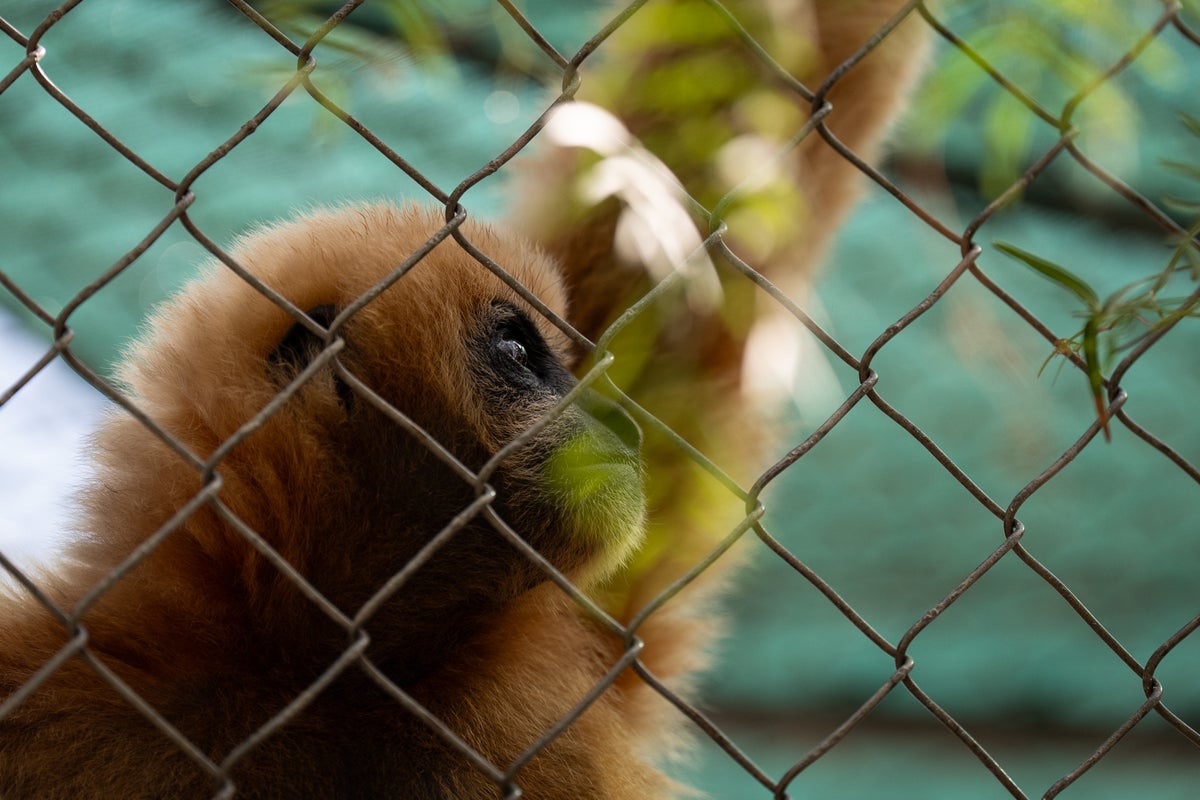
Right now, roughly forty gibbons across five distinct species call this facility home. They are split into family groups and pairs, and each individual has a massive personality.
Meet the cast:
- Pepper: A young northern white-cheeked gibbon who routinely kicks off the morning chorus.
- Violet and Truman: A pileated gibbon duo who always nail the finale of the group song.
- Pierre: A rescued resident who famously holds a grudge against men.
- Rocky: A hand-reared youngster who owes his life to senior caretaker Jodi Kleier.
Kleier started out volunteering over a decade ago. Now she has a tattoo of Rocky on her leg. She spends her days prepping chopped bananas, sweet potatoes, and washed lettuce. Feeding happens five to six times daily. That frequency isn't arbitrary. It mimics natural foraging cycles in the wild, keeping their active minds occupied.
The Real Threat Facing Southeast Asia's Canopy Dwellers
Why does a dry California valley need to house tropical primates? Because their native homes in Southeast Asia are disappearing at an alarming rate.
Deforestation strips away the rainforest canopy piece by piece. At the same time, the illegal wildlife trade targets baby gibbons, ripping infants away from mothers who are often killed in the process. Some species living at the sanctuary have fewer than two thousand individuals left in the wild.
The facility acts as an insurance policy against extinction. It was the first institution to successfully breed Javan gibbons outside of their native island. They coordinate breeding loans with zoos globally—like recent transfers of pileated females to France and Cincinnati—to maintain genetic diversity.
Visiting the Sanctuary Without Disrupting the Apes
You cannot just drop by on a whim. The sanctuary keeps strict boundaries to protect the animals' peace, opening its gates to the public primarily for guided weekend tours.
Visitors hear the duets first. Gibbon songs carry up to a mile across the valley, sounding like a surreal blend of acoustic art and wailing alarms. When you stand near the enclosures, you realize how small, slender, and blindingly fast they are. They don't walk through trees; they launch themselves across gaps with terrifying precision.
Educational outreach drives the mission forward. The staff partners with local academic programs like Moorpark College's Teaching Zoo, giving students hands-on keeper experience that textbooks cannot teach. Skollar's ongoing capital goals focus on expanding enclosure sizes and building a dedicated visitor education center.
Supporting a place like this takes more than passive sympathy. It takes chopped vegetables, veterinary care funds, and volunteers willing to haul heavy hoses in the scorching California heat. Check their schedule online, book a weekend tour, and go listen to the forest spirits sing before their wild counterparts run out of time.