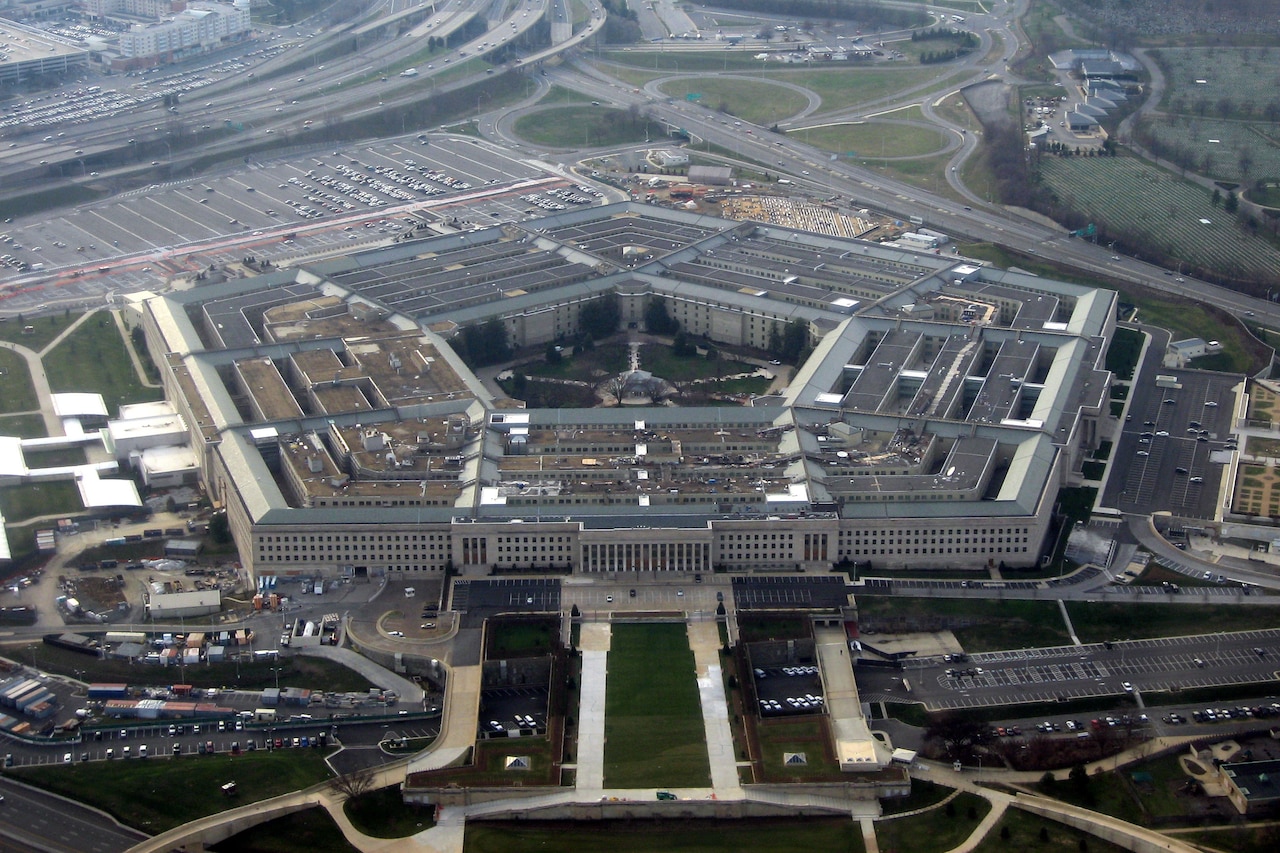
The military isn't built for comfort. It's built to break things and win wars. For decades, Washington forgot that simple truth. Bureaucrats buried the chain of command under layers of administrative red tape, ideological checklists, and supply chains outsourced to foreign rivals. Then came the speech at Quantico.
Secretary of War Pete Hegseth stood before junior officers and enlisted leaders at Marine Corps Base Quantico and delivered an unvarnished assessment of the United States military. The "State of the Force" address wasn't your standard bureaucratic progress report. It was a full-scale declaration of war against the status quo. Hegseth laid out an aggressive blueprint designed to strip away institutional bloat, rewire procurement, and drag the armed forces back to their singular mandate: violent, decisive combat readiness. If you want to understand where American national security is heading, you have to look past the political noise in Washington and examine the structural mechanics of this overhaul. Don't miss our previous coverage on this related article.
The Cultural Pivot Back to the Warrior Ethos
For years, critics inside and outside the ranks pointed to a creeping cultural drift within the Department of War. PowerPoint presentations on sensitivity, shifting diversity quotas, and civilian-led social experiments had slowly bled into daily operations. Hegseth made it clear that era is over. The core thesis of the Quantico speech was unapologetic: the military exists to destroy enemies, not to serve as a sociological laboratory.
This cultural reset isn't just about rhetoric. It changes how leadership evaluates performance. The administration implemented what insiders call the E6-O3 test—giving mid-level leaders and platoon commanders actual authority to fight their formations without second-guessing from distant headquarters. When leaders have their hands untied, morale shifts. Troops don't join up to fill out compliance reports; they join to master their craft. To read more about the context here, The Washington Post provides an excellent breakdown.
Critics call this approach abrasive. Supporters call it overdue. Either way, the transformation has sent shockwaves through the traditional defense establishment. Generals and admirals who align with the renewed focus on lethality find themselves empowered, while career administrators who treat the armed forces like a corporate HR department are finding the door.
Autonomous Warfare Command and the Tech Revolution
Modern conflicts are won in code, spectrum, and silicon just as much as steel and gunpowder. Recognizing that traditional procurement moves at glacial speeds, Hegseth announced the creation of the Autonomous Warfare Command, known as AutoWarCom. Scheduled to stand up as a four-star functional combatant command by October 1, 2027, this entity represents the fastest peacetime operational shift in modern military history.
The initiative scales autonomous warfare across the entire Joint Force. It builds directly on the early successes of the Drone Dominance program, which rushed thousands of robotic systems into active theaters during Operation Epic Fury. To cut through the typical Pentagon red tape, leadership placed the unmanned systems development under a unique operational structure led by Defense Innovation Unit director Owen West and Navy SEAL Senior Chief Max Strasiser.
This isn't about buying a few experimental drones for a test range. It's about mass production and instant battlefield integration. Traditional defense contractors take years to design, test, and field new hardware. AutoWarCom is designed to bypass that bottleneck by fusing procurement directly with combat operations. Software updates happen weekly; hardware iterations happen monthly. If an adversary fields a new electronic jamming pod, American forces won't wait for a five-year congressional review cycle to counter it. They will deploy a software fix by the weekend.
FORTRESS America and the End of Supply Vulnerabilities
One of the most glaring vulnerabilities exposed over the past two decades was America's quiet addiction to foreign supply chains. Microchips from overseas factories, rare earth minerals mined by strategic rivals, and weapons propellants sourced thousands of miles away meant that a major conflict would instantly choke the U.S. war machine.
Hegseth addressed this vulnerability head-on with the launch of FORTRESS America, an acronym for Federal Operations for Resilience, Troop Resources, Energy, Supply, and Survivability. This initiative functions as a national insurance policy for the homeland.
The strategy relies on several hard-headed pillars:
- Energy Independence: Every major military installation in the United States is mandated to generate its own power, completely independent of the civilian grid. If a foreign adversary launches a massive cyberattack or sabotage campaign against domestic utilities, military bases will stay lit, aircraft will fly, and command centers will never go dark.
- Domestic Supply Chains: Rare earth elements, specialty metals, advanced semiconductors, and chemical propellants are being brought back home. They must be mined, refined, and manufactured on American soil by American workers.
- Strategic Reserves: The military is stockpiling deep reserves of munitions, fuel, medical supplies, and blood. The calculation is simple: in a real, high-intensity conflict, global supply lines will break. FORTRESS America ensures the force keeps fighting even when international commerce freezes.
- Hardened Infrastructure: Installations are being fortified against cyber intrusion, physical sabotage, and drone swarms, while space-based assets and electromagnetic spectrum dominance are locked down to prevent friendly forces from being blinded or silenced.
Critics argue that rebuilding these industrial ecosystems domestically is expensive. The administration counters that losing a war because you can't buy microchips from an adversary is infinitely more costly.
Rebuilding the Officer Corps and Infrastructure
You can't run a modern military with advanced technology alone. You need leaders of deep character who understand history, strategy, and duty. To address a perceived drift in traditional commissioning sources, the Department of War introduced America's Corps of Cadets.
Rather than relying solely on legacy pipelines, this program partners with premier academic institutions like Louisiana State University, Liberty University, Tuskegee University, Mississippi State University, and Hillsdale College. These schools are designated as "Distinguished Military Colleges," enforcing rigorous discipline, tactical instruction, and a curriculum grounded in the Constitution and American heritage. The goal is to flood the Joint Force with officers who are intellectually tough and ideologically grounded.
Infrastructure is getting a matching upgrade. The military hasn't broken ground on a brand-new major base in forty years. That changes with the Next Great American Base initiative. Spanning hundreds of thousands of acres, this new installation will feature organic power generation, modern air defenses, and cutting-edge operational layouts designed from scratch. Instead of political favoritism, the location is being decided through a merit-based competition among states willing to partner with the federal government.
Political Friction and the Fight in Washington
An overhaul of this magnitude doesn't happen quietly. The rapid pace of change and the unapologetic tone of the leadership have triggered intense political pushback. Capitol Hill has become a battleground, marked by sharp clashes over military actions, oversight, and operational authorities.
House Republicans recently blocked a high-profile impeachment resolution led by Representative Thomas Massie and backed by Democrats, halting an effort to remove Hegseth over his handling of ongoing operations. Supporters of the defense secretary, including Vice President JD Vance and President Donald Trump, dismissed the legislative maneuver as political theater substituting for actual policymaking.
Hegseth defended his tenure fiercely during Pentagon press briefings, arguing that targeting civilian leadership and military commanders in the middle of active operations directly sabotages the nation's service members. He framed the congressional friction not as healthy debate, but as an attempt to punish warriors for executing lawful orders. With control of Congress shifting, the legislative battles over defense budgets, oversight, and executive war powers are guaranteed to intensify.
The Real Test Ahead
The speeches are delivered, the memos are signed, and the executive orders are moving through the pipeline. Yet, administrative announcements mean nothing if they don't change what happens on the ground and at sea.
The success of this military overhaul will not be measured by press releases or organizational charts. It will be judged the moment an adversary tests American deterrence. By decentralizing authority, bringing supply chains home, and demanding absolute focus on combat lethality, the current defense leadership is taking a massive gamble that structure dictates outcome. If the force holds the line, deters major conflicts, and wins decisively when pushed, this era will be remembered as the moment the U.S. military saved itself from internal decay. If it falters, the reckoning will be swift. For now, the machine is moving forward at full speed, and there is no reverse gear.