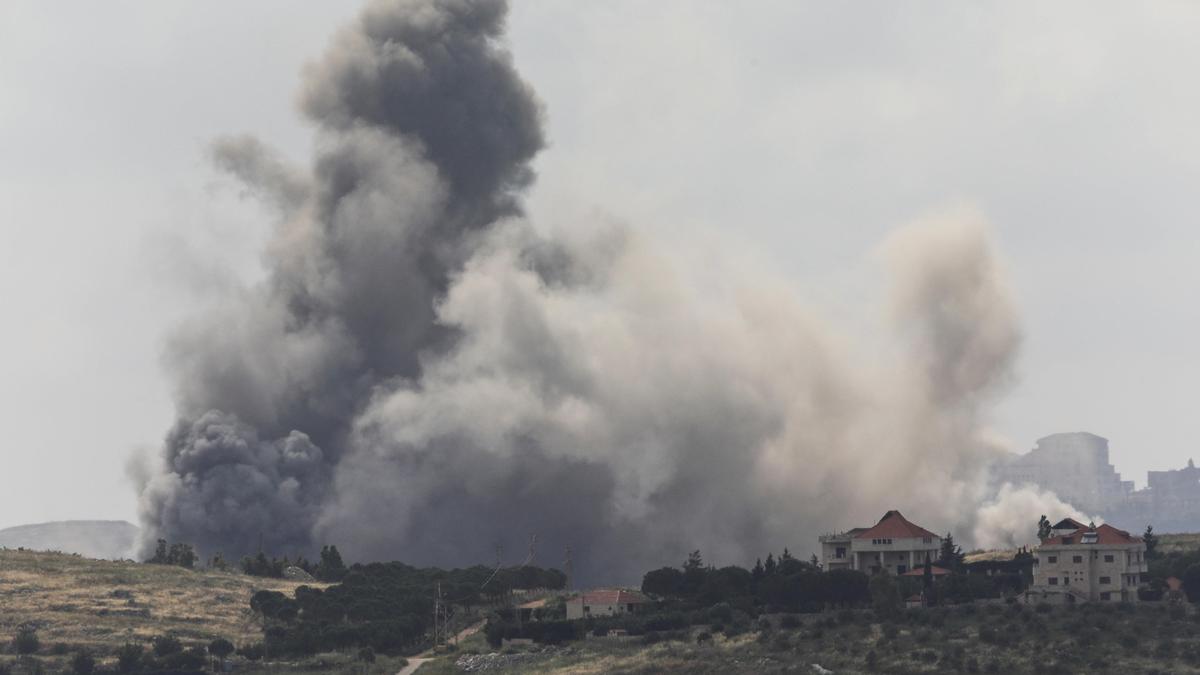
Diplomacy is not a substitute for force. It is the accounting department that tallies up the bill after the heavy lifting is finished. While mainstream outlets fixate on the "tragedy" of escalating strikes in Lebanon during high-level meetings in Washington, they miss the fundamental mechanics of international relations. They paint a picture of a "fragile peace process" being undermined by "senseless violence." This is a fundamental misunderstanding of how sovereign states communicate.
The strikes in Lebanon aren't an interruption of the talks. They are the primary engine of the negotiation.
The Myth of the Neutral Negotiating Table
Standard reporting suggests that for talks to succeed, guns must fall silent. This "lazy consensus" assumes that diplomacy exists in a vacuum of goodwill. It doesn't. In the Middle East, and specifically in the friction between Israel and non-state actors like Hezbollah, the "negotiating table" extends directly onto the battlefield.
When an Israeli strike hits a logistics hub or a command center in Lebanon, it isn't a "failure of diplomacy." It is a calculated data point sent to the actors sitting in D.C. It shifts the cost-benefit analysis in real-time. If you aren't applying pressure while you talk, you aren't negotiating; you are pleading.
I have watched analysts for decades wring their hands over "unfortunate timing." There is no such thing as timing in war. There is only leverage. To expect a state to cease its kinetic operations while a third-party mediator maneuvers in a Marriott ballroom is to ignore the last five centuries of Westphalian sovereignty.
Why Dozens of Casualties Are Tragic but Strategically Logical
Every headline screams about the "dozens wounded" as proof that the situation is spiraling out of control. Let’s be brutally honest about the arithmetic of conflict. In the eyes of a military strategist, those dozens of casualties are a signal of intent and capability.
The mainstream media focuses on the human cost—which is real and devastating—but fails to analyze the strategic utility. By escalating the intensity of strikes during the Washington summit, Israel is effectively telling the mediators and the adversaries that the status quo is more expensive than the concession.
- The Credibility Gap: A nation that stops fighting because a meeting started is a nation that can be stalled indefinitely.
- The Information Loop: Physical strikes provide immediate feedback on an enemy's operational readiness that a diplomat never could.
- The Escalation Ladder: You cannot de-escalate if you have no room to move down. You must climb higher to make the descent look like a win for the other side.
Dismantling the "Ceasefire Now" Fallacy
"Why can't they just stop and talk?"
This is the question that dominates the "People Also Ask" sections of the internet. It is a flawed premise. It assumes both parties want the same thing: peace. Usually, parties want victory, and peace is just the byproduct of one side realizing they cannot win or the cost of trying has become ruinous.
A ceasefire at the wrong time—specifically when one side has the operational momentum—is a strategic blunder. It allows the adversary to re-arm, re-position, and dig in. If you want a lasting settlement, the pressure must be maintained until the ink is dry. Anything else is just a tactical pause that guarantees a bloodier conflict six months down the line.
I’ve seen this play out in every major theater of the last twenty years. The moment the "international community" forces a pause for humanitarian optics, the underlying structural causes of the war are preserved in amber. You don't fix a broken bone by refusing to set it because the patient might scream.
The Washington Ghost Dance
The talks in the U.S. are often described as "pivotal" (to use a word I despise) or "the last best hope." In reality, they are a performance. The real decisions are being made by the drone operators and the tunnel commanders.
The U.S. role here isn't to "bring peace." It is to manage the optics of the inevitable. Washington acts as a shock absorber for the regional fallout. When the State Department issues a statement "expressing concern" about strikes in Lebanon, they aren't surprised. They are doing their job—maintaining the diplomatic facade so that the parties can continue the grittier work of defining borders through fire.
The Uncomfortable Truth About Sovereignty
Hezbollah is not a state, yet it holds the Lebanese state hostage. This is the nuance the "peace" articles ignore. You cannot have a traditional diplomatic breakthrough when one of the primary combatants doesn't answer to a central government or a constitution.
- State Actors: Use diplomacy to preserve their borders and trade.
- Ideological Proxies: Use diplomacy to buy time for the next phase of an eternal struggle.
When you treat these two entities as equals at a negotiating table, you have already lost the thread. Israel understands this. The strikes are an attempt to force the Lebanese government—or what remains of its influence—to realize that harboring a proxy army has a price that exceeds its benefits.
Operational Reality Over Media Narrative
The media loves a "peace process." It’s easy to cover. It has scheduled press conferences and men in suits. War is messy, chaotic, and doesn't follow a 24-hour news cycle. But the war is what makes the peace possible.
Look at the geography. This isn't about "ancient hatreds." It's about topography, launch sites, and buffer zones. If the talks in Washington don't result in a physical change on the ground—meaning a retreat of armed elements from the border—then the talks were a failure, regardless of how many handshakes occurred.
The strikes are the only thing ensuring that those "physical changes" stay on the agenda. Without the kinetic pressure, the diplomats would just be debating the phrasing of a non-binding resolution that no one intends to follow.
The Cost of the Contrarian Path
The downside of this realistic approach is obvious: people die. It is a grim, cold-blooded way to view the world. But pretending that the world works differently doesn't save lives; it just draws out the suffering.
A "contained" conflict that lasts thirty years kills more people than a "decisive" conflict that lasts three weeks. By trying to soften the blows during negotiations, the international community often ensures the war never truly ends. They turn a sprint into a marathon of attrition.
Stop looking for the "breakthrough" in the joint communique. The breakthrough is happening in the munitions depots and the intelligence briefings.
Accept the reality: The violence isn't a sign that the talks are failing. The violence is the only reason the talks are happening at all.
Every explosion in Beirut or the Bekaa Valley is a sentence in a contract that hasn't been signed yet. If you want to know how the negotiations are going, stop listening to the spokespeople in D.C. and start watching the flight paths of the F-35s. They are the ones actually doing the talking.
Stop asking when the fighting will stop so the talking can begin. The fighting is the talking.