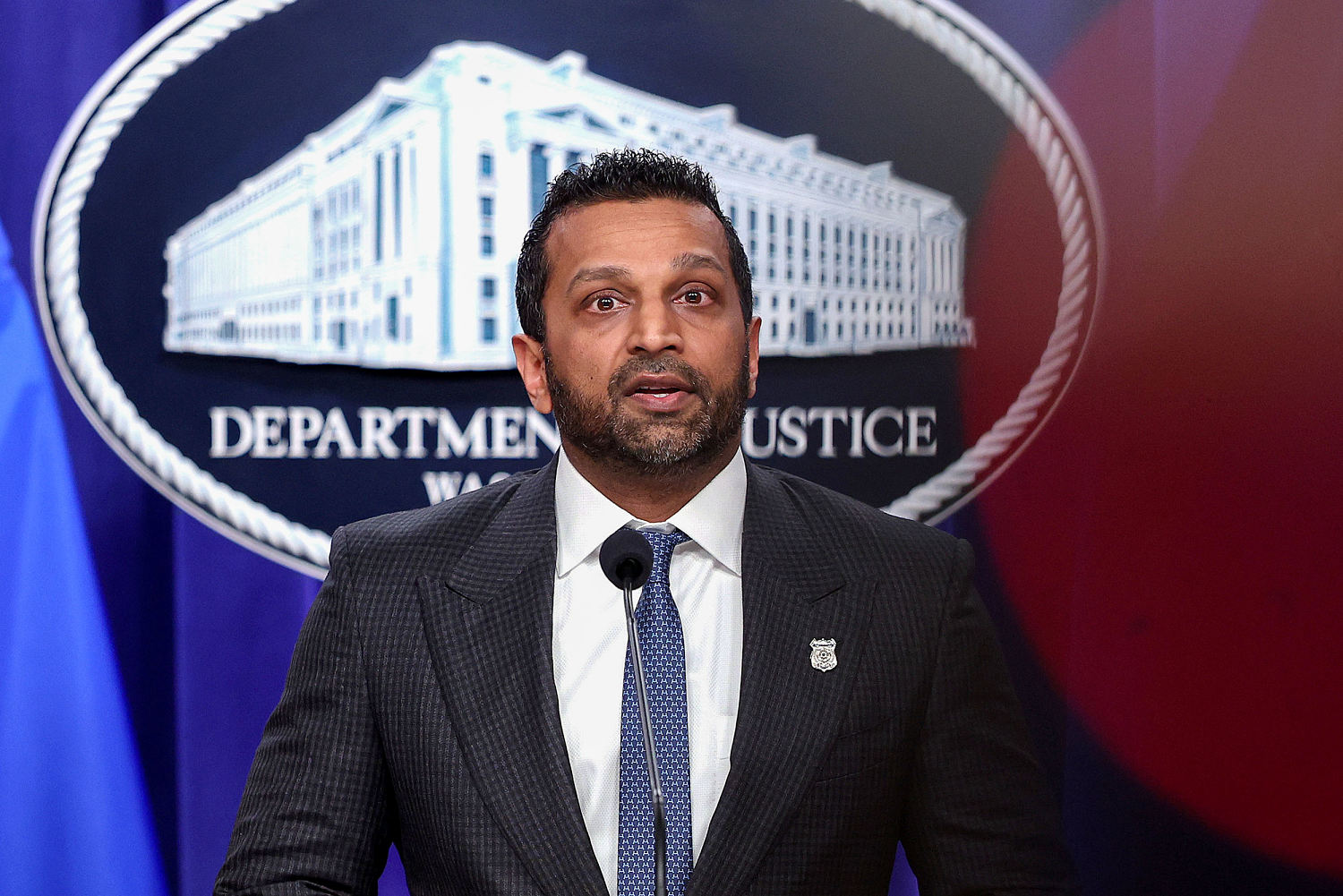
The unauthorized acquisition and subsequent distribution of emails belonging to Kash Patel, a high-ranking intelligence official in the previous U.S. administration and a transition advisor, represents a calibrated execution of "hack-and-leak" doctrine. This incident is not a randomized act of cybercrime but a tactical component of a broader Iranian state-sponsored influence strategy designed to degrade the perceived integrity of U.S. political transitions. To understand the gravity of this breach, one must look past the immediate voyeurism of the leaked content and analyze the structural intent behind the selection of the target, the timing of the release, and the specific infrastructure used to disseminate the stolen data.
The Architecture of Target Selection
In state-sponsored cyber operations, the value of a target is calculated through a function of access, proximity to power, and symbolic resonance. Kash Patel sits at the intersection of all three. As a figure deeply embedded in the national security apparatus and a vocal surrogate for the incoming executive branch, his communications provide a dual-purpose asset for an adversary.
First, the technical intelligence value (INTEL) involves mapping the informal networks of power. By accessing Patel’s private correspondence, Iranian actors gain a blueprint of who talks to whom, which lobbyists or advisors hold the most sway, and the internal friction points within a political transition team. This allows the adversary to refine future phishing campaigns or social engineering efforts against secondary and tertiary targets identified in the threads.
Second, the psychological operations value (PSYOP) is maximized by targeting a polarizing figure. The Iranian group, often identified by researchers as APT42 or Charming Kitten, understands that the U.S. media environment is highly sensitive to information regarding political figures associated with controversial investigations. By leaking Patel's emails, the attackers guarantee a high "velocity of spread" across domestic social and news media, effectively using the target’s own public profile to amplify the reach of the stolen data.
The Three Pillars of Iranian Cyber Doctrine
Iran’s approach to cyber warfare has evolved from crude Distributed Denial of Service (DDoS) attacks into a sophisticated, multi-layered framework. The Patel breach demonstrates the seamless integration of three specific operational pillars.
1. Persistence via Social Engineering
The initial breach rarely stems from zero-day vulnerabilities in hardened government systems. Instead, it relies on the "Cost of Convenience" paradox. High-level targets often use personal email accounts for sensitive but unclassified discussions to bypass the rigid logging and oversight of official government networks. Iranian actors exploit this by creating elaborate personas—often posing as journalists, think-tank fellows, or conference organizers—to lure targets into entering credentials on credential-harvesting pages. The Patel incident suggests a long-term surveillance phase where the attackers sat on the data, waiting for a high-impact moment to release it.
2. Strategic Attribution Obfuscation
While security researchers can trace infrastructure back to Iranian IP blocks or known toolsets like the "Charming Kitten" backdoors, the Iranian state maintains a layer of "plausible deniability" by using front groups or hacktivist personas. In this instance, the use of a seemingly independent platform to host the leaked emails serves to distance the Iranian Intelligence Services from the act, complicating the diplomatic and legal response from the U.S. Department of Justice.
3. Information Laundering
The raw data is seldom the end product. The strategy involves "laundering" the stolen information through legitimate or semi-legitimate media outlets. By offering the emails to journalists under the guise of a "whistleblower" or an anonymous hacktivist, the attackers force the media into an ethical dilemma: report on the news value of the stolen emails and become an unwitting distribution agent for a foreign intelligence service, or ignore the story and cede the narrative to social media echo chambers.
The Dissemination Lifecycle and Media Vulnerability
The effectiveness of a hack-and-leak operation is measured by its "Observed Impact Coefficient"—the ratio of actual political disruption to the resources expended on the hack. The Patel leak follows a predictable lifecycle that exploits the structural weaknesses of the modern digital information ecosystem.
The first stage is Seeding. The attackers upload the archive to a decentralized or offshore hosting site. They then use "disposable" social media accounts to tag prominent journalists and political influencers. The goal is to trigger a manual download of the archive.
The second stage is Validation and Fragmentation. Because the archive is often massive (gigabytes of data), no single entity can vet it quickly. This leads to fragmented reporting where individual emails are taken out of context. This fragmentation is a feature, not a bug; it creates a "fog of information" where the sheer volume of data overwhelms the public's ability to discern what is actually significant.
The third stage is Normalization. Once the emails are cited by a few mainstream outlets, they become "public record." At this point, the fact that the data was obtained illegally by a hostile foreign power becomes secondary to the content of the emails themselves. The adversary has successfully shifted the focus from their criminal act to the internal politics of their target.
Technical Barriers to Mitigation
Traditional cybersecurity focuses on the "Hard Perimeter"—firewalls, encryption, and multi-factor authentication (MFA). However, the Patel breach highlights the "Soft Underbelly" of personnel security.
- The MFA Bypass: Modern Iranian phishing kits are capable of capturing MFA tokens in real-time. If a user is directed to a proxy site that mimics a legitimate login page, the attacker can harvest the username, password, and the one-time code simultaneously, logging into the actual account before the token expires.
- The Private vs. Professional Gap: There is a fundamental lack of enforceable security policy for the personal accounts of individuals who hold high-level security clearances. An adversary knows that while a government laptop is monitored by a Security Operations Center (SOC), a personal smartphone is often only protected by the user’s individual hygiene.
- The Data Residue Problem: Even if a target secures their account today, an adversary may have harvested years of historical data months ago. In cyber espionage, the damage is often "baked in" long before the public becomes aware of the breach.
Evaluating the Strategic Intent
Why now? The timing of the Patel leak correlates with the heightened tensions in the Middle East and the transition period of a U.S. administration. Iran uses these operations as a form of "asymmetric signaling." They are communicating to the U.S. political establishment that they possess deep access and can disrupt the transition process at will.
This is a defensive-offensive posture. By targeting individuals like Patel, who are seen as "hardliners" on Iran, the Iranian state seeks to create internal friction within the U.S. government. They hope to induce a state of "Paranoia-Driven Inertia," where officials become so concerned about their digital footprints and potential leaks that their ability to formulate and execute policy is slowed.
Operational Recommendations for High-Value Targets
The current paradigm of "awareness training" is insufficient against the caliber of APT groups targeting U.S. officials. A structural shift in personal operational security (OPSEC) is required.
The first move is the Compartmentalization of Communication Tiers. High-value targets must operate under the assumption that all unencrypted, third-party hosted email (Gmail, Outlook, Yahoo) is a "dirty environment." Sensitive coordination must move exclusively to end-to-end encrypted (E2EE) platforms with disappearing message features, reducing the "shelf life" of the data available to an attacker.
The second move is the Elimination of the Password Variable. Hardware-based security keys (e.g., FIDO2/YubiKey) should be mandatory for all personal accounts of individuals in the transition chain. This effectively kills the viability of credential harvesting, as the physical key cannot be phished by a remote proxy.
The third move is Pre-emptive Narrative Control. When a breach is detected, the target should not wait for the leak to occur. By publicly acknowledging the breach and characterizing it as a state-sponsored attack before the data is released, the target can "poison the well," framing any subsequent release as a curated product of a hostile intelligence service rather than a legitimate exposé.
The Patel breach is a stark reminder that in the current geopolitical landscape, the personal inbox is a frontline. The Iranian strategy succeeds not through technical brilliance, but by exploiting the predictable patterns of human psychology and the voracious appetite of the 24-hour news cycle. Countering this requires more than just better software; it requires a disciplined refusal to engage with the adversary’s chosen medium of disruption.
The final strategic play for any incoming administration is the establishment of a "Shadow SOC" specifically for the personal digital lives of the transition team. Without a dedicated team to monitor and harden the personal assets of key advisors, the transition remains a high-surface-area target for any nation-state seeking to exert influence through information warfare.