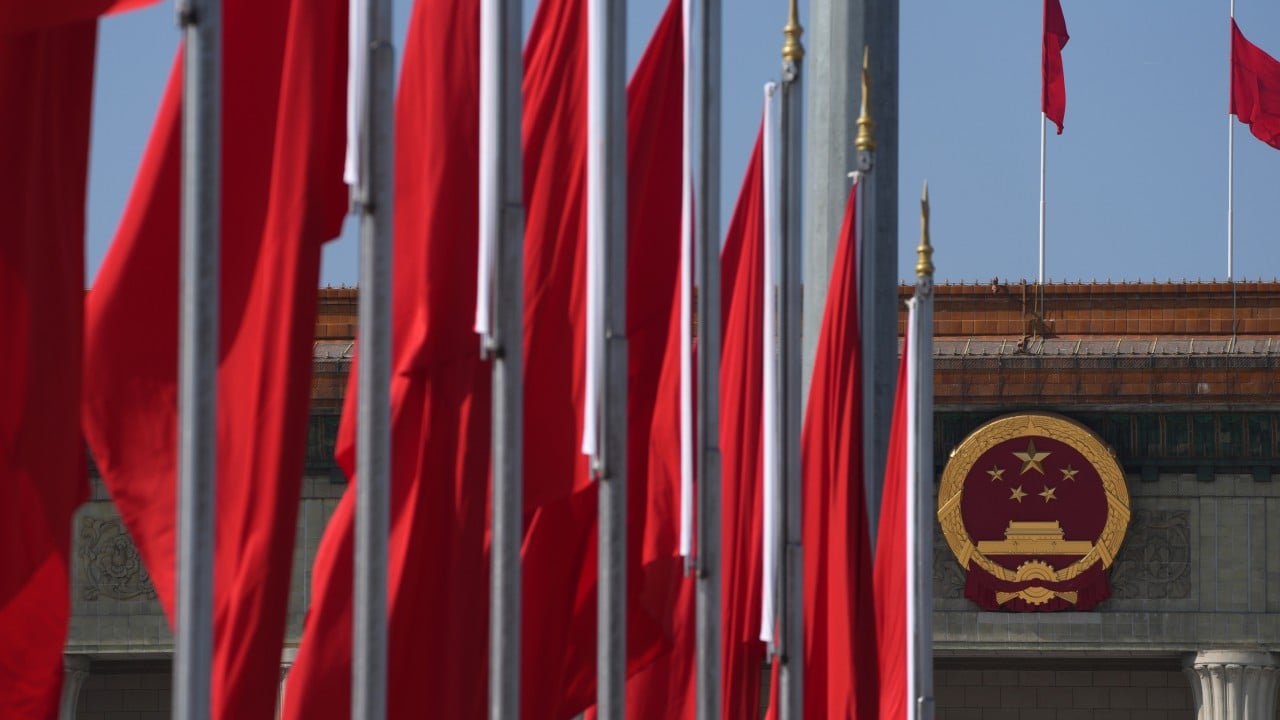
The terminal chimes at 9:30 a.m. in Hong Kong, and a quiet kind of dread fills the room.
It is not a loud panic. There are no shouting traders tossing paper slips into the air like confetti from an older century. Today, dread looks like a row of muted monitors glowing softly against dark glass, a lukewarm Americano cooling beside a mechanical keyboard, and a series of crimson ticks sliding down a screen while delegates behind closed doors in Beijing debate five-year blueprints, industrial policy, and the pace of domestic demand.
I have sat in financial newsrooms and trading desks across Asia long enough to recognize the exact texture of this hesitation. Your palms stay dry, yet your jaw tightens. Every time a senior official in Beijing mentions "high-quality development" or "stabilizing expectations," thousands of people from Shenzhen to London try to read the tea leaves between two commas. Meanwhile, on another screen, a global bank with deep roots in both East and West posts strong quarterly earnings, reminding everyone that even when equity markets sulk, cross-border trade, wealth management, and interest income still move billions across borders every single day.
Let me be candid with you upfront: we do not have a live wire feed or a specific session transcript sitting in front of us for this exact moment, so I will not pretend to quote line-by-line figures that are not in front of me. What we do have—and what matters far more to anyone watching global markets—is a recurring collision we see time and again: high-stakes Chinese Communist Party meetings, sagging stock prices, and heavyweight lenders like HSBC reporting resilient earnings amid uneven global momentum.
Inside the Closed Doors and the Open Markets
Policy signals travel slowly. Stock prices react in milliseconds.
When Beijing convenes a major party meeting—whether a plenum, a central work conference, or a high-level policy gathering—the market rarely gets a neat, instant shopping list of stimulus checks and immediate rate cuts. Instead, markets get direction. Themes. Long-horizon priorities around manufacturing upgrades, debt resolution, consumer confidence, and strategic self-reliance. Traders who want a spark today often walk away with a roadmap for five years from now.
Disappointment. That is usually the first emotion on the trading floor when investors hope for immediate fiscal fireworks and hear measured language about structural transition.
Consider a hypothetical character to see how this plays out on the ground. This is purely a hypothetical scenario built to illustrate how macro headlines hit real routines. Call her Mei, a portfolio analyst in Singapore who tracks Greater China equities and Asian financials. At 8:45 a.m., she reads the overnight summary of a party meeting in Beijing. The communique stresses steady progress, risk prevention, and technological self-reliance, with cautious wording around broad-based consumption stimulus. By 9:35 a.m., mainland and Hong Kong stock indices are slipping into the red. Clients ping her on chat asking whether to trim exposure or buy the dip.
Mei has lived through enough policy cycles to know that market red does not automatically mean economic collapse, nor does a calm press release guarantee a rally by Friday. Still, watching red ink spread across sectors that depend on household confidence—property-adjacent names, consumer discretionary stocks, certain industrial suppliers—wears on you. You start questioning your own assumptions. Maybe the recovery is taking longer than the consensus priced in. Maybe domestic savers are still clutching cash tightly because job security and housing values feel unsettled.
Why do stocks slump right when policymakers are meeting to chart a path forward? Because markets trade on urgency and surprise, whereas party meetings trade on consensus, caution, and long-term state priorities.
Why a Bank Can Shine While Stocks Sag
A slump in equities does not freeze every artery of the financial system.
This is the detail that often catches casual observers off guard when headlines pair falling stock indices with upbeat bank results. When a major institution like HSBC leads earnings—or delivers standout quarterly profits—it reflects a business model built on scale, international trade corridors, commercial lending, treasury operations, and wealth flows across Asia, the Middle East, and Europe.
Think of it like a toll road during a rainy Tuesday. Fewer weekend sightseers might be driving up to the scenic overlook—that is your slumping equity market, where retail and institutional risk appetite pulls back. Yet freight trucks hauling electronics, components, food, and energy still roll past the booths at all hours, and multinational treasurers still move liquidity across currencies. A global bank sits right near those tolls. When interest rates stay higher than the ultra-low era of the 2010s, net interest margins can cushion results even when equity valuations look bruised or dealmaking feels choppy.
To make that distinction concrete, imagine another hypothetical character: David, a mid-sized export manufacturer in Dongguan who sells precision hardware to buyers in Europe and Southeast Asia. This is also a hypothetical illustration rather than a real individual. While local stock indexes wobble after a Beijing policy meeting, David is worried about two very practical things: whether his overseas buyers will delay orders if global growth cools, and whether his trade finance lines and foreign-exchange hedging costs are manageable. A well-capitalized international bank that clears payments smoothly, helps him hedge currency swings, and finances cross-border receivables matters far more to David's payroll on the fifteenth of the month than whether the Shanghai or Hang Seng index closed down one percent.
Still, banks are never immune to the broader weather. If weak domestic demand lingers for quarters on end, loan growth can slow, credit quality in stressed pockets can require closer watching, and fee income from wealth or investment banking can swing with investor mood. Strong earnings in one quarter tell you the machine has power and reach; they do not erase the questions hanging over underlying demand.
The Invisible Stakes Behind Every Ticker
Numbers on a screen are shorthand for human decisions.
Behind every red candle on an equity chart sits a real choice made by a real person. A young graduate in Wuhan decides whether to rent a smaller apartment and save extra cash rather than buy a car. A family in Guangzhou debates putting bonuses into bank deposits instead of stocks after watching market volatility year after year. A fund manager in Zurich wonders whether China's pivot toward advanced manufacturing and green tech will create durable global champions—or intensify competition and margin pressure for companies elsewhere.
Here is where I have to admit something honest: even seasoned market watchers often struggle to separate noise from signal during these stretches. Policy language can sound dense, repetitive, and deliberately vague. Stock moves can look irrational—dropping on "good" news or bouncing on a single rumor. If you feel confused trying to make sense of a party meeting headline alongside a stock pullback and a strong bank earnings report, you are not missing some secret decoder ring. The tension is genuinely complex.
Historically, big shifts in Chinese economic policy have rarely moved in a straight line. When reforms opened markets decades ago, growth surged alongside waves of inflation, restructuring, and painful adjustments for state enterprises and workers. Later, credit booms and infrastructure pushes brought rapid expansion followed by years of deleveraging and balance-sheet repair. Each chapter reshaped who won, who struggled, and where capital flowed next.
Reading the Signals Without Losing Your Head
Panic is expensive. Patience, properly calibrated, is a superpower.
When a party meeting wraps up, stocks slump, and a heavyweight bank like HSBC posts leading earnings, the temptation is to pick a single dramatic storyline and run with it. Either Beijing is failing to revive confidence, or everything is fine because big banks are making money.
Reality is messier—and more interesting—than either extreme.
- Watch the follow-through, not just the speech. Policy statements set direction, but actual budget execution, local government financing rules, credit data, and consumer spending numbers show whether intentions turn into traction.
- Separate equity sentiment from balance-sheet cash flows. A falling stock market reflects changing valuations and risk appetite; strong bank earnings reflect real transaction volumes, interest dynamics, and cross-border activity.
- Respect time horizons. A day trader staring at a five-minute chart lives in a completely different universe from a long-term investor, a factory owner, or a household planning five years ahead.
Notice how each of those points connects back to the same core truth: headlines compress complex, multi-layered systems into three punchy clauses. When you slow down and unpack those clauses, the picture stops looking like a contradiction and starts looking like a tug-of-war between long-term state strategy, short-term investor nerves, and everyday global commerce.
Late afternoon settles over the city, the warm amber glow of streetlamps begins to bleed through the glass panes, and on the monitor a single green number flickers beside a row of stubborn red ones—a quiet reminder that even in the heaviest market weather, money is always moving somewhere.