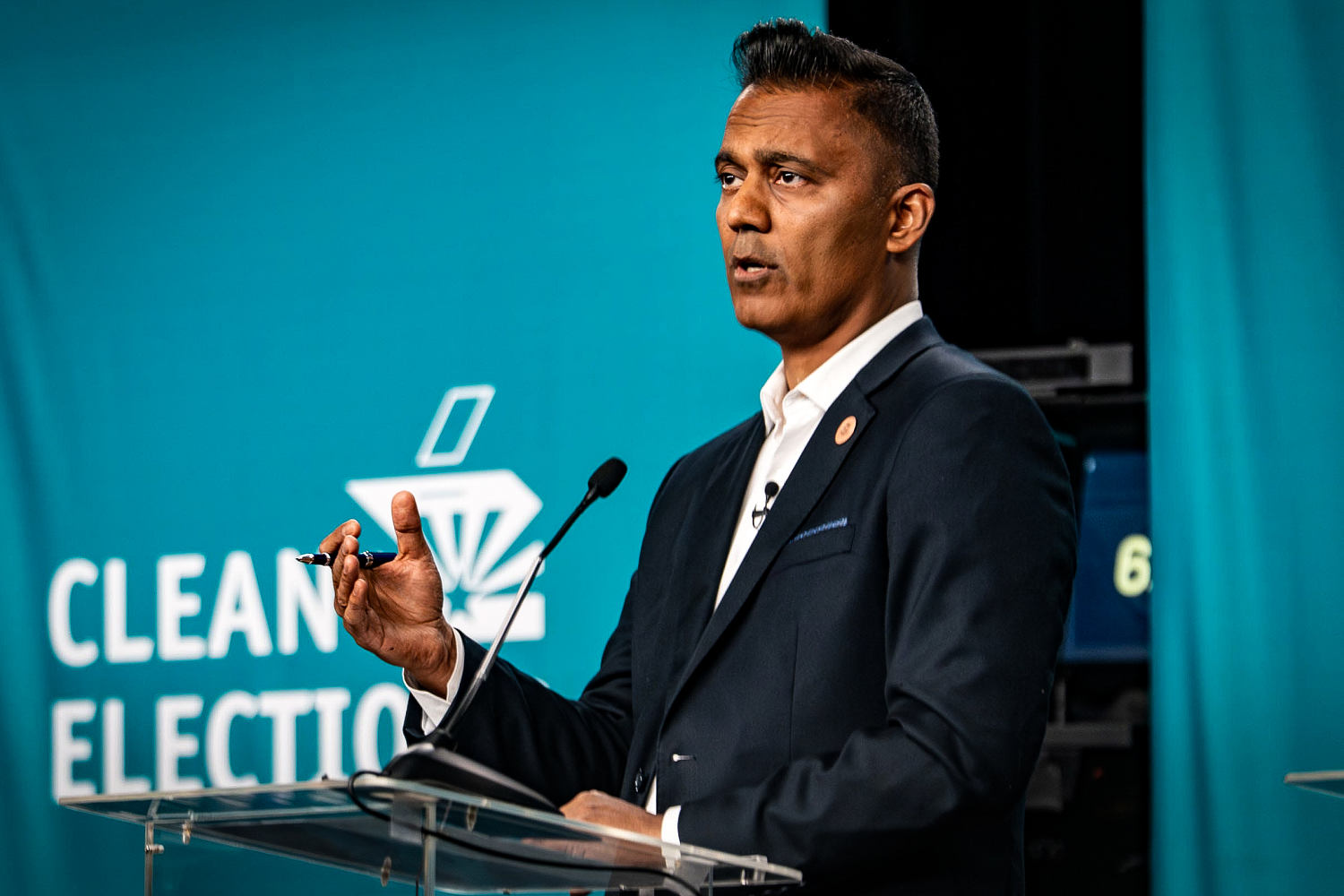
National Democratic leaders threw their weight, money, and machinery behind Marlene Galán-Woods in Arizona's 1st Congressional District. They thought they had the perfect formula: an establishment-friendly candidate, strong fundraising ties, and a moderate background aimed at pulling over suburban voters. Yet when the primary votes rolled in, former state lawmaker and emergency physician Amish Shah pushed ahead.
Party bosses in Washington keep applying old playbooks to shifting ground realities. Scottsdale and its surrounding suburbs aren't interested in top-down dictates from party headquarters. Voters inside competitive swing districts want ground-level engagement and proven local records, not national committee seals of approval.
Washington Directives Don't Dictate Local Primaries
The Democratic Congressional Campaign Committee (DCCC) made its bet clear early on. They backed Galán-Woods, a former news anchor whose late husband was a prominent Republican figure in Arizona politics. The theory made sense on paper: run someone who could easily talk to disgruntled moderate Republicans in affluent Maricopa County precincts.
Local voters saw it differently.
Shah didn't rely on national endorsements. He leaned into his ground game—knocking on thousands of doors, knocking them again, and pitching his record as an ER doctor and state representative. Voters remembered his previous run in 2024. They knew his name before national money started flooding local television airwaves.
When national party apparatuses step into local primaries, it often backfires. Primary voters tend to resist being told who is "electable" by consultants sitting two thousand miles away. They want to decide electability for themselves.
The Unique Nuance of Arizona's First District
Arizona's 1st Congressional District isn't a typical partisan stronghold. Anchored in Scottsdale and Paradise Valley, it features an educated, highly affluent, and fiscally conservative electorate that has slowly shifted away from MAGA-style populism. It's a district where small margins determine whole elections.
AZ-01 District Dynamics
├── Suburbs: Scottsdale, Paradise Valley, Northeast Phoenix
├── Electorate: Highly educated, high-income, independent-leaning
└── Key Battleground Focus: General election turnout among suburban moderates
Longtime Republican incumbent David Schweikert vacated the seat to run for governor, leaving the district wide open. That open-seat status escalated the stakes dramatically. Democrats see AZ-01 as a mandatory pickup if they want to secure a majority in the U.S. House. Republicans view it as a core fortress they can't afford to lose.
Galán-Woods offered a party-line appeal, but Shah tapped into a grassroots fatigue with Washington politics. Primary voters opted for the candidate who spent years building local name recognition rather than the candidate selected by national strategy boards.
Primary Performance Versus General Election Success
Establishment party leaders backed Galán-Woods largely over fears regarding general election electability. Their argument against Shah was straightforward: in 2024, he ran behind the top of the ticket in certain affluent precincts. Party operatives worried he wouldn't pull enough crossover Republican votes in November.
That argument misreads modern primary dynamics.
- Primary voters prioritize authenticity over theoretical polling matchups.
- Name recognition built through grassroots outreach outlasts short-term ad buys.
- Endorsements from Washington insiders can actually alienate swing-state voters suspicious of party bosses.
On the Republican side, primary voters selected Trump-backed former NFL kicker Jay Feely. That sets up a general election contrast between an ER doctor focused on healthcare and pragmatism against a celebrity candidate leaning on national party brand power.
What Other Campaigns Need to Learn
If you're running a campaign in a high-stakes swing district, relying on a national committee's blessing is no longer a silver bullet. Local voters notice when a campaign is generated inside D.C. boardroom strategy meetings instead of local community centers.
Focus on direct voter contact early. Build independent funding streams so national party decisions don't make or break your infrastructure. Focus on local issues—like healthcare access, inflation, and local development—rather than just talking about national party platforms.
Party leadership will always try to pick winners in primaries to smooth out general election paths. But as voters in Arizona's 1st District just proved, grassroots presence beats establishment preference every single time.
Track local precinct-level turnout data from this primary. Compare Shah's strong performance in Scottsdale neighborhoods with previous turnout figures to see where grassroots door-knocking yielded the highest returns. Use those metrics to guide your own field operations heading into the general election cycle.


