Cold.
That is the first thing you notice when a power grid dies in February, long before the headlines reach Brussels or Washington, long before diplomats begin drafting position papers on continental stability. The radiator stops ticking. Your breath turns to white mist inside your own living room, and the hum of the refrigerator—a sound so ordinary you never knew you loved it—vanishes into an eerie, heavy silence.
I remember standing in a darkened apartment block in eastern Europe during a winter blackout a few years ago, watching an elderly neighbor wrap her hands around a tin mug of lukewarm tea heated over a camping stove. She did not care about the phrasing of diplomatic communiqués. She cared about whether the people who promised to protect her border actually meant it, or whether her safety was merely a bargaining chip waiting to be traded away for a quiet life in another capital.
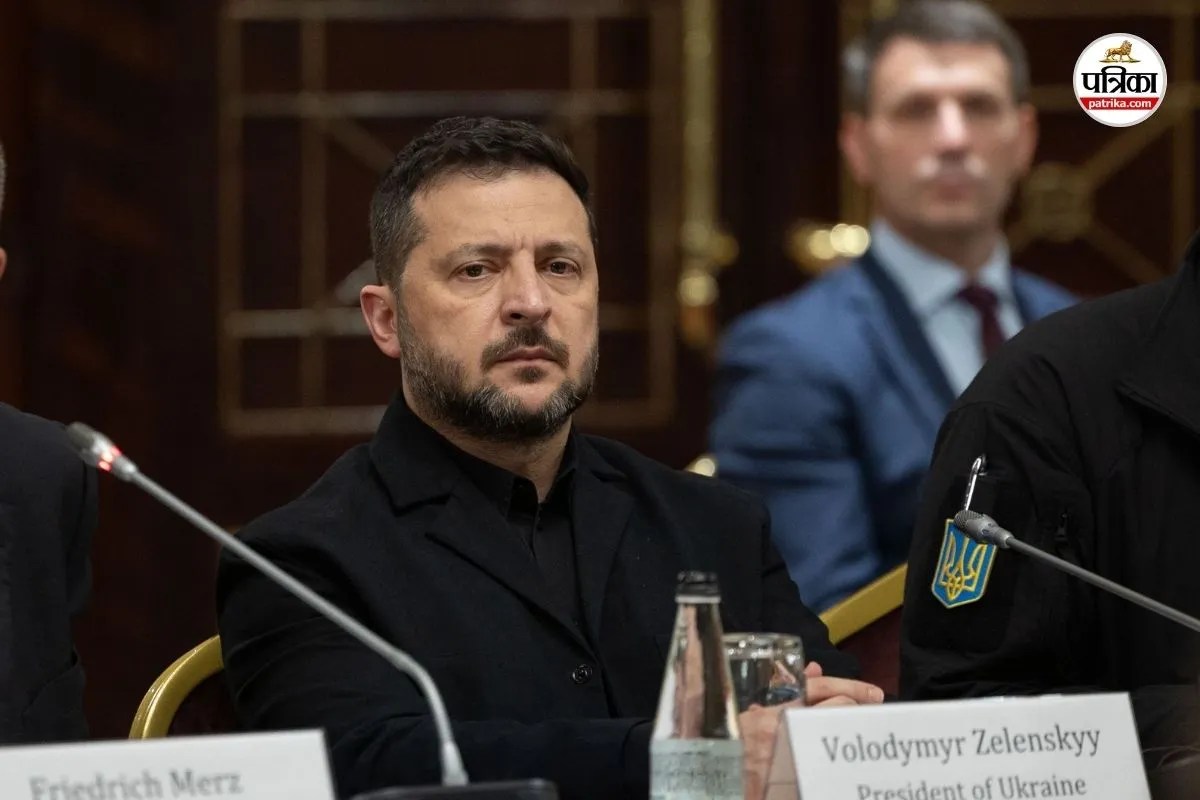
That is the human reality behind a warning issued by Ukrainian President Volodymyr Zelenskyy regarding proposals for a new security arrangement between Russia and Europe. According to public statements from the Ukrainian presidency and reporting on European diplomatic discussions, Zelenskyy cautioned European leaders that striking a separate security deal with Moscow would not bring lasting peace—it would be actively dangerous for the European Union itself.
To understand why a diplomatic agreement meant to calm tensions could actually ignite a far larger crisis, we have to step away from the conference tables and look at the invisible architecture holding modern Europe together.
The Architecture of a Broken Promise
Diplomacy often looks like clean ink on heavy cream paper, signed with fountain pens under crystal chandeliers. In practice, security agreements are only as strong as the willingness of the parties to bleed for them when the ink dries.
Consider a hypothetical scenario to illustrate what happens when deterrence becomes negotiable. Picture a homeowner in a quiet neighborhood—let us call her Elena—who notices a neighbor repeatedly knocking down the fence between their yards, claiming the ground beneath the grass belongs to him. Every few years, the neighborhood association steps in. Instead of rebuilding the fence and enforcing the boundary, they ask Elena to give up ten feet of her garden in exchange for the neighbor signing a formal pledge never to cross the new line. The neighbor signs. Two years later, he moves the stakes again, demanding the patio.
This is not merely a metaphor; it is the historical pattern that shapes Kyiv's skepticism toward new diplomatic frameworks with Moscow. When Ukrainian officials point to the danger of a Russia-Europe security deal, they are drawing directly from the ledger of the past three decades.
In 1994, Ukraine surrendered the world's third-largest nuclear arsenal under the Budapest Memorandum, receiving security assurances from Russia, the United States, and the United Kingdom in return for respecting its sovereignty and existing borders. Twenty years later, in 2014, Russian forces seized Crimea and ignited war in the Donbas. The Minsk agreements followed—complex diplomatic roadmaps brokered with European mediation, intended to freeze the conflict and restore order. Yet those agreements failed to prevent the full-scale invasion launched in February 2022.
For millions of Ukrainians, a security deal with the Kremlin is not an abstract diplomatic experiment. It is a lived memory of trusting paper over steel.
What Makes a Russia-Europe Deal So Tempting—and So Risky
Why, then, do whispers of a broader European security settlement with Russia keep resurfacing in Western policy circles?
Exhaustion.
War is expensive, politically draining, and terrifyingly unpredictable. Across European capitals, leaders face voters worried about inflation, energy prices, defense budgets, and the lingering fear that a regional war could spill across NATO borders. In that environment, the idea of a grand bargain—a structured security architecture that defines spheres of influence, limits troop deployments, and brings Moscow back into a predictable diplomatic framework—sounds seductively rational. It promises an off-ramp. It offers the illusion that the continent can return to the comfortable predictability of the early 2000s, when pipelines flowed uninterrupted and defense spending could quietly shrink.
Yet European security analysts and Baltic and Polish officials have echoed Zelenskyy's core concern: a deal negotiated over Ukraine's head, or one that legitimizes territorial conquest in exchange for temporary quiet, fundamentally alters the rules of the European order.
Think about what happens the morning after such an agreement is signed.
If Europe signs a security pact with Moscow that accepts altered borders or restricts Ukraine's right to choose its own alliances, the message sent across the continent is unmistakable: force works. If a nation with a large army and nuclear weapons can redraw maps by invading its neighbor and then negotiate a favorable security treaty with Western powers, the post-World War II prohibition against territorial conquest collapses.
Small and medium-sized European nations—from Estonia and Latvia to Moldova and Finland—suddenly face a chilling calculation. Their security no longer rests on inviolable international law or collective defense guarantees, but on whether larger powers decide their sovereignty is worth the cost of confrontation.
The Invisible Stakes Inside the European Union
When Zelenskyy warns that a Russia-Europe security deal would be dangerous for the EU, he is pointing to a vulnerability that lives inside Brussels itself: unity.
The European Union is not a single nation with one army and one reflex. It is a union of twenty-seven distinct democracies, each with its own history, economic pressures, and domestic politics. Keeping those twenty-seven governments aligned on sanctions, military aid, and energy independence has required extraordinary political effort.
A bilateral or multilateral security arrangement with Moscow would immediately drive a wedge straight through that consensus.
Consider how different capitals react to the Kremlin. For governments in Tallinn, Vilnius, or Warsaw, Russian military expansion is an existential threat measured in kilometers from their borders. For capitals further west or south, geographically insulated from the eastern flank, the threat often feels distant, secondary to economic stability or migration pressures.
Moscow has long understood how to exploit these fissures. A formal security dialogue between Russia and select European powers creates an immediate hierarchy of safety: some nations get bilateral assurances and economic normalization, while frontline states are left wondering whether their allies would actually honor Article 5 mutual defense commitments if tested in a gray-zone crisis.
Once doubt enters an alliance, deterrence evaporates. Deterrence is not built out of tanks and fighter jets alone; it is built out of certainty. An adversary stays behind its border only when it is 100 percent convinced that crossing it will trigger an overwhelming, unified response. Introduce a separate security treaty that signals Western eagerness to compromise, and that certainty drops to 60 percent—or 40 percent. In geopolitics, ambiguity is an invitation.
The Illusion of the "Frozen" Conflict
There is another, quieter danger embedded in talks of a European security settlement: the belief that freezing a war is the same thing as ending it.
In policy papers, a frozen conflict looks neat. Shooting stops along a line of contact. Monitors are deployed. Reconstruction funds are discussed. Headlines move on to other crises.
On the ground, a frozen conflict is a slow-burning fuse.
Imagine living in a town ten miles from a ceasefire line—a hypothetical community like thousands of real settlements across eastern and southern Ukraine. Schools operate in basements because nobody knows when shelling will resume. Investors will not build factories where artillery can reach. Young families pack their bags and leave for western Europe, draining the region of doctors, teachers, and engineers. Meanwhile, across the line, an occupying force uses the pause not to cultivate peace, but to rearm, fortify trenches, conscript local populations, and prepare for the next offensive when Western attention is distracted by an election cycle or a crisis elsewhere in the world.
Ukrainian officials have repeatedly argued that any security deal that leaves Russia in control of occupied territories while restraining European military support simply hands Moscow time to rebuild its depleted arsenals. Intelligence assessments from several European defense ministries—including those in Denmark, Germany, and the Baltic states—have similarly warned that Russia could reconstitute its conventional military capacity to pose a direct threat to NATO territory within several years if left unchecked.
From that perspective, a premature security pact does not buy Europe peace. It buys the Kremlin a breather.
Honest Doubts and the Weight of Uncertainty
It would be dishonest to pretend that rejecting a diplomatic deal carries no risk. Anyone who tells you there is a painless, guaranteed path forward in eastern Europe is selling fantasy.
Continuing to support Ukraine militarily and economically demands sustained sacrifice from European taxpayers. It requires European factories to churn out artillery shells at a pace not seen since the Cold War. It carries the constant, sobering risk of escalation with a nuclear-armed state—a reality that keeps responsible leaders awake at night in Berlin, Paris, and Washington alike.
To dismiss those fears as cowardice is to misunderstand the weight of leadership. Wanting peace is not a flaw; it is the baseline of human decency.
The hard, uncomfortable truth, however, is that peace cannot be conjured simply by signing a document with a counterparty that views treaties as tactical pauses rather than binding commitments. Real peace requires changing the aggressor's calculation so that renewed war becomes impossible or prohibitively costly.
What Genuine European Security Actually Looks Like
If a flawed security deal with Russia is the trap, what is the alternative?
History offers a clear answer, though not an easy one. Europe enjoyed its longest era of stability after 1945 not because adversaries signed gentle non-aggression pacts, but because Western democracies built integrated defense structures, credible deterrence, and clear red lines that left zero doubt about the consequences of aggression.
Today, that means reversing the sequence proposed by advocates of early accommodation. Security guarantees for Ukraine and the strengthening of Europe's own defense industrial base cannot come after a deal with Moscow—they are the prerequisite for any sustainable settlement.
When Europe invests in its own air defenses, ammunition production, and rapid-response forces, it stops negotiating from fear of winter blackouts or energy coercion. When Ukraine is equipped with the long-range capabilities and air shields needed to protect its cities and energy grid, the Kremlin's strategy of exhausting Western willpower begins to fail. Only when Moscow realizes that time is no longer on its side—that Europe is growing stronger, more unified, and more resolute with every passing month—does genuine diplomacy become possible.
Until that moment arrives, any grand security pact offered by the Kremlin is less like a bridge to peace and more like a Trojan horse wheeled straight through the gates of Brussels.
The Sound of the Radiator
Think back to that darkened apartment block in February, and the elderly woman warming her hands around a tin mug of tea.
Her life, and the lives of millions of ordinary people from Kharkiv to Helsinki, depends on a simple question: do borders still mean something, or do they belong to whoever brings the most artillery to the fence?
A signature on a piece of paper in a grand European hall will not keep the heat running in eastern Europe if the ink is backed only by wishful thinking. The quiet hum of a warm radiator in winter is never an accident—it is the sound of lines held firm, promises kept, and a continent that refused to trade its future for the comfort of a temporary lie.