Everyone from Washington think-tanks to local trade associations is having a collective meltdown over a single statistic. Russia now accounts for over half of India's crude imports. The Global Trade Research Initiative throws up its hands, warning New Delhi against making rapid cuts while simultaneously hyperventilating about economic dependency. The consensus narrative is predictable, exhausted, and fundamentally wrong.
The lazy crowd looks at a 52 percent market share and screams monopoly. They see a trap. They see New Delhi handing its energy sovereignty over to Moscow on a silver platter, trading one form of colonial dependency for another.
They are missing the entire architecture of modern commodity trading.
I have spent the better part of two decades watching western compliance officers and compliance-obsessed analysts misread supply chains. They look at spreadsheets through an ideological lens, assuming that massive percentages equal permanent political alignment. They do not understand how physical crude moves, how arbitrage works, or how pragmatism overrides panic in actual trading desks from Mumbai to Gujarat.
Let us dismantle the panic.
The Arithmetic of Arbitrage That Wall Street Refuses to See
When sanctions hit Russian Urals crude, Western refiners ran for the hills, clutching their pearls and self-sanctioning far beyond regulatory mandates. They created an artificial vacuum. India did not walk into a trap; India walked into a multi-billion-dollar discount bonanza created by Western myopia.
To understand why the 52 percent figure is a paper tiger, you have to look at how refineries actually operate. Refineries are not giant kettles that take any liquid you pour into them. They are chemically tuned machines optimized for specific sulfur levels, viscosities, and API gravities. Russian Urals happen to match the sweet spot for many complex Indian processing units.
When you buy crude at a thirty-dollar discount per barrel, you are not forming a geopolitical blood oath. You are engaging in rational corporate profit optimization. The moment that discount vanishes—the second freight rates, insurance costs, or taxation adjustments make Urals more expensive than Middle Eastern medium sours—Indian state-owned refiners and private giants like Reliance will drop Russian barrels faster than a bad startup pitch.
Markets do not care about flags. They care about crack spreads.
"A discount is a temporary incentive, not a permanent leash."
The Myth of Lock-In and the Reality of Floating Storage
The panic merchants love to talk about dependency as if India has chained its economy to a single pipeline running straight across the Eurasian steppe. That is historical illiteracy.
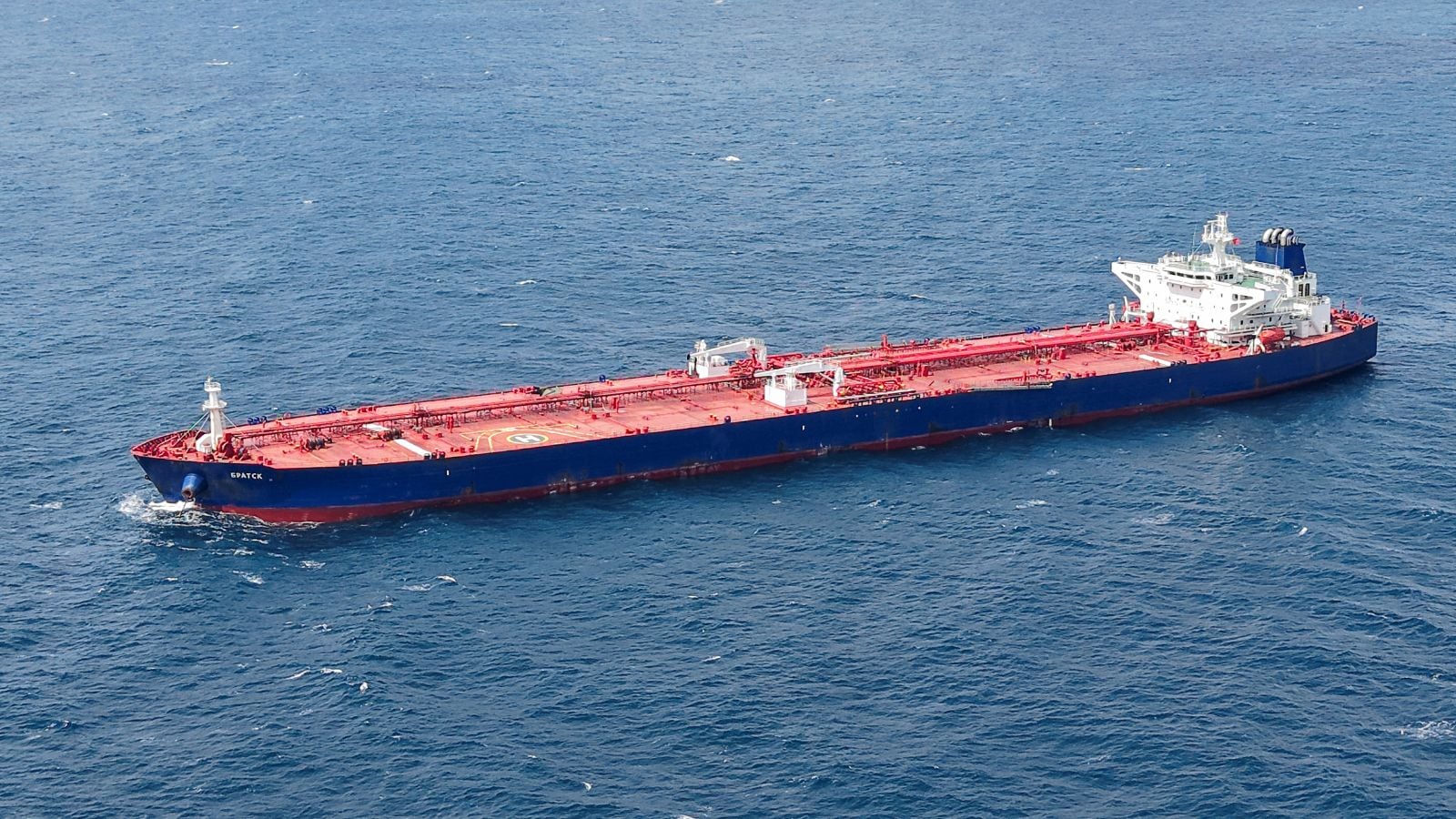
Most Russian crude arrives by sea. Sea routes can be rerouted in a single afternoon. If a tanker is halfway to Vadinar and the economic parameters shift, that vessel can steam toward alternative buyers in Asia or sit in floating storage until the economics correct themselves. The maritime logistics network built around shadow fleets, decentralized insurance pools, and non-dollar settlement mechanisms has made state-level energy blockades largely obsolete.
Imagine a scenario where Moscow attempts to weaponize its market share by cutting off supply to India tomorrow. What happens? Indian refiners pivot back to Iraq, Saudi Arabia, and the United States within forty-eight hours, absorbing higher input costs while global oil flows reorganize. Yes, margins would squeeze temporarily. No, the Indian economy would not collapse.
The reverse is also true. Russia needs India's hard currency and processing capacity infinitely more than India needs Russian feedstock. Moscow cannot easily bottle up its Siberian production without permanently damaging its wells through freeze-offs and reservoir collapse. Russia is structurally forced to sell. India is merely choosing the cheapest shelf in the supermarket.
Dismantling the GTRI Warning
The Global Trade Research Initiative released a brief suggesting that rapid cuts to Russian imports would hurt, but warning that staying at these levels invites Western secondary sanctions and long-term vulnerability.
This is defensive institutional positioning at its finest. It covers all bases so the authors can say "we told you so" no matter what happens.
Let us look at why their warning relies on flawed logic:
- The Secondary Sanction Phobia: The West cannot afford to sanction Indian refined products out of existence. If Europe bans diesel refined in Gujarat from Russian crude, European diesel prices will skyrocket past the pain threshold of voters already hostile to inflation. Europe is net-short on middle distillates. Indian refineries act as the essential laundering and processing valve that keeps European economies functioning without formally violating sanctions text. It is hypocritical, messy, and entirely functional.
- The Currency Illusion: Much is made of rupee-ruble trade complications. Analysts cry that India is accumulating pools of non-convertible rupees that Russia cannot spend. But savvy trading desks quickly adapted, utilizing third-country triangulation, dirhams, and yuan adjustments. Trade finds a liquid medium. Money flows like water through the path of least resistance.
- The Substitution Fallacy: The assumption that India is trapped because other suppliers cannot instantly replace 52 percent of its import basket ignores global supply elasticity. When prices spike, marginal production comes online from the Americas and West Africa.
The Real Risk Nobody is Talking About
While the chattering classes obsess over the Russian percentage, they are completely blind to the actual systemic risks facing India's energy corridor.
The danger is not geopolitical blackmail from the Kremlin. The danger is domestic infrastructural inertia and the blinding speed of the global energy transition colliding with legacy capital allocation.
India's domestic demand is surging faster than almost any major economy on earth. Urbanization, vehicle fleet expansion, and industrial electrification require an unprecedented volume of primary energy. By focusing entirely on where the crude comes from, analysts miss whether the refining sector can upgrade fast enough to handle petrochemical integration. The future of oil is not gasoline for sedans; it is polymers, plastics, and advanced materials.
If Indian refineries spend the next decade defending their right to buy cheap Russian crude instead of pivoting their capital expenditures toward deep conversion units and green hydrogen infrastructure, they will miss the actual industrial revolution happening underneath them.
You are worrying about the wrong decade.
The Unconventional Playbook for Energy Security
If you want to understand how a superpower-in-waiting actually secures its energy supply, look past the geopolitical theater. Here is what smart capital and state planners should be doing right now:
- Weaponize the Discount: Treat Russian Urals as a temporary arbitrage window to pad corporate balance sheets, then funnel those windfall profits directly into domestic renewable manufacturing and grid modernization. Do not let cheap oil mask the urgency of the transition.
- Diversify the Payment Rails: Push aggressively for multilateral commodity settlement mechanisms that bypass both the dollar hegemony and the ruble trap. Build sovereign redundancy into financial plumbing.
- Call the Bluff on Sanctions: Continue to buy what makes economic sense while keeping compliance firewalls pristine. Western regulators bark loudly about secondary sanctions, but they lack the administrative capacity and the political stomach to sanction the primary refiner of the Global South's fuel supply.
Stop treating international trade like a moral crusade. It is a ruthless, cold-blooded optimization engine. India is playing the board with ruthless pragmatism while Western pundits lose their minds over percentages on a spreadsheet.
Cut the panic. Follow the margins.
The map is not the territory.