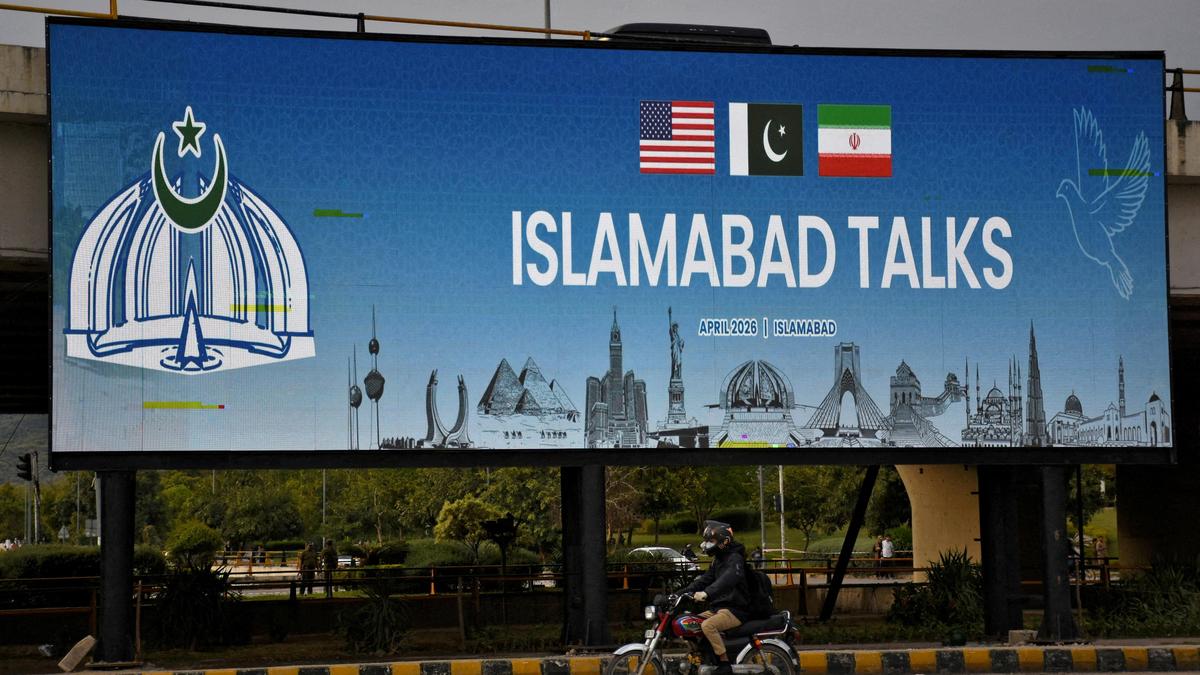
The press is currently swooning over the narrative that Islamabad is "preparing" to facilitate a new round of U.S.-Iran talks. It’s a comfortable story. It paints a picture of a regional middle-weight using its unique geography and shared borders to play the role of the global stabilizer. It suggests that with just enough Pakistani diplomacy, the decades-long frost between Washington and Tehran might finally thaw.
It is a total fantasy.
If you believe Pakistan is acting as a neutral arbiter out of a sense of regional duty, you haven't been paying attention to the last forty years of South Asian realpolitik. Islamabad isn't building a bridge; it’s building a shield. The "mediator" tag is a convenient geopolitical costume used to distract from internal instability and to extract concessions from both sides of the table.
The Myth of the Neutral Conduit
The standard analysis suggests that because Pakistan shares a 900-kilometer border with Iran and maintains a long-standing (if strained) security partnership with the United States, it is the natural choice for a back-channel.
This logic is fundamentally flawed. Neutrality requires a lack of skin in the game. Pakistan has more skin in this game than almost any other player. Every time an official in Islamabad "prepares" for talks, they aren't looking for a peace treaty; they are looking for a way to manage their own impossible balancing act.
Pakistan is caught in a vice between its massive debt obligations to Western-aligned institutions and its desperate need for Iranian energy and a stable western border. When they offer to mediate, they aren't helping the U.S. or Iran. They are trying to prevent themselves from being forced to choose a side—a choice that would be catastrophic for their domestic economy regardless of which way they leaned.
The Proxy Problem Nobody Mentions
You cannot be an honest broker when you are simultaneously a theater for the very conflict you claim to be solving.
For years, the U.S.-Iran tension has played out inside Pakistan’s own borders through sectarian proxy groups. To suggest that Islamabad can objectively steer a diplomatic ship while its own intelligence services are busy managing the fallout of Iranian influence and American counter-terrorism demands is laughable.
I have watched diplomats waste months on "preliminary frameworks" provided by regional intermediaries, only to realize those frameworks were designed to protect the intermediary's local assets rather than solve the core nuclear or sanctions issues. Pakistan’s involvement doesn't simplify the U.S.-Iran equation; it adds a third variable that makes the math impossible to solve.
The Economic Delusion
The "People Also Ask" section of the global consciousness usually focuses on whether this mediation will lead to the completion of the Iran-Pakistan (IP) gas pipeline.
Let's be brutally honest: the pipeline is a ghost.
Pakistan uses the "mediator" role to beg for sanctions waivers from Washington so they can finally tap into Iranian gas without getting crushed by U.S. financial penalties. Washington, in turn, uses the carrot of mediation to keep Islamabad from drifting too far into the orbit of the Beijing-Tehran axis.
It is a circular game of leverage.
- Pakistan pretends it can bring Iran to the table to avoid U.S. wrath.
- The U.S. pretends to value Pakistani mediation to keep a foot in the door of a nuclear-adjacent state.
- Iran plays along because any diplomatic noise reduces their isolation, even if it leads nowhere.
None of this is about peace. It’s about managing the status quo. If peace actually broke out, Pakistan would lose its primary source of geopolitical relevance with the State Department.
The Logistics of Failure
Consider the actual mechanics of these proposed talks. Real diplomacy between the U.S. and Iran—the kind that led to the 2015 JCPOA—happens in Oman, Switzerland, or directly in the shadows of New York hotels. It happens where there is bankable, neutral ground and a history of discreet, high-level financial infrastructure.
Pakistan offers none of that. Its economy is on a permanent life-support machine provided by the IMF. Its political structure is a revolving door of crises. Why would Tehran or Washington trust a mediator that is one domestic protest or one currency collapse away from a total change in foreign policy?
They wouldn't. And they don't.
They use Pakistan for "messaging." When Washington wants to send a stern warning to Tehran without the weight of an official cable, they whisper it to a general in Rawalpindi. When Tehran wants to signal a slight softening of their stance without looking weak to their hardliners, they mention it to a visiting Pakistani minister.
This isn't mediation. It’s a glorified postal service.
The Cost of the Charade
The danger in this "Pakistan as peacemaker" narrative is that it provides a false sense of progress. It allows the international community to check a box marked "Diplomatic Efforts Underway" while the actual underlying issues—uranium enrichment, regional hegemony, and ballistic missile programs—continue to accelerate.
We see this pattern every few years. A high-ranking Pakistani official makes a statement about "shuttle diplomacy." The markets react with a tiny, hopeful blip. A few months later, a border skirmish or a new set of sanctions reminds everyone that nothing has changed.
The downside of my contrarian view is grim: it means there is no easy regional fix. It means the path to a U.S.-Iran settlement doesn't run through Islamabad. It’s a harder pill to swallow than the "helpful neighbor" story, but it’s the only one grounded in reality.
Stop Asking the Wrong Questions
The media asks: "Can Pakistan successfully bring both sides to the table?"
The real question is: "Why are we still pretending that a country struggling for its own internal survival has the bandwidth to resolve a forty-year ideological war between a superpower and a regional revolutionary state?"
The answer is that we love the theater of it. We love the idea that there is a secret key to the Middle East locked away in the vaults of the Pakistani Foreign Office.
There isn't.
The Reality of the "New Round"
If you see headlines about Pakistan "preparing" for talks, read it for what it actually is: a press release for the IMF and a signal to domestic voters that the country is still a "Major Non-NATO Ally" that matters on the world stage.
If Washington actually wanted to talk to Tehran, they have the phone numbers. They don't need a middleman who is currently trying to figure out how to pay their own electricity bills.
The next time an official suggests that Islamabad is the linchpin of Persian Gulf stability, look at the data. Look at the history of failed initiatives. Look at the fundamental lack of trust between the three parties.
Then, stop waiting for a breakthrough that was never on the menu.
The "mediation" is the destination, not the path. As long as they are "mediating," they are relevant. If they ever succeeded, they would be redundant. And in the world of high-stakes diplomacy, redundancy is a death sentence.
Don't buy the hype. The talks aren't starting because Pakistan is a master of peace; they are "starting" because everyone involved needs the cover of a process to hide the fact that they have no intention of changing.
Go look at the border. Look at the sanctions list. Look at the empty pipelines.
That is the only truth you need.