A young man in a worn winter jacket sits in a brightly lit pickup point in Rostov-on-Don. Outside, the rain turns cold dust into grey slush. Inside, cardboard boxes stack to the ceiling, smelling of freshly printed tape and damp paper. He isn't waiting for a smartphone or a designer sweater. His brother is thirty miles past the border, crouching in a muddy trench near Donetsk, waiting for a specific brand of thermal imaging scope, three packs of lithium batteries, and a pair of water-resistant combat boots.
The transaction took four minutes on a phone screen. No military quartermaster was involved. No official defense procurement channel signed off on the invoice. Just a credit card, a civilian logistics app, and a delivery driver driving an unmarked van.
For decades, military strategists drew maps with red arrows pointing at ammunition depots, railway hubs, and fuel refineries. Strike those, the textbooks said, and an army starves. But modern warfare found a new, quiet spine. It runs through civilian e-commerce giants—the digital marketplaces that supply everyday citizens with toaster ovens by day and frontline units with drone components by night.
When analysts talk about "Russia’s Amazon"—sprawling digital platforms handling millions of orders daily—they often focus on consumer spending and retail metrics. But under the weight of war, these platforms transformed into something far more critical: an informal, hyper-efficient military quartermaster operating in plain sight.
The Invisible Quartermaster
To understand how a civilian shopping app becomes a pillar of war, look at the supply chain of an infantry squad in 2026.
Standard state logistics are notoriously slow. Bureaucracy demands paperwork, approvals, and months of delay before equipment reaches the front lines. But volunteers, families, and soldiers themselves bypassed the state entirely. They turned to the fastest delivery networks in the country.
Need micro-drones for reconnaissance? Order a dozen on a commercial marketplace. Need rugged power banks to keep radio gear alive? They arrive at a regional pickup point in forty-eight hours. Need specialized radios, camouflage nets, tactical vests, or medical tourniquets? The digital storefront lists them all, complete with user reviews and next-day shipping.
This isn't a shadow economy. It is the primary economy, adapted for survival and conflict.
+-------------------------------------------------------------------+
|               THE DUAL-USE LOGISTICS STREAM                       |
+-------------------------------------------------------------------+
|  Civilian Tech & Warehouses  --->  Fast Regional Transport        |
|  (Micro-drones, batteries,        (Commercial pickup points near  |
|   thermal optics, boots)           border regions)                |
|                                         |                         |
|                                         v                         |
|                               Volunteer Networks                  |
|                                         |                         |
|                                         v                         |
|                               Frontline Deployment                |
+-------------------------------------------------------------------+
By relying on these private networks, military operations gain a level of speed that traditional supply chains cannot match. A drone pilot loses his equipment at dawn; by evening, a replacement is paid for by a crowd-funded campaign and dispatched via a commercial courier.
It creates a fragile paradox. The very speed that keeps frontline units supplied depends entirely on the stability of digital infrastructure, commercial warehouses, and payment gateways.
The Chokepoint in the Cloud
Dismantling a traditional supply line requires heavy munitions, high-risk air sorties, and physical destruction. Dismantling a digital supply line requires a totally different toolset.
Consider what happens when the primary e-commerce ecosystem stumbles.
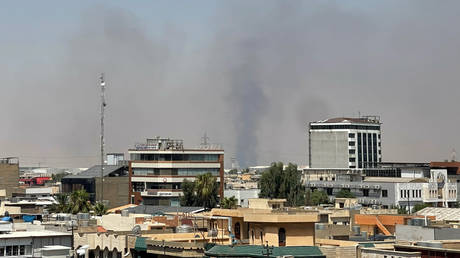
It begins quietly. A server cluster in Moscow goes dark. Regional distribution centers lose connection to their inventory databases. Automated sorting hubs freeze, their conveyor belts grinding to a halt as millions of barcode scans bounce off dead internal networks.
To an average city dweller, it looks like a temporary annoyance. The app won't load. The pickup notification doesn't arrive. A package containing a pair of sneakers is delayed.
But to the volunteer driver waiting at a distribution hub near the border, the impact is instant and severe. The thermal optics, the drone parts, the cold-weather gear—all trapped behind frozen digital gates.
Physical Supply Line Target:   [Rail Line]  ---> High Explosives Required
Digital Supply Line Target:    [Data Center] ---> Cyber Disruption / Logistics Paralysis
When cyber operations or targeted strikes hit these civilian logistics networks, the damage ripples outward far beyond the computer screens. It creates a sudden, suffocating bottleneck. Without the ability to track, sort, and dispatch millions of small packages daily, the informal military supply chain collapses back into the slow, grinding machinery of state bureaucracy.
The Human Cost of Disrupted Signals
The true vulnerability of this system isn't found in server racks or logistics code. It is felt in the human reality on both sides of the line.
Imagine the civilian population in major urban centers like Moscow or Saint Petersburg. For years, domestic life carried on under a thin veneer of normalcy. You order coffee, you buy appliances, you track your package on a clean, colorful interface. The war is something that happens on television, distant and abstract.
Then the digital floor gives way.
When the platforms that run daily life go dark, the illusion of distance vanishes. The inability to buy basic goods, the sudden collapse of delivery networks, and the failure of digital payment systems bring the physical cost of conflict directly into the living rooms of ordinary citizens. It turns an abstract geopolitical event into an immediate, personal crisis.
Meanwhile, on the front line, the silence is physical. A drone unit sitting in a tree line near Kupyansk doesn't care about corporate revenue or cloud infrastructure. They only know that the box of replacement rotors they were promised on Tuesday isn't coming. They know that without those small plastic blades, their eyes in the sky are blind.
The war of attrition is no longer just about artillery shells produced in heavy foundries. It is about the friction introduced into the daily routines of millions of people—the soldiers waiting for gear that never leaves the warehouse, and the civilians realizing that the digital walls protecting their normal life are far thinner than they believed.
The Fragile Architecture
We often treat modern technology as weightless, floating effortlessly in clouds and applications. But every click of an order button sets off a cascade of physical events: a diesel truck starts its engine, an automated arm swings across a concrete floor, a worker steps up to a sorting bin.
When strategy shifts to target these interconnected networks, it proves that the most dangerous weapon against a modern state isn't always a missile aimed at a fort. Sometimes, it is the quiet removal of the digital pins that keep the wheels of daily existence turning.
The young man in Rostov-on-Don stands up from the wooden bench in the pickup office. The clerk behind the counter shakes her head, staring at a frozen monitor that refuses to load the database.
He steps back out into the cold rain, his hands empty. Thirty miles away, the trench remains dark, and the rain keeps falling.