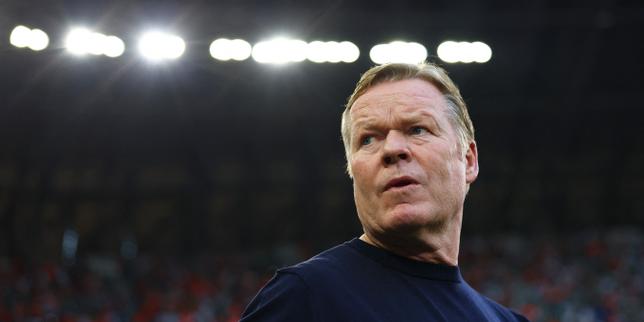
The football media is running its standard playbook. Ronald Koeman steps down from his post, racist abuse is reported within the Dutch national team ecosystem, and the pundits immediately pivot to a familiar, comfortable narrative. They blame toxic fan culture. They wring their hands over internet trolls. They treat the manager’s departure and the systemic rot as two separate, unfortunate coincidences.
They are completely wrong. Meanwhile, you can explore other stories here: Why England Should Be Terrified of DR Congo.
The lazy consensus wants you to believe that European international football is a pristine meritocracy occasionally polluted by bad actors. The reality is far uglier. The dual crises of Koeman’s exit and the racial abuse directed at Oranje players are not isolated incidents; they are structural symptoms of an identical disease. European football associations are stuck in a cycle of archaic leadership that breeds tactical stagnation on the pitch and institutional cowardice off it.
Stop looking at the social media comments. Look at the boardrooms. To explore the complete picture, check out the detailed report by Yahoo Sports.
The Koeman Fallacy: Why Mediocrity is Cyclical
When a high-profile manager like Ronald Koeman leaves a national team, the press treats it like a sudden tragedy or a shocking twist. It isn't. It is the predictable outcome of "heritage hiring"—the toxic practice where football federations select managers based on their playing resume from 1998 rather than their tactical innovations in 2026.
I have spent decades analyzing the structural shifts in European football governance. I have watched federations waste golden generations because they confuse nostalgia with a sporting blueprint. The KNVB (Royal Dutch Football Association) has institutionalized this failure.
Let's dissect the actual mechanics of the Dutch tactical decline. For years, the Netherlands coasted on the laurels of Total Football—a system predicated on universal spatial awareness, fluid positioning, and intense pressing. But modern international football has evolved. It is dictated by low-block midfields, rapid transitional triggers, and highly specialized micro-tactics.
Koeman’s tactical framework relied on individual brilliance to bail out structural deficiencies. When you rely on a few elite players to solve systemic structural flaws, you don’t just lose matches; you fracture the squad. The burden of failure is never distributed evenly.
The Cowardice of the "Statement" Culture
While the media focuses on the shock of a managerial vacancy, the report of racist abuse against Dutch players is met with the standard corporate response: an infographic on Instagram, a generic hashtag, and a promise to "investigate."
This is where the mainstream narrative completely falls apart. The press treats online racism as an external force invading the game. It isn't an invasion. It is an output of the system.
When an association prioritizes corporate compliance over player protection, they create an environment where minority players are viewed as assets when they win, and targets when they lose. Look at the data from major tournaments over the last five years. Racial abuse spikes predictably after tactical failures. Why? Because weak tactical systems expose players on the pitch, and weak institutional systems expose them off it.
If a federation actually cared about eradicating this behavior, they wouldn't issue press releases. They would walk off the pitch. They would forfeit matches. They would pull sponsorships from platforms that refuse to verify user identities. But they won’t. Because forfeiting a match costs television revenue, and standing up to tech giants risks commercial partnerships.
The KNVB, much like UEFA, operates on a model of risk mitigation, not moral leadership. They treat racism as a public relations crisis to be managed, rather than an existential rot to be excised.
Dismantling the "People Also Ask" Delusions
The public discourse surrounding this crisis is warped by fundamentally flawed assumptions. Let's address the questions people are actually asking, and strip away the comforting lies.
Did Ronald Koeman resign because of the squad’s internal issues?
No. Managers of Koeman's echelon do not resign out of moral objection to systemic issues. They resign because their tactical currency has expired, the locker room has tuned out their outdated training ground methods, and they want to preserve their market value before the inevitable sacking occurs. Blaming "internal squad tension" is a convenient shield. It allows the manager to exit with his reputation intact while leaving the players to deal with the fallout of a broken system.
How can the KNVB stop the abuse directed at national team players?
By fundamentally shifting the power dynamic. Right now, players are expected to endure the abuse, report it to a toothless committee, and focus on the next match. That paradigm must be broken. The players' union should hold veto power over match participation. If the federation cannot guarantee a safe working environment—which includes the digital footprint surrounding the match—the squad should refuse to play.
The downside to this contrarian approach is obvious: it will cause financial chaos. It will alienate sponsors. It will result in point deductions from UEFA. But until the financial cost of bigotry exceeds the financial cost of disruption, nothing changes.
The Failure of Modern Football Governance
The crisis in Dutch football is a mirror for the sport at large. We are witnessing the collapse of the traditional international football model. Federations are structured like mid-century government bureaucracies, while the sport itself operates as a multi-billion-dollar entertainment industry.
Consider the sheer tactical regression of international football compared to the club game. Elite club managers spend 300 days a year drilling hyper-specific geometric patterns into their squads. International managers get a few weeks a year to throw together a coherent strategy. Because their time is limited, they rely on culture, national pride, and hierarchy.
This reliance on hierarchy is exactly why old-school managers fail, and it is exactly why systemic issues fester. In a rigid hierarchy, dissent is viewed as mutiny. When minority players speak up about the hostile environments they face, they are frequently told not to "disturb the peace" of the squad. The desire for a harmonious locker room becomes an excuse to silence the victims of systemic failure.
We see this pattern repeated across Europe. It is a cycle of predictable outrage, superficial fixes, and absolute structural inertia.
Stop Demanding Better Managers. Demand Better Institutions.
The football world will now spend weeks debating who should replace Koeman. They will throw out names of former legendary players. They will argue about whether the next coach should play a 4-3-3 or a 5-3-2.
None of it matters.
If you replace an outdated manager but leave the underlying institutional architecture untouched, you are simply resetting the timer on the next explosion. The next manager will face the same tactical deficits, rely on the same corporate-approved platitudes, and fail the same players when the pressure mounts.
The Dutch national team does not need a tactical tune-up. It needs an institutional demolition.
Clean out the boardroom. Strip the legacy executives of their unearned authority. Give the players actual, legally binding governance over their working conditions. Until that happens, every victory is a fluke, and every crisis is completely manufactured.
Turn off the pundits. Stop buying the shirts. Stop pretending that changing the man on the touchline fixes the rot in the foundation.