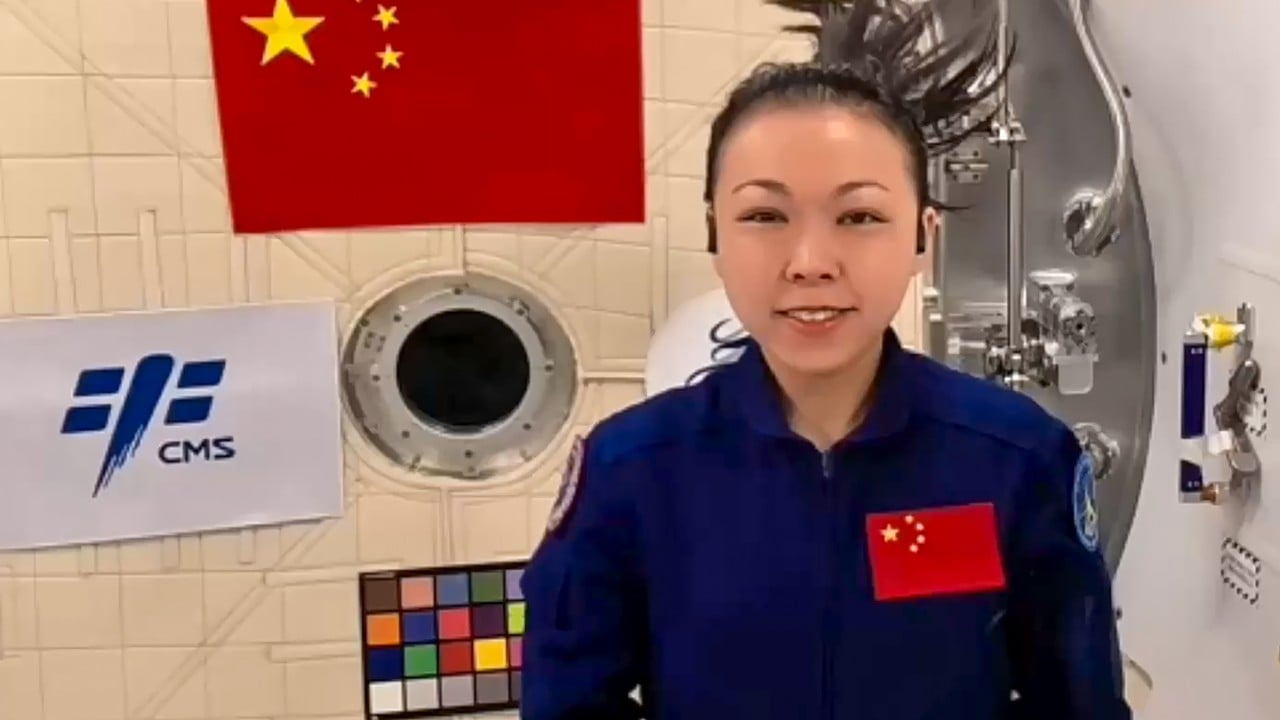
We interrupt our regularly scheduled worship of celebrity astronauts for a dose of reality. When headlines erupt over spacefarers beaming holiday greetings back to anxious crowds below, the mainstream media treats it like a spiritual awakening. The narrative writes itself: humanity transcends its terrestrial bounds, reaching across the void to share warm tidings during cultural festivals like the Mid Autumn Festival.
It is emotional comfort food. And it is entirely designed to distract you from the structural ledger of what orbital programs actually cost.
Let us dismantle the lazy consensus. The common narrative insists that symbolic gestures from low Earth orbit unify populations, inspire youth, and justify astronomical public expenditures through cultural resonance. We are told that watching someone wave in zero gravity brings us closer together.
I have spent decades watching aerospace budgets bleed dry while public infrastructure rots. I have seen policymakers trade tangible civic investment for expensive orbital photo-ops. The truth nobody in the traditional press wants to print is that sentimental broadcasts from the thermosphere are the ultimate bread and circuses. They cost millions of dollars per minute of operational overhead, yet they yield zero scientific return while acting as public relations shields for bloated state budgets.
The Economics of Orbital Sentimentality
To understand why a holiday greeting from space is an exercise in fiscal sleight of hand, look at the logistics. Every kilogram lofted past the Karman line demands a terrifying expenditure of fuel, engineering hours, and redundant life support systems. When an astronaut spends hours setting up lighting, aligning communication relays, and practicing a 60-second holiday message for terrestrial television, you are funding the most expensive vanity broadcast in human history.
Mainstream commentators frame these moments as milestones of accessibility. They argue that bringing space closer to ordinary citizens democratizes the cosmos. That argument collapses under the weight of basic math.
Imagine a scenario where the exact capital required to maintain a permanent orbital platform for a decade was instead funneled directly into urban public transit or regional water security. The romanticism of the void evaporates the moment you check the balance sheet. Space agencies do not broadcast holiday wishes out of pure altruism; they do it because public relations keeps the appropriations bills funded. If citizens realized that their tax dollars were primarily buying expensive postcard deliveries, political support would fracture.
Why Cultural Symbolism Masks Structural Decay
The Mid Autumn Festival is about harvest, community, and gathering under the glow of a full moon. It is an ancient terrestrial tradition rooted in agriculture and family. Inserting a pressurized tin can floating four hundred kilometers overhead into a festival about earthly soil and harvest is a category error of monumental proportions.
We do not need orbital validation to celebrate our heritage. Yet, media outlets breathlessly report on these messages as if the moon landing somehow upgraded our cultural traditions. This is not progress. It is displacement. We substitute proximity to actual community with vicarious participation in a high-tech corporate state spectacle.
Let us look at the technical reality of human spaceflight outside of the PR department. The vast majority of time spent on orbital outposts is maintenance, life support management, and basic physiological survival against muscle atrophy and radiation. When an agency pauses critical operational routines to stage a photogenic holiday broadcast, they are prioritizing optics over mission integrity.
I have watched public relations teams orchestrate these exact moments. The scripts are vetted for maximum emotional pull. The camera angles are chosen to emphasize fragility, isolation, and unity—classic psychological triggers designed to bypass critical thinking. It works brilliantly on television. It fails completely when measured against societal return on investment.
The Counter-Intuitive Truth About Inspiration
The primary defense offered for expensive space theatrics is the inspiration factor. The claim is simple: children see an astronaut waving from orbit, and they study engineering.
Data does not support this linear fantasy. Inspiration is cheap; institutional support is scarce. A child does not need a taxpayer-funded orbital greeting to pick up a calculus textbook. They need functional schools, reliable internet access, and mentors who are paid a living wage. We use the excuse of inspiring the next generation to justify massive expenditures on projects that primarily serve geopolitical posturing and military-industrial contracting.
If we genuinely wanted to inspire youth toward scientific literacy, we would flood primary education budgets with cash instead of launching multi-million-dollar communication arrays designed to transmit seasonal greetings.
Stop confusing technological capability with moral or cultural advancement. The ability to bounce a video signal off a satellite does not make a society more enlightened, just as shouting across a canyon does not make you a philosopher.
The Real Cost of Looking Up
When we fixate our gaze upward for emotional nourishment, we neglect the ground beneath our feet. The problems worth solving right now are stubbornly terrestrial. Climate adaptation, urban resilience, clean energy distribution, and educational equity do not get solved by pointing a camera at the horizon and wishing everyone a happy holiday.
The next time you see a headline about a stellar broadcast bringing a nation together, look past the sentiment. Ask who paid for the bandwidth. Ask what experiments were delayed so the crew could rehearse their lines. Ask why we feel the need to validate our most ancient human celebrations with the most expensive machinery ever built.
True progress is unglamorous. It happens in mundane laboratories, municipal planning offices, and community centers where nobody is filming for the evening news. Abandon the orbital fairy tale. Fix the ground floor first.


