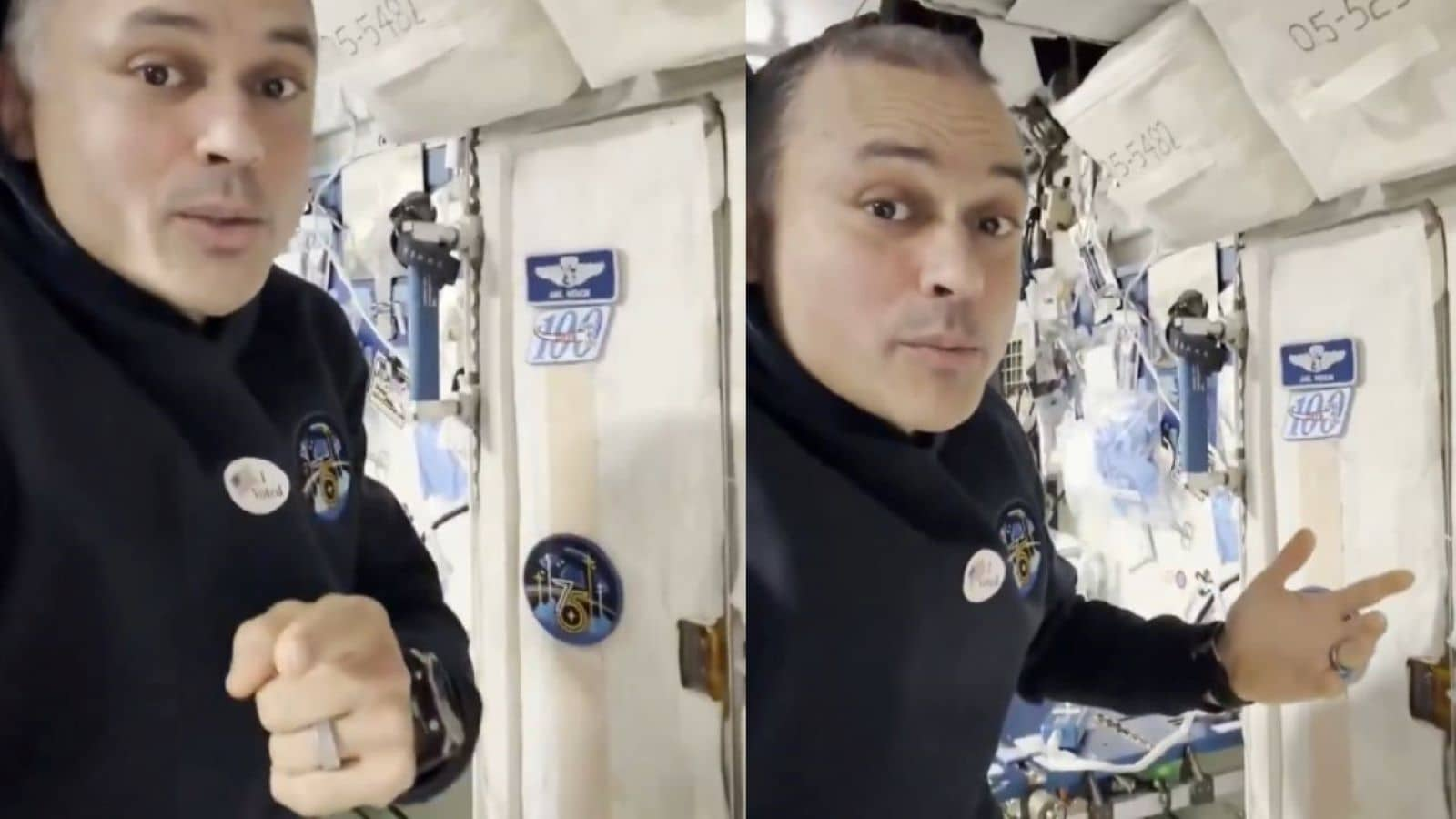
Casting a ballot from Low Earth Orbit is not a ceremonial gesture; it is a tightly regulated, end-to-end cryptographic and logistical operation governed by state law and federal telecommunications infrastructure. When NASA astronaut Anil Menon participated in the United States midterm elections from the International Space Station, the event demonstrated the resilience of absentee voting architecture under extreme physical constraints. Most coverage treats orbital voting as a human-interest novelty. In reality, it is a case study in statutory adaptation, air-gapped digital transmission, and chain-of-custody verification.
The Statutory Foundation of Extraterrestrial Enfranchisement
Before a single bit of election data leaves Johnson Space Center, the entire process depends on a specific legal mechanism. In the United States, elections are administered at the state and county levels, not by a centralized federal authority. Because NASA astronauts are predominantly based at the Johnson Space Center in Houston, Texas, the legal bottleneck historically resided in the Texas Election Code. For a different perspective, see: this related article.
Prior to 1997, Texas law required absentee ballots to be mailed via physical post or delivered in person. An astronaut in orbit could not satisfy either condition. To resolve this, the Texas Legislature passed House Bill 2070 in 1997, establishing a formal procedure for a person who is on a spaceflight to vote by electronic transmission.
This legal framework rests on three operational pillars: Further reporting on this matter has been shared by The Guardian.
- Residency Anchoring: Astronauts must maintain legal residency in a specific county (typically Harris, Brazoria, or Galveston County for Houston-based personnel) and register as absentee voters using the Federal Post Card Application (FPCA).
- Designation of Exception: The law explicitly classifies spaceflight as a qualifying condition that permits the use of secure electronic transmission in place of physical mail.
- County-Level Execution: The responsibility for generating, transmitting, and tabulating the ballot remains strictly with the local county clerk's office, ensuring that federal spaceflight operations do not supersede local election sovereignty.
Without this state-level statutory carving, NASA's technical capabilities would be legally irrelevant. The agency acts solely as a secure courier, never as an election administrator.
The Three-Stage Transmission Architecture
The movement of a ballot from a county clerk's office in Texas to an astronaut aboard the International Space Station—and back again—follows a strict, unidirectional-then-bidirectional data pipeline. The system is designed to balance two competing priorities: voter secrecy and transmission integrity.
Stage 1: Ballot Generation and Encryption
The process begins approximately one year before launch, when an astronaut selects which elections they intend to participate in while in orbit. Six months prior to the election, the astronaut receives a standard Federal Post Card Application. Once the county clerk's office verifies the voter's eligibility, the clerk generates a digital, fillable PDF ballot specific to the astronaut's precinct.
To prevent interception or tampering, the county clerk's office assigns unique credentials to the astronaut. These credentials are sent separately from the ballot itself, establishing a basic two-factor authentication model.
Stage 2: The Uplink via Mission Control
The digital ballot is transmitted from the county clerk's office to the Mission Control Center (MCC) at Johnson Space Center. From there, NASA's Space Communications and Navigation (SCaN) program takes over. The file is routed through the Tracking and Data Relay Satellite System (TDRSS), a network of geosynchronous satellites that provides near-continuous communication with the International Space Station.
The ballot arrives on the station's local area network as an encrypted email attachment. The astronaut accesses it on a standard crew laptop, which operates within a hardened, segmented network environment isolated from the station's critical flight control systems.
Stage 3: Execution and Downlink
Once the astronaut completes the PDF ballot on the crew laptop, they input their unique credentials to lock and encrypt the file. The completed ballot is then transmitted back down through the TDRSS network to Mission Control in Houston.
At this juncture, NASA personnel do not open, read, or process the file. The encrypted PDF is forwarded directly back to the originating county clerk's office. Only the county clerk possesses the specific decryption key or password required to open the ballot, print it onto a physical paper form, and feed it into the official optical scanner alongside standard mail-in ballots.
Chain of Custody and Security Trade-Offs
Any electronic voting system introduces attack surfaces that do not exist in paper-based balloting. In orbital voting, the primary vulnerabilities are not at the satellite link level—which is heavily encrypted for command-and-control telemetry—but at the endpoints.
- The PDF Vulnerability: Standard PDF files are not inherently designed as high-security voting instruments. The system relies on the isolation of NASA's internal network and the physical security of the county clerk's receiving terminal.
- The Secrecy Compromise: Because the county clerk must manually print the decrypted digital ballot and feed it into a tabulator, absolute anonymity is technically impossible at the moment of transcription. The clerk knows the identity of the sender. The system relies on statutory oath and procedural separation—the same trust model applied to military personnel voting via email or fax from combat zones under the Uniformed and Overseas Citizens Absentee Voting Act (UOCAVA).
- Latency and Bandwidth Constraints: While the ISS has significantly higher bandwidth than early orbital platforms, crew time and downlink windows are strictly rationed. Voting is treated as a low-priority payload, scheduled during off-duty hours to avoid interfering with scientific operations or station maintenance.
The system works not because it is technologically unbreakable, but because the sample size is microscopic. Securing a single ballot—or a handful of ballots per election cycle—against state-level actors requires far less overhead than securing millions of civilian endpoints.
Operational Integration for Crew Members
For an astronaut like Anil Menon—a physician, former SpaceX medical director, and NASA astronaut—participating in a midterm election requires deliberate scheduling. Crew members aboard the ISS operate on Coordinated Universal Time (UTC), with every minute of their workday mapped by flight planners on the ground.
Astronauts are given the flexibility to cast their ballots during their personal time, typically on weekends or after their scheduled 12-hour workdays. The process takes roughly 15 to 30 minutes, depending on the length of the local ballot and the stability of the satellite link.
The psychological and institutional value of this process outweighs its operational cost. Long-duration spaceflight isolates crew members from terrestrial civic life. Maintaining the ability to participate in local governance reinforces the principle that astronauts remain active citizens, not detached agents operating outside the social contract.
The Scalability Limit of Orbital Voting
As commercial spaceflight expands and the number of humans in Low Earth Orbit increases, the current bespoke model will hit a scaling wall. The Texas House Bill 2070 framework was designed for a handful of government employees working on a single, government-operated station.
When private citizens, commercial researchers, and international tourists spend months aboard private stations—such as those planned by Axiom Space, Blue Origin, or Starlab—the current system will break down for three reasons:
- Jurisdictional Fragmentation: Private astronauts will not all be residents of Houston, Texas. Many will hail from states that explicitly prohibit electronic ballot return, even for overseas military personnel.
- Network Ownership: Commercial stations will rely on private communications networks (such as SpaceX's Starlink or commercial optical relays) rather than NASA's TDRSS. County clerks have no legal or technical framework to verify the chain of custody across private commercial satellite constellations.
- Volume: Manual decryption and printing by a county clerk's office is viable for three astronauts. It is an administrative bottleneck for three hundred.
Strategic Forecast for Space-Based Civic Infrastructure
The current orbital voting mechanism is a functional stopgap, not a permanent architecture. To prevent the disenfranchisement of a growing off-world workforce, state legislatures and federal election bodies must decouple spaceflight voting from NASA's proprietary infrastructure.
The necessary evolution requires standardizing end-to-end verifiable (E2E-V) cryptographic voting protocols across all 50 states for UOCAVA-eligible voters, explicitly expanding the definition of "overseas" to include orbital and lunar environments. Until that statutory and cryptographic standardization occurs, voting from space will remain a privilege restricted to government astronauts who happen to claim residency in the right Texas county.