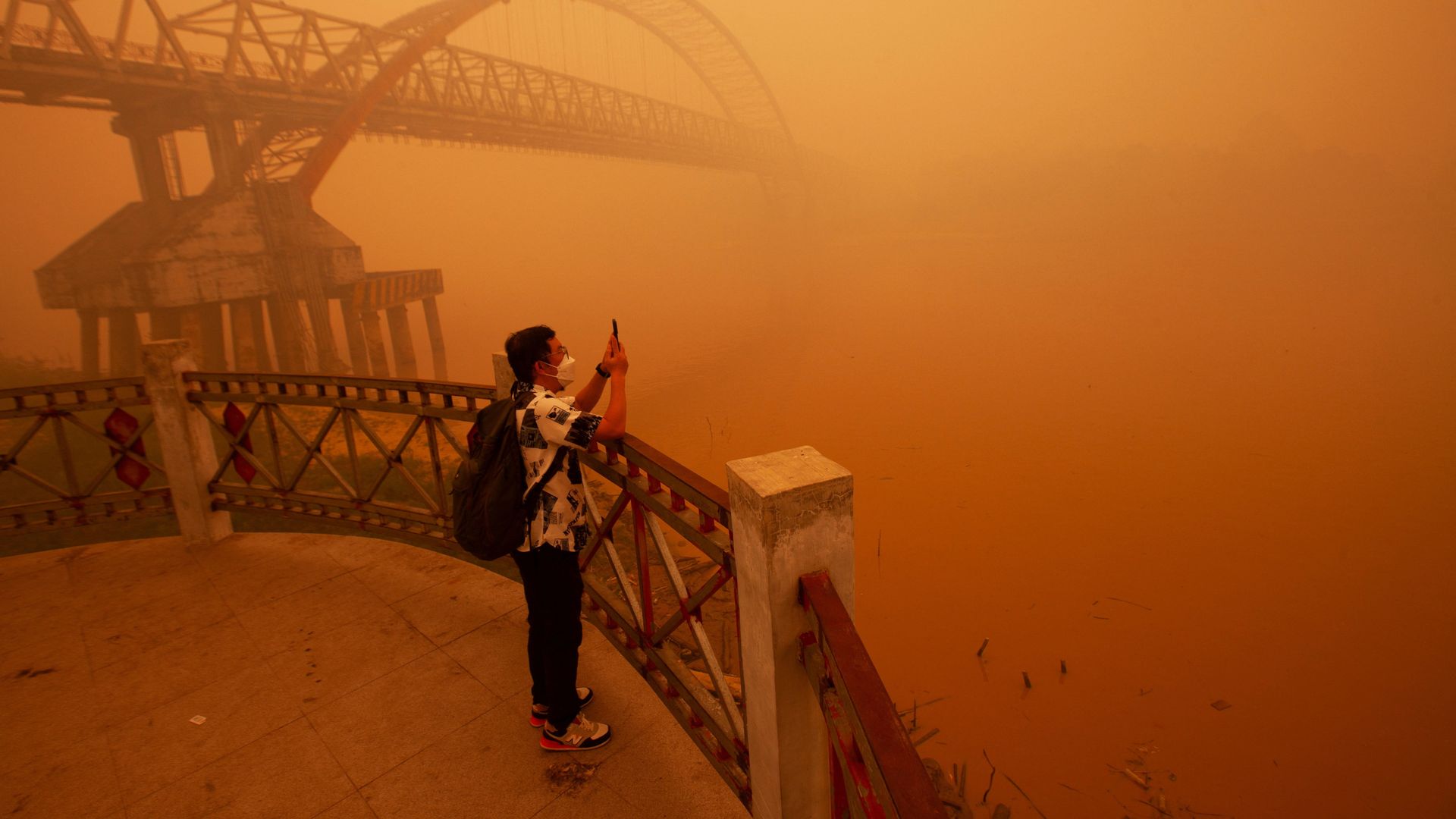
Every time orange smog drops over Sumatra, Kalimantan, or peninsular Malaysia, the headlines write themselves. Apocalyptic sky. Choking commuters. Air quality monitors flashing maroon and purple. Then comes the predictable chorus of outrage aimed at rogue slash-and-burn farmers, corrupt local officials, and a season that refuses to rain.
That story is lazy. Worse, it is comforting. Treating an acute haze episode as a freak weather event paired with a moral failing lets everyone off the hook except the guy holding a match on a drained peat dome.
Orange smog shrouds Indonesian cities because smoke particles scatter sunlight toward the red and orange end of the spectrum while absorbing shorter blue wavelengths, especially when high atmospheric pressure traps emissions close to the ground during dry months. That is the physics. The politics and economics sit underneath it—and they are much uglier than a matchstick.
Why "Blame the Firebugs" Misses the Real Engine
Ask the average reader what causes Indonesian haze and you get an instant answer: illegal land clearing for palm oil. True, as far as it goes. Fires burn across mineral soils and deep tropical peatlands, particularly during El Niño years when rainfall drops and water tables sink.
Stop there, though, and you confuse the spark with the fuel depot.
Peatlands in Sumatra and Borneo are not normal dirt. They are waterlogged accumulations of partially decayed plant matter built up over thousands of years, storing massive amounts of carbon. Drain those peatlands via canals so heavy machinery can plant oil palms, pulpwood, or rubber, and the surface dries out. Once drained and dry, peat becomes tinder. A tiny fire can smolder underground for weeks, pumping out dense, choking smoke rich in fine particulate matter ($\text{PM}_{2.5}$), carbon monoxide, and volatile organic compounds that travel across borders on monsoon winds.
Calling that "just bad farming" is like calling a burst dam a "wet afternoon." Smallholders light fires because fire is cheap, fast, and clears scrubland when labor is scarce or credit is tight. Large concession holders and supply-chain middlemen often sit upstream in the money flow—buying fruit from surrounding plots, operating drainage networks that dry out neighboring land, or benefiting from land-price appreciation once scrub turns into productive estate.
I have watched corporate sustainability teams and NGOs burn through millions of dollars on satellite alerts, glossy pledges, and press releases promising "zero deforestation" by some convenient future date. Satellites are great at spotting active heat signatures. They are terrible at fixing broken land tenure, overlapping concessions, or a smallholder who needs cash this month to pay school fees or service debt while certification premiums take years to trickle down—if they ever arrive at all.
Stop Asking "How Do We Stop the Fires?"
When orange haze returns, the standard search queries sound like a panic button: Why is the sky orange in Indonesia? How bad is the air quality for health? Can Indonesia stop forest fires?
Let’s take those questions head-on because most of them point at the wrong lever.
"Why does the sky turn orange?"
Because fine aerosols and smoke particles scatter incoming solar radiation selectively. Larger particles and specific smoke densities scatter longer wavelengths—red, orange, yellow—while scattering and absorbing shorter blue light more strongly, especially when the sun sits low on the horizon or a thick haze layer filters direct light. Add a dry spell, stagnant air, and peat smoke loaded with organic carbon, and midday starts looking like dusk inside a kiln.
If your takeaway is "ooh, eerie sunset colors," you are staring at the paint on a burning wall. Fine particulate matter ($\text{PM}_{2.5}$) penetrates deep into the lungs and enters the bloodstream, driving respiratory inflammation, cardiovascular stress, school closures, flight cancellations, and lost economic output across Southeast Asia.
"Who is really at fault—Indonesia or its neighbors?"
Finger-pointing across the Malacca Strait is a regional sport. Singapore and Malaysia complain when transboundary smoke blankets their cities; Jakarta pushes back against lecturing from capitals whose banks, traders, and consumers sit right inside the palm oil and pulp value chain.
Here is the blunt truth: blame is shared, accountability is fragmented, and wind does not care about sovereignty. When Malaysian or Singaporean buyers source commodity palm oil or wood pulp without strict, auditable traceability down to the plot level—or when financial institutions keep lending to groups with murky concession histories—they are part of the market that prices land conversion higher than standing peat. At the same time, domestic governance in Indonesia has to wrestle with decentralized licensing, contested customary (adat) land rights, and entrenched local patronage. Pretending one capital holds the magic off-switch is political theater.
"Can Indonesia stop the fires permanently?"
Not with slogans, seasonal task forces, or a handful of water-bombing aircraft once the peat is already bone-dry.
Put out a surface flame on drained peat during a drought and the fire often keeps creeping below ground through root channels and dry organic layers. Extinguishing deep peat fires is grueling, expensive, and sometimes nearly impossible until heavy rains raise the water table again.
Preventing the next orange sky requires changing the hydrology and the incentives before the dry season hits. That means blocking drainage canals, rewetting degraded peatlands, mapping and resolving overlapping land claims so communities actually hold secure rights, and enforcing penalties that bite harder than the profit margin from illegal clearing.
The Uncomfortable Math of Land, Debt, and Commoditized Crops
Environmental debates love clean villains and clean heroes. Real commodity markets rarely oblige.
Palm oil is not an evil crop. Biologically, oil palm produces far more vegetable oil per hectare than soy, sunflower, or rapeseed. Wipe out oil palm without changing global demand for cooking oil, processed food, cosmetics, and oleochemicals, and you do not save nature—you just push agricultural expansion into other ecosystems across South America or Africa with lower yields per acre.
The problem is where and how expansion happens, and who absorbs the risk.
Imagine a scenario where a smallholder farmer in Sumatra holds an informal plot adjacent to a drained canal. A neighbor clears land with fire, clears it in days, and plants fast. If the smallholder obeys every rule, hires manual labor, and waits for slow institutional support, their cash flow lags while living costs run on schedule. Meanwhile, global commodity prices swing, fertilizer costs move, and enforcement on the ground can be patchy or inconsistent.
Under those conditions, compliance is not just a matter of virtue. It is a function of capital, enforcement credibility, and alternative livelihoods.
Even well-intentioned policies have unintended side effects. Broad bans or sudden export restrictions can squeeze smallholders first while leaving opaque supply chains intact. Strict zero-deforestation commitments on paper can push buyers toward "clean" estates while pushing higher-risk production into less visible corners of the supply chain if smallholders are locked out of formal markets rather than supported to farm sustainably.
That is the trade-off nobody likes putting on a slide deck: if you exclude smallholders from profitable, legal supply chains without funding alternatives, you often make illegal clearing more attractive, not less.
What Heavy Hitters in the Field Have Been Saying for Years
You do not need to guess the mechanics here. Researchers and policy institutions—including the Center for International Forestry Research (CIFOR), World Resources Institute (WRI), and Indonesian peatland and forestry scholars—have documented the same core pattern across multiple haze cycles.
The pattern is consistent:
- Drained peat is the multiplier. Intact, wet tropical peat rarely burns easily on its own. Drainage turns a carbon sink into a fire hazard.
- Fire is a tool of convenience and cost control. Where cheap alternatives, credit, or clear land titles are missing, fire remains the default clearing method.
- El Niño acts as an amplifier, not the sole author. Dry weather turns chronic vulnerabilities into acute regional emergencies.
- Transparency helps, but enforcement closes the loop. Public concession maps, supply-chain traceability, and peatland restoration agencies matter only if rules apply consistently across powerful players and local actors alike.
Where My Contrarian Take Can Backfire
Let’s be honest about the risks of pushing a hard structural, economic critique over a simple "stop the fires" message.
First, structural reform is slow, and people are breathing bad air right now. If you tell a parent whose kid has an asthma attack during a severe haze event, "Well, canal blocking and tenure reform take years," that sounds cold—and politically, it invites inaction today. Emergency air-quality alerts, clean-air shelters, mask distribution, and rapid fire suppression still matter for immediate harm reduction.
Second, focusing too heavily on macro economics can sound like excusing lawbreaking. Arson and illegal burning on protected peatlands violate the law and harm millions of innocent people. Explaining why an incentive exists is not the same as justifying the harm. Good policy has to separate empathy for vulnerable farmers from immunity for deliberate land-grabbers and repeat offenders.
Third, over-indexing on supply-chain pressure can create blind spots. Western corporate pledges get plenty of attention, yet domestic consumption, regional trade, and local political economy drive huge shares of demand and governance. If you only pull one lever, the system bends somewhere else.
What Actually Works Instead of Performative Outrage
If you care about stopping the next orange sky—whether you run a company, shape policy, invest capital, or just want to read past the hype—drop the performative shock and focus on high-leverage mechanics.
- Follow the water table, not just the smoke. Track peatland restoration and canal-blocking metrics, especially ahead of dry spells and El Niño forecasts. Wet peat is the single best firebreak Southeast Asia has.
- Fix smallholder bottlenecks instead of issuing paper ultimatums. Real progress requires practical financing, clear land rights, non-fire land preparation options, and realistic timelines for compliance—not sudden cutoff lists that leave small producers stranded.
- Demand plot-level accountability, not vague pledges. Anyone can announce a green target five or ten years out. Look at verified traceability, transparent concession ownership, and whether violators actually face consequences when smoke crosses borders.
- Treat haze as a public health and economic risk, not a seasonal curiosity. When skies turn orange, measure the real cost in hospital visits, lost workdays, and regional disruption—because budgets move when costs are counted honestly.
Orange smog does not fall out of the sky because nature got moody. It rises when short-term profit, broken land rules, and dry peat meet in the open air.