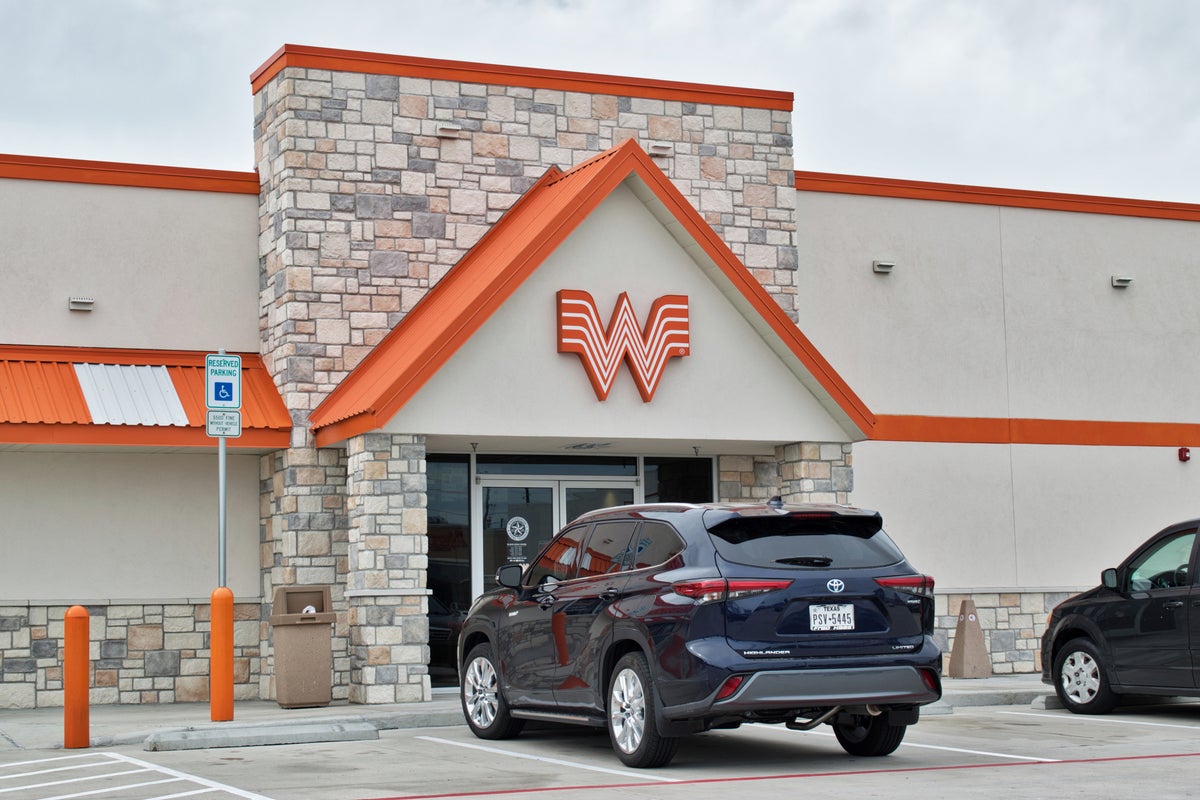
Whataburger’s current operational pivot represents a fundamental shift from geographical expansion toward unit-level efficiency and throughput optimization. The leadership’s focus on shortening wait times and narrowing the menu is not a mere customer service initiative; it is a calculated response to the diminishing returns of menu complexity and the physical constraints of legacy kitchen architecture. By reducing the variance in order preparation, the organization aims to stabilize its labor-to-sales ratios and reclaim market share lost to faster-casual competitors.
The Economic Cost of Menu Variance
Menu breadth acts as a tax on kitchen velocity. For a brand like Whataburger, which prides itself on a "made-to-order" ethos, every additional SKU introduces exponential complexity into the prep line. This is defined as the Complexity Multiplier, where the time required to train staff and execute a varied menu grows faster than the revenue generated by the niche items.
The decision to focus the menu is a move toward standardization. In a high-volume Quick Service Restaurant (QSR) environment, total throughput is dictated by the slowest station in the kitchen—the bottleneck. When a menu features items with disparate cooking times or specialized assembly requirements, the probability of a "bottleneck event" increases. By pruning low-velocity items, Whataburger reduces the cognitive load on line cooks and the physical movement required to access disparate ingredients.
The relationship between menu items ($n$) and operational friction ($F$) can be modeled as:
$$F \propto n^2$$
As $n$ increases, the potential for error and delay rises quadratically. Trimming the menu is the most direct lever to decrease this friction without capital-intensive kitchen redesigns.
Quantifying the Wait Time Deficit
Wait time in the QSR industry is composed of two distinct phases: Point of Sale (POS) Latency and Production Lag.
- POS Latency: The time from the customer entering the queue to the moment the order is finalized. This is influenced by menu clarity and technology interfaces (kiosks, apps).
- Production Lag: The time from order finalization to delivery. This is a function of kitchen ergonomics and labor deployment.
Whataburger’s traditional model involves a high degree of customization, which inherently inflates Production Lag. Shortening wait times requires a dual-track strategy. First, the brand must utilize predictive analytics to anticipate order surges, allowing for "pre-staging" of high-volume components without violating freshness standards. Second, it must address the physical flow of the drive-thru, which remains the primary revenue driver for the brand.
The drive-thru is a linear system. A single vehicle with a complex, multi-item order creates a "bubble" of delay that affects every subsequent vehicle in the queue. To mitigate this, Whataburger is likely exploring Parallel Processing. This involves pulling complex orders into designated parking bays to allow the linear queue to continue moving, effectively turning a serial system into a multi-threaded operation.
The Labor Efficiency Ratio
Labor is the largest controllable expense in the QSR P&L. However, reducing labor hours to save costs often leads to a death spiral: fewer staff members result in slower service, which drives away customers, leading to lower revenue and further labor cuts.
Whataburger’s strategy seeks to improve the Labor Efficiency Ratio—the amount of revenue generated per labor hour—through process improvement rather than headcount reduction. A simplified menu allows for "Cross-Training Elasticity." When a menu is too complex, employees become specialists in specific stations. When the menu is streamlined, every employee can pivot between prep, assembly, and window with minimal loss in speed. This elasticity ensures that the kitchen can absorb sudden spikes in demand without requiring additional staff on the floor.
Infrastructure and Digital Integration
The pivot toward digital ordering (Mobile App and Kiosks) serves as a data-gathering mechanism that informs the supply chain. Every digital interaction provides granular data on peak demand times, ingredient popularity, and regional preferences.
This data allows for Dynamic Inventory Management. Instead of a static delivery schedule, Whataburger can shift toward a demand-responsive model. If a specific region shows a 15% increase in demand for a particular limited-time offer, the supply chain can adjust in real-time, preventing stock-outs that frustrate customers and disrupt the kitchen's rhythm.
Furthermore, digital integration reduces the "Human Error Rate" at the POS. A customer-entered order via an app eliminates the risk of miscommunication between the driver and the headset operator. This accuracy is a hidden driver of speed; a wrong order requires a "Remake," which is the most expensive event in a QSR kitchen because it consumes double the labor and double the ingredients for a single unit of revenue.
Geographic Sensitivity and Brand Equity
As Whataburger expands beyond its Texas core, it faces the "Stranger in a Strange Land" problem. In Texas, the brand relies on deep-seated loyalty that may tolerate longer waits for a "cult" product. In new markets like the Midwest or the Southeast, the brand is judged purely on the utility of its service: speed, accuracy, and price.
The new CEO’s focus on speed suggests an awareness that brand loyalty is not a durable substitute for operational excellence in competitive markets. The expansion strategy must therefore prioritize Operational Parity—ensuring that a location in Kansas City performs at the same efficiency level as a flagship in San Antonio. This requires a "Playbook" approach where kitchen layouts and staff training are identical across the footprint, allowing for centralized management and oversight.
The Limitations of Speed-Focused Strategies
While the pursuit of speed is logical, it carries significant risks if not balanced against the brand's core identity.
- Commoditization: If Whataburger becomes too fast and too streamlined, it risks losing the "premium fast food" distinction that allows it to charge a price premium over competitors like McDonald's or Burger King.
- Quality Erosion: High-speed throughput can lead to "assembly fatigue," where the visual appeal and temperature of the food suffer in the rush to meet a timer.
- The Customization Paradox: Whataburger's competitive advantage has always been "Just Like You Like It." Removing too many customization options to save seconds could alienate the core fan base that views the brand as a higher-quality alternative to standardized chains.
Strategic Execution Roadmap
To achieve the CEO's objectives without cannibalizing the brand's soul, the organization must implement a tiered operational roll-out:
- Tier 1: High-Velocity Menu Engineering. Identify the bottom 20% of menu items contributing to less than 5% of revenue but more than 15% of preparation time. These must be moved to "Digital-Only" or removed entirely.
- Tier 2: Algorithmic Staffing. Deploy AI-driven scheduling tools that predict foot traffic based on local events, weather, and historical data to ensure peak labor is always aligned with peak demand.
- Tier 3: The "Split-Stream" Kitchen. For new builds, implement a kitchen design that physically separates digital/delivery orders from drive-thru/dine-in orders. This prevents "clogging" where a 10-bag delivery order halts the drive-thru line.
The success of Whataburger in the 2026 fiscal year depends on its ability to transform from a regional favorite into a high-performance logistics machine. The transition requires a ruthless adherence to data and a willingness to sacrifice legacy menu items in favor of system-wide velocity. The ultimate metric for success will not be the number of new stores opened, but the year-over-year reduction in average drive-thru service times across all territories.
The strategy must move beyond promising speed to engineering it into the very floorplan of every restaurant. This necessitates a shift in corporate culture from "Texas Hospitality" to "Industrial Precision," where every second saved at the window is viewed as a direct contribution to the bottom line. If the brand fails to bridge this gap, it will find itself trapped in the middle ground: too slow for the convenience-driven customer and too expensive for the budget-conscious one.