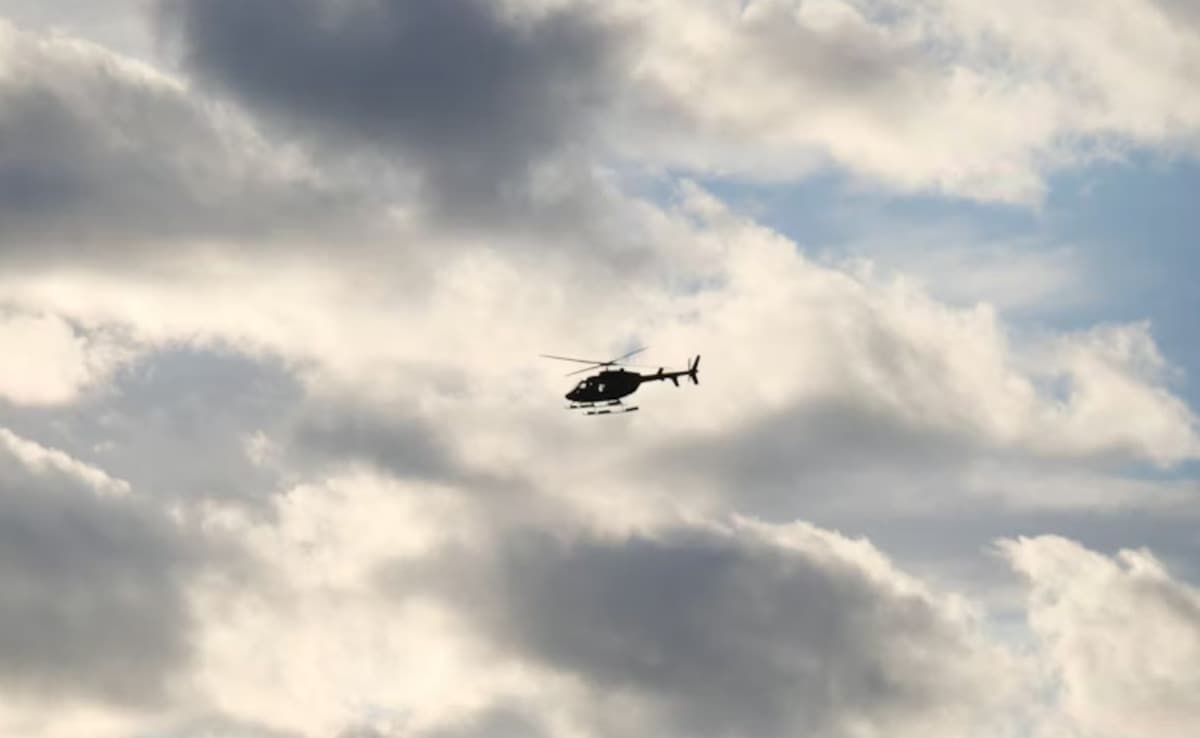
The loss of six lives and the ongoing search for a seventh following a Qatari helicopter crash represents a systemic failure in the high-reliability organization (HRO) framework required for military and state aviation. While superficial reporting focuses on the tally of casualties, a rigorous analysis must dissect the incident through the lens of Aviation Safety Management Systems (SMS), environmental risk variables, and the specific mechanical tolerances of the airframes utilized in the Gulf region. This event is not merely a tragedy; it is a data point indicating a breakdown in the causal chain of flight safety.
The Triad of Aviation Risk Factors
To understand the mechanics of this crash, one must evaluate the intersection of three distinct risk pillars. When these variables overlap without sufficient mitigation, a "Swiss Cheese" model of failure occurs, where holes in sequential layers of safety align perfectly to permit an accident.
1. Environmental and Atmospheric Volatility
The Persian Gulf presents a unique set of aerodynamic challenges. High ambient temperatures decrease air density, directly impacting Density Altitude. As temperature increases, the air becomes "thinner," which reduces the lift generated by rotor blades and the power output of turbine engines.
$$L = \frac{1}{2} \rho v^2 A C_L$$
In the equation above, where $L$ is lift and $\rho$ is air density, any reduction in density requires a squared increase in velocity ($v$) or an increase in the coefficient of lift ($C_L$) via blade pitch. If a helicopter is operating near its maximum gross weight in the Qatari heat, the margin for error during maneuvers or sudden mechanical stress evaporates. Furthermore, "brownout" conditions—where rotor wash kicks up fine sand—can lead to spatial disorientation, stripping a pilot of visual cues within seconds.
2. Mechanical Integrity and Thermal Stress
Helicopters operating in desert environments face accelerated wear cycles. Fine particulate ingestion acts as an abrasive on turbine blades, eroding the leading edges and reducing compressor efficiency. This creates a hidden degradation of the power-to-weight ratio that might not be evident during standard pre-flight checks but becomes fatal during an In-Flight Emergency (IFE).
3. Human Factors and Crew Resource Management (CRM)
The transition from a standard flight profile to a catastrophic descent is often measured in seconds. CRM is the systemic approach to communication and decision-making in the cockpit. In high-stakes environments, a breakdown in CRM—often caused by "plan continuation bias"—leads crews to push into deteriorating conditions rather than aborting the mission.
Quantifying the Survivability Gap
The disparity between the six confirmed fatalities and the one missing individual highlights a critical failure in the Post-Crash Survivability Chain. This chain is comprised of three distinct phases:
- Impact Dynamics: The ability of the airframe to absorb kinetic energy and maintain a "livable volume" for the occupants.
- Egress Efficiency: The speed at which survivors can exit a downed craft, particularly in maritime or remote desert environments where fire or sinking is a secondary threat.
- Search and Rescue (SAR) Latency: The time delta between the crash event and the arrival of professional recovery assets.
The fact that one individual remains missing suggests the crash likely occurred over water or in high-complexity terrain where the debris field was scattered. In maritime ditching scenarios, the "Golden Hour" of rescue is compressed into minutes due to the risk of hypothermia, drowning, or the physical trauma of the impact itself.
The Search Logic for the Missing Person
The search for the seventh individual is currently governed by Probability of Detection (POD) and Probability of Area (POA). SAR coordinators utilize Monte Carlo simulations to predict the drift of a person in water or the likely dispersal pattern based on the last known position (LKP) and prevailing currents or winds.
The transition from a "Rescue" mission to a "Recovery" mission is a cold calculation based on the survivability limits of the human body. Factors being calculated by Qatari authorities right now include:
- Water Temperature: Even in the Gulf, prolonged immersion leads to core temperature drops.
- Sea State: High waves decrease the POD for visual observers and infrared sensors.
- Transponder Data: If the craft's Emergency Position Indicating Radio Beacon (EPIRB) failed to activate, the search area expands exponentially with every hour of delay.
Structural Implications for Qatari Aviation Policy
Qatar has invested billions in modernizing its air fleet, yet hardware acquisition is not a substitute for deep-rooted safety culture. This incident necessitates a hard audit of current operational protocols.
The Maintenance Bottleneck
Military and state-operated fleets often face high operational tempos. If maintenance schedules are squeezed to meet mission readiness requirements, latent defects go undetected. A rigorous audit must determine if the crashed airframe had exceeded its "Time Between Overhaul" (TBO) for critical components like the tail rotor drive shaft or main gear box.
Training Deficits
Simulated emergency procedures in a controlled environment cannot fully replicate the "startle factor" of a real-world mechanical failure. The investigation must look at the recent training hours of the flight crew, specifically focusing on autorotation proficiency—the ability to land a helicopter without engine power—and water egress training.
Strategic Operational Recommendations
The immediate path forward for the Qatari Ministry of Defense and civil aviation authorities involves a three-stage tactical reset:
- Ground the Fleet: A temporary safety stand-down of the specific airframe model involved is mandatory until a "non-conformance" report can rule out systemic mechanical flaws.
- Data Recorder Forensics: Priority must be placed on the recovery of the Flight Data Recorder (FDR) and Cockpit Voice Recorder (CVR). These "black boxes" provide the only objective truth regarding engine torque, rotor RPM, and pilot inputs in the final 60 seconds of flight.
- Sensor Integration: Future missions in these corridors should require mandatory satellite-based flight following with a sub-five-minute ping rate to ensure that the LKP is narrowed to a manageable radius in the event of a transponder failure.
The search for the missing person is now a race against statistical probability. As the search grid expands, the likelihood of a successful rescue diminishes. The focus must shift from the immediate tragedy to the structural vulnerabilities this event has exposed in the Qatari flight safety infrastructure.