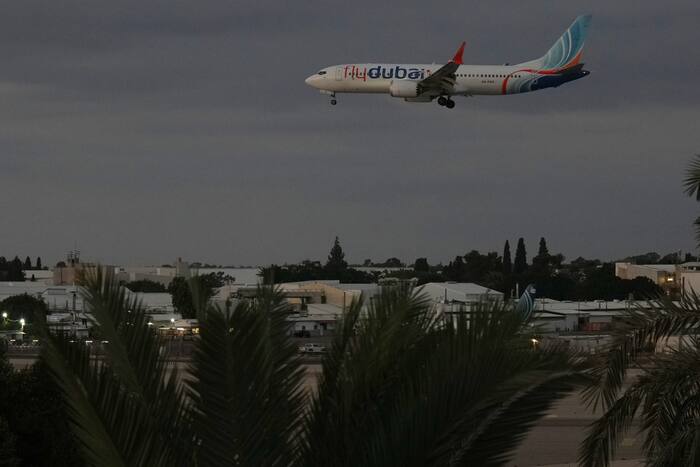
Commercial aviation operates under an assumption of predictable spatial geometry. Routes are optimized for fuel burn, air traffic control corridors, and turnaround velocity. When geopolitical hostility or security threats fracture this geometry, the economic architecture of a carrier faces immediate stress. A sudden flight suspension is never an isolated operational decision. It represents the terminal point of a complex risk calculus where safety thresholds are breached, insurance premiums spike, and network topology must be reconfigured in real time. Deconstructing the mechanics of carrier responses to airspace security crises reveals how airlines absorb shocks, reallocate assets, and manage passenger demand volatility under extreme uncertainty.
The Operational Trigger and Immediate Containment
Security incidents involving aviation assets introduce an immediate binary constraint: operational continuity versus catastrophic liability. When an aircraft or crew experiences a hostile event, intelligence units and executive boards must process threat vectors without the luxury of protracted deliberation. The threshold for suspension is determined by risk tolerance parameters set by state regulators, insurance underwriters, and internal safety committees.
Unlike routine weather delays or routine air traffic congestion, security shocks disrupt the baseline assumptions of route viability. The decision to halt operations to a specific destination requires immediate cessation of departures, repositioning of stranded aircraft outside the affected airspace, and secure extraction or sheltering of flight crews. This phase tests the logistical agility of operations control centers. Every minute an aircraft remains on the ground in a contested or compromised zone amplifies exposure to systemic risk.
The primary operational variables during this initial phase include crew duty limitations, airport slot retention rules, and ground support availability. Carriers operating under hub-and-spoke models face secondary propagation effects. A grounded aircraft scheduled for a multi-leg rotation creates cascading delays across the entire network. The immediate priority shifts from revenue generation to asset preservation and personnel security.
Furthermore, communication protocols during the initial containment phase dictate regulatory compliance and stakeholder confidence. Dispatchers must coordinate with civil aviation authorities across multiple jurisdictions, each enforcing distinct sovereign airspace mandates. If a state regulatory body issues a formal airspace closure, compliance is mandatory. However, when an airline initiates a voluntary suspension ahead of regulatory directives, the burden of proof rests heavily on internal risk assessment models. Executives must justify capital losses to shareholders while prioritizing absolute safety margins over short-term revenue retention.
The Cost Function of Route Reconfiguration
Once the immediate threat containment phase concludes, financial and structural consequences dominate executive decision-making. Suspending service to a high-demand or strategically important destination imposes a severe cost function comprising direct and indirect expenditures.
Direct costs manifest through revenue forfeiture and asset idling. Aircraft assigned to suspended corridors must either be redeployed to alternative routes or parked, incurring continuous depreciation without revenue offset. However, redeployment is rarely frictionless. Aviation assets are optimized for specific stage lengths and seating configurations. Widebody aircraft designed for long-haul or high-density regional trunks cannot simply be transferred to short-haul domestic routes without incurring heavy economic inefficiencies due to excessive fuel burn per seat-mile and sub-optimal cabin layouts.
Indirect costs emerge through contractual liabilities, fuel hedging mismatches, and overhead reallocation. Airlines frequently lock in fuel purchases or ground handling contracts based on projected volume commitments. Sudden volume drops diminish pricing power with vendors and airports. Furthermore, flight suspensions trigger passenger compensation mandates and re-accommodation expenses under various regional regulatory frameworks. Carriers must absorb the cost of rebooking passengers onto competing airlines, often at premium spot-market rates, or refund tickets entirely, draining liquidity reserves.
Insurance liabilities represent another critical dimension. Underwriters constantly reassess risk profiles following security incidents. War-risk insurance premiums escalate rapidly for carriers maintaining operations in adjacent or similar geopolitical zones. If an airline attempts to maintain service against the consensus of risk assessors, premium hikes can easily erase the operating margins of the route, rendering the suspension financially mandatory regardless of top-line revenue potential.
Leasing commitments also compound these financial pressures. Aircraft lessors maintain strict covenants regarding asset deployment in high-risk zones. Operating an aircraft in an active conflict area without underwriter or lessor approval can constitute a technical default on lease agreements, threatening the carrier's entire fleet financing structure. Thus, the financial imperative to suspend operations extends far beyond immediate ticket sales forfeiture into the matter of solvency protection and covenant compliance.
Fleet Reallocation and Network Topology
Maintaining network integrity during a regional suspension requires dynamic capacity management. Airlines cannot afford idle capacity in capital-intensive asset classes. Planners must evaluate alternative deployment strategies based on marginal revenue potential and operational constraints.
The first strategic option involves network contraction. By reducing total capacity, airlines trim variable operating costs, specifically fuel, landing fees, and variable crew expenses. However, fixed overhead costs remain constant. Fixed lease payments, administrative salaries, and maintenance reserves must now be amortized across a smaller revenue base. As a result, aggressive contraction can degrade operating margins if not executed with surgical precision.
The second option is asset pivoting. Carriers redirect aircraft to stable international markets or increase frequencies on high-yielding domestic corridors. This requires navigating bilateral air service agreements, securing foreign landing rights, and adapting cabin crew training for new operating environments. Regulatory approvals for new routes can take weeks or months, creating a temporal gap where assets remain underutilized.
Network topology dictates the resilience of a carrier during such disruptions. Point-to-point low-cost carriers face different vulnerabilities compared to legacy network carriers. Point-to-point operators can suspend a single route with minimal systemic disruption, whereas legacy carriers face domino effects across their connecting hubs. If a feeder flight into a major hub is canceled, connecting passenger flows diminish, impacting the profitability of long-haul trunk routes that depend on feed traffic.
To mitigate structural vulnerability, network planners utilize scenario-modeling software to simulate route closures across various geopolitical flashpoints. These models calculate optimal fleet redistribution vectors before shocks occur, reducing reaction latency when crises materialize. Yet, theoretical models frequently collide with physical bottlenecks, such as gate shortages at alternative hub airports and localized shortages of qualified type-rated pilots for alternative equipment assignments.
Passenger Demand Elasticity and Revenue Recovery
Consumer behavior following a security-induced flight suspension exhibits distinct psychological and economic patterns. Demand elasticity varies significantly between corporate travelers and leisure segments.
Corporate travelers demonstrate high sensitivity to safety and schedule reliability. When a route is suspended due to security threats, business demand drops instantly and remains depressed long after service resumes. Corporate travel policies often institute automatic bans on travel to regions experiencing security volatility, insulating business volume until diplomatic stabilization occurs.
Leisure travelers, by contrast, exhibit higher price sensitivity and faster recovery rates once restrictions lift. However, capturing returning leisure demand requires aggressive pricing strategies. Carriers often deploy discount fares to stimulate traffic and rebuild load factors on reinstated routes, compressing yields.
Revenue recovery depends heavily on communication transparency and brand equity. Carriers that manage cancellations with efficient automated rebooking tools and clear communication retain customer loyalty better than those plagued by operational bottlenecks and communication blackouts. The reputational cost of mishandled disruptions often exceeds the direct financial loss of the canceled flights.
Data analytics teams monitor booking curves and search velocity to determine the optimal timing for route reinstatement. Premature resumption of service in an unstable market can trigger widespread cancellations and customer backlash, while delayed reinstatement cedes valuable market share to competing carriers operating out of unaffected hub jurisdictions. Balancing yield management with risk aversion is a delicate calibration that defines commercial survival during prolonged regional crises.
Strategic Forecast and Asset Management
Navigating security-driven disruptions demands a shift from reactive crisis management to proactive structural resilience. Modern aviation strategy must integrate geopolitical risk assessment directly into fleet planning and network design.
Carriers must build structural flexibility into lease agreements, allowing for faster scale-down or transfer of assets during regional shocks. Diversification of route portfolios remains the most effective hedge against localized instability. Relying heavily on single-country corridors exposes carriers to binary risk profiles where political or security shifts can wipe out substantial revenue streams overnight.
Furthermore, treasury management must account for liquidity buffers capable of sustaining multi-week suspensions of high-yield routes without triggering solvency crises. As geopolitical friction persists across global trade and travel corridors, operational agility and rigorous capital preservation will separate surviving incumbents from distressed operators. The carriers that treat security disruptions not as anomalies, but as recurring operational variables, will maintain financial stability in an increasingly volatile operating environment. Capital allocation models must permanently factor in tail-risk events, ensuring that network expansion never outpaces the carrier's capacity to absorb sudden geographical contractions.