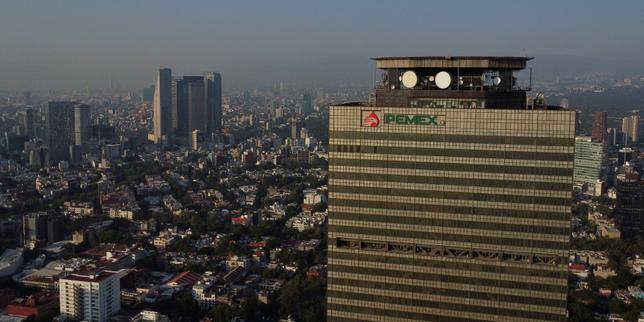
The recent acknowledgment by Mexico’s state-owned oil entity regarding a significant spill in the Gulf of Mexico—covering an estimated linear distance of 467 kilometers—reveals a systemic failure in infrastructure maintenance and crisis communication. Surface-level reporting focuses on the visual scale of the slick; however, a rigorous analysis must dissect the mechanical causes, the discrepancy in reported leakage volumes, and the long-term economic degradation of the Cantarell Field’s operational integrity.
The Mechanics of Structural Fatigue in Mature Fields
The spill originated from the Ek Balam field, a component of the aging Cantarell Complex. To understand the spill, one must analyze the Three Vectors of Infrastructure Failure that characterize mature offshore assets:
- Material Degradation and Corrosion: The pipelines in the Ek Balam field have exceeded their original design life. Continuous exposure to high-salinity environments and internal pressure fluctuations leads to "pitting" and stress corrosion cracking.
- Pressure Management Volatility: As fields deplete, operators often utilize enhanced oil recovery (EOR) techniques. Sudden shifts in pressure can compromise weakened joints in underwater manifolds.
- Delayed Remediation Cycles: Maintenance debt—the gap between required structural upkeep and actual capital expenditure—creates a statistical certainty of containment failure.
The specific failure in this instance involved a leak in a duct system that had reached its mechanical limit. While the operator framed the event as a localized "pore-sized" leak, the resulting 400-plus kilometer slick suggests a misalignment between the reported leak rate and the observed surface area.
Quantifying the Discrepancy: The Volume-Surface Area Paradox
A significant tension exists between the official report and satellite data processed by academic institutions. The state entity estimated the daily loss at roughly 65 barrels. Conversely, oceanographic analysis of the 467-square-kilometer slick suggests a volume significantly higher to maintain a consistent film thickness across such a vast expanse.
The Calculation of Dispersion
Calculating the true impact requires an understanding of the Oil Displacement Function. The spread of oil on water is governed by gravity, surface tension, and viscosity, but it is accelerated by:
- Ekman Transport: Wind-driven currents that stretch a concentrated spill into thin "windrows."
- Evaporative Loss: Lighter hydrocarbons vanish within 24 to 48 hours, meaning a 400-kilometer slick visible after several days implies a continuous, high-volume source rather than a momentary burst.
If the leak were as minor as claimed, the natural dispersion and evaporation rates in the high-temperature environment of the Gulf of Mexico would likely have prevented the formation of a semi-continuous slick of this magnitude. The logical inference is a failure in flow-metering accuracy or a strategic underreporting to mitigate regulatory fines.
The Economic Cost of Reputation and Regulatory Friction
The financial implications extend beyond the immediate cost of cleanup. A state-owned monopoly operates under a different risk profile than private firms, but it is not immune to The Operational Risk Feedback Loop:
Capital Expenditure vs. Environmental Fine Structures
In many jurisdictions, the cost of proactive pipeline replacement is higher than the expected value of occasional fines. This creates a "moral hazard" where the operator chooses to run assets to failure. However, in the current global energy market, this leads to a higher cost of capital when seeking international partnerships or credit lines. Institutional investors now weigh ESG (Environmental, Social, and Governance) metrics as proxies for operational competence.
Downstream Industry Interference
The Gulf of Mexico is a multi-use economic zone. The spill creates immediate bottlenecks for:
- Commercial Fisheries: Bioaccumulation of hydrocarbons leads to long-term stock depletion and immediate market bans.
- Local Tourism: Coastal contamination triggers a "stigmatization discount" on local real estate and services that persists long after the physical oil is removed.
Institutional Opacity as a Strategic Bottleneck
The delay in public acknowledgment—nearly three weeks—highlights a structural weakness in the organization's crisis management framework. Effective industrial communication requires The Gold Standard of Incident Transparency: immediate notification, real-time telemetry sharing, and third-party verification.
By suppressing information, the operator loses the ability to coordinate with regional partners (such as the U.S. Coast Guard or private containment contractors) who possess specialized deep-water recovery equipment. This isolationism exacerbates the environmental damage, as the "Golden Hour" for skimming and chemical dispersant application is lost to bureaucratic internal reviews.
Engineering the Recovery: A Tactical Roadmap
For an offshore operator to regain structural integrity and public trust, the strategy must shift from reactive patching to a Predictive Maintenance Architecture.
- Deployment of Digital Twins: Creating a real-time virtual model of the Cantarell pipeline network allows engineers to simulate stress points and predict failures before they occur.
- Automated Leak Detection Systems (ALDS): Integrating fiber-optic acoustic sensors along the seabed provides instant notification of pressure drops, bypassing the need for visual satellite confirmation.
- Acoustic Emission Testing: Utilizing non-destructive testing (NDT) to identify micro-fractures in subsea infrastructure that traditional pressure tests might miss.
The immediate priority for the Gulf of Mexico assets is a comprehensive audit of all pipelines older than 30 years. The Ek Balam incident is not an isolated anomaly but a leading indicator of a broader "Infrastructure Cliff."
Operators must transition from a model of maximizing short-term extraction at all costs to a model of Total Asset Lifecycle Management. This requires a radical reallocation of dividends toward a sinking fund specifically for decommissioning and replacement of legacy hardware. Failure to do so will result in a cascading series of environmental liabilities that will eventually outpace the revenue-generating capacity of the remaining reserves. The strategy moving forward must prioritize the hardening of subsea assets against the inevitable degradation of time, treating environmental protection not as a regulatory hurdle, but as a fundamental component of operational uptime.