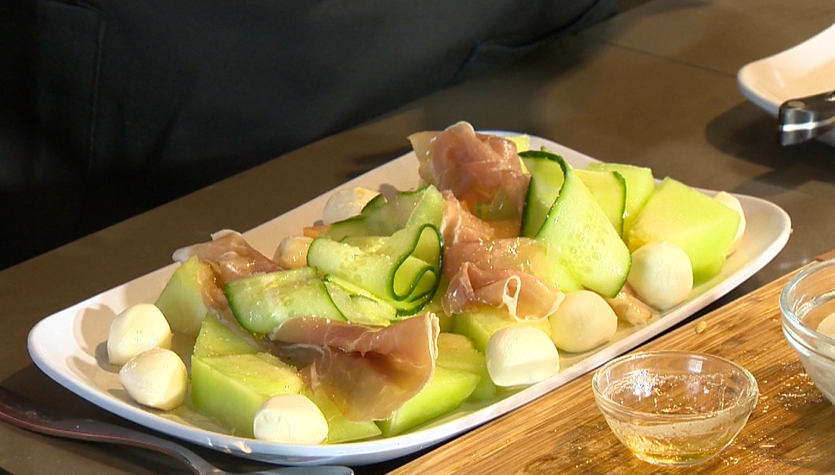
Summer food writing suffers from an acute case of seasonal amnesia. Every June, digital food publications churn out identical paeans to the classic pairing of melon and cured meat, dressing it up as a stroke of modern genius. They tell you to cube some fruit, tear some ham, and toss it with mini bocconcini cheese balls. What they omit is the actual mechanics of why the dish succeeds or fails, and more importantly, how lazy sourcing ruins the entire plate before you even pick up a fork.
Let us address the primary query immediately. A proper cantaloupe, bocconcini, and prosciutto salad works because of a precise biochemical tension between high-sugar fruit, high-sodium protein, and high-fat dairy. When executed with fresh Ontario cantaloupe, fresh mozzarella, and dry-cured Italian ham, the dish hits every major palate receptor simultaneously. But if you treat these ingredients as interchangeable components rather than chemically reactive elements, you end up with a watery, salt-blasted disappointment. Learn more on a related topic: this related article.
We need to talk about the melon. Most recipes treat cantaloupe as a passive sweet vessel. It is not. A true Ontario-grown cantaloupe harvested at peak summer warmth contains complex volatile organic compounds that give it a musky, floral aroma entirely missing from out-of-season imports gassed in transit.
When you buy a rock-hard orange sphere from a grocery chain bin in early June, you are buying water and cellulose. It lacks the sugar density required to stand up to the intense salinity of dry-cured pork. Prosciutto is cured with heavy salt to draw out moisture, concentrating the umami through months of air-drying. If your cantaloupe lacks sufficient natural sucrose, the salt completely obliterates the fruit flavor, leaving behind an unpleasant metallic aftertaste. More journalism by Medical News Today delves into comparable perspectives on the subject.
The cheese selection introduces another structural variable. Mini bocconcini, or mozzarella pearls, provide a milky, high-fat buffer that coats the tongue. This fat barrier prevents the sodium in the prosciutto from overwhelming your tastebuds. However, commercial fresh mozzarella is frequently packed in brine or water, sealed in plastic, and left to sit on logistics trucks for weeks.
Waterlogged cheese is the silent killer of summer salads. When you drop wet, spongy bocconcini onto a plate with sliced melon, it leaches moisture into the surrounding ingredients. Within twenty minutes, your dressing is diluted, the herbs turn slimy, and the delicate texture of the cured meat degrades into a gummy mess.
Drain the cheese thoroughly. Better yet, pat individual pieces dry with a paper towel before they ever touch the bowl.
The Fat and Acid Fallacy
Standard culinary advice insists on drenching this combination in heavy vinaigrettes made with honey, balsamic, and extra virgin olive oil. This is a mistake born of excess.
Prosciutto already contains rendered intramuscular fat. High-grade San Daniele or Parma hams do not need an oil slick coating them. Introducing heavy oils on top of the natural dairy fats in the bocconcini creates an excessively heavy mouthfeel.
A superior approach relies on targeted acid rather than blanket dressing. A light squeeze of fresh lemon juice or a splash of sharp white wine vinegar applied directly to the melon prior to assembly wakes up the fruit sugars. It cuts through the dairy fat without masking it.
Consider the physical interaction of the elements on the plate.
- The melon provides cellular structure and water content.
- The prosciutto provides concentrated sodium and cured lipid proteins.
- The bocconcini provides lactic acid and milk fat.
- The herbs provide volatile aromatics to bridge the gap between sweet and savory.
If you toss everything together with heavy-handed quantities of honey and thick balsamic glaze, you flatten these distinct contrasts into a single, cloying sweetness. Let the ingredients speak through their native properties.
Sourcing Realities and Regional Variations
Geographic context matters far more than food bloggers care to admit. When home cooks attempt to replicate upscale restaurant salads using supermarket ingredients, they ignore the constraints of agricultural timing.
Ontario cantaloupes have a brief, intense window from late July through August. Outside of this window, attempting a local melon salad is an exercise in nostalgia rather than flavor. If local fruit is unavailable, you are better off adjusting your expectations or shifting to a different structural fruit like stone fruit or figs.
The handling of the prosciutto is equally vital. Sliced paper-thin by a skilled deli clerk, the fat melts at body temperature. Sliced thick by an automated machine at a warehouse club, it behaves like tough leather that you have to chew around.
Tear the prosciutto by hand rather than chopping it with a knife. Tearing preserves the natural grain of the muscle fibers, allowing the dressing and fruit juices to cling to the ragged edges. It changes the physical distribution of the salt across the plate, ensuring that no single bite is an unmitigated salt bomb.
The Assembly Protocol
Do not assemble this dish an hour before serving. That is the quickest way to ruin a summer gathering.
The salt in the prosciutto will instantly begin drawing water out of the cantaloupe via osmosis. Within thirty minutes, your crisp fruit turns soft and your serving platter fills with a pink, watery pool.
Keep your components completely separate in the refrigerator until the exact moment of service.
- Cube or ball the cantaloupe and keep it chilled.
- Drain and dry the bocconcini.
- Pull the prosciutto slices apart and keep them loosely folded on parchment paper.
- Arrange everything on a cold ceramic platter right at the table, finishing with a crack of black pepper and torn fresh mint or basil.
Do not toss it like a green garden salad. Treat it like a constructed plate where every bite can be customized by the person eating it.
True culinary excellence in simple dishes relies on ingredient respect and timing, not complicated kitchen techniques. Stop masking mediocre produce with heavy dressings and let the raw components do their work.