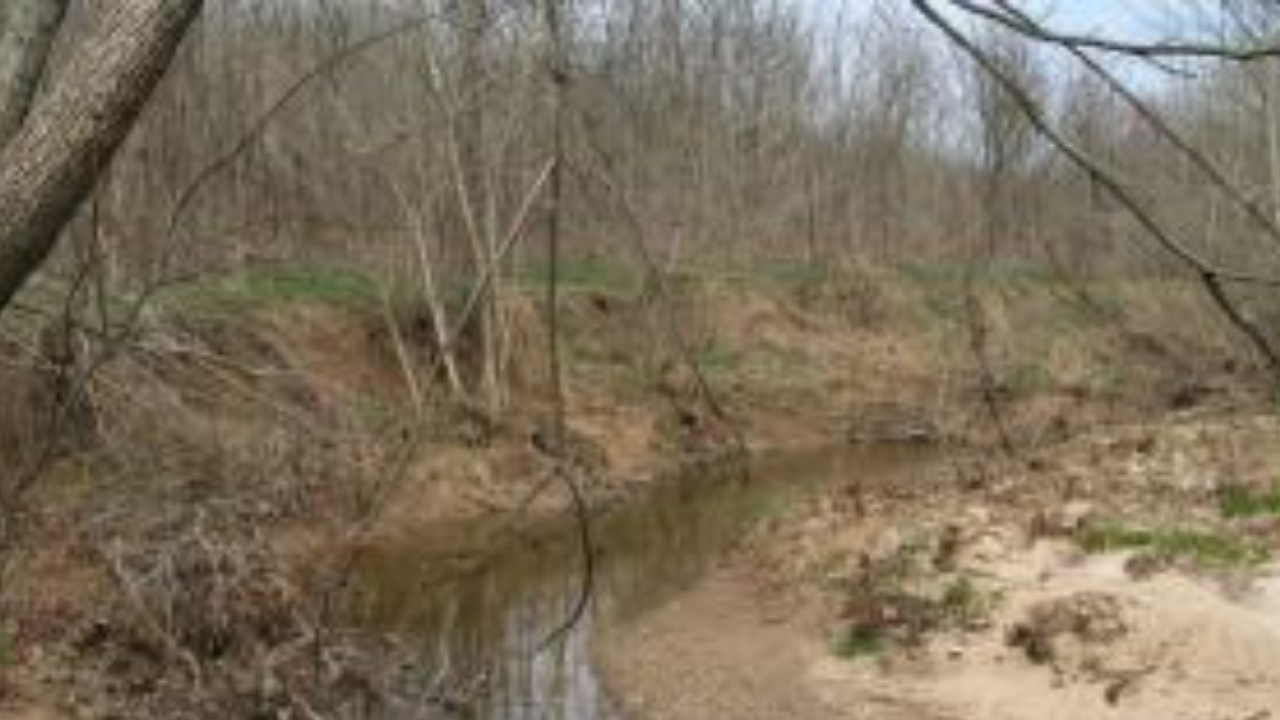
Water does not care about property lines. When heavy rains batter the uplands surrounding Kinkaid Lake, topsoil, agricultural chemicals, and organic debris flow downhill regardless of who holds the deed. For decades, this unmanaged runoff threatened the long-term viability of a vital regional water supply. Then one landowner decided to change the trajectory entirely. By investing private capital and modern ecological engineering into a comprehensive creek restoration project, a single property owner accomplished what municipal budgets and bureaucratic oversight committees spent years arguing over. This intervention halted severe stream bank erosion, trapped thousands of tons of nutrient-rich sediment before it could cloud the reservoir, and proved that private stewardship remains the most effective defense against ecological degradation.
The broader public rarely considers where drinking water comes from until turbidity spikes or restrictions take effect. Municipal water treatment facilities handle the final purification stages, but the real battle occurs miles upstream in the watershed. Every acre of cleared timber, every poorly managed drainage ditch, and every unprotected stream bank acts as an accelerator for soil loss. When silt enters Kinkaid Creek, it travels downstream directly into Kinkaid Lake. Over time, accumulated sediment reduces storage capacity, smothers aquatic habitats, and drives up treatment costs for local utility districts. Public agencies frequently find their hands tied by jurisdictional limits, funding deficits, and endless environmental impact assessments. Private landowners operate under fewer constraints, allowing swift, decisive action when deterioration becomes obvious.
Understanding the mechanics of this private restoration requires looking closely at how water carves through soil during storm events. Without natural vegetation barriers, high-velocity water strips away topsoil and widens stream channels. Deep gullies form, dumping massive volumes of earth straight into the tributary network. The landowner in question bypassed traditional bureaucratic stagnation by hiring specialized hydrological contractors. Instead of pouring concrete walls that merely deflect destructive energy elsewhere, the project utilized bioengineering principles. Root wads, live fascines, and native grass plantings were installed along vulnerable bends of the creek. These natural structures dissipate hydraulic force while encouraging native vegetation to reclaim the banks, locking the soil in place through extensive root networks.
Critics often dismiss private conservation efforts as localized vanity projects with minimal regional impact. That assumption collapses under close inspection. Watersheds function as interconnected biological circuits. When one critical bottleneck is repaired, the downstream benefits multiply rapidly. Water clarity improves. Aquatic macroinvertebrates return, signaling a healthy ecosystem. Fish populations find shaded, stable spawning grounds free from suffocating blanket layers of fine silt. By stabilizing several miles of critical creek frontage, this single private initiative intercepted sediment loads that would have otherwise required millions of dollars in mechanical dredging by public authorities down the line.
Financing such an undertaking demands substantial capital and a long-term perspective that defies quarterly profit models. Traditional agricultural incentives often favor maximum yield over ecological health, encouraging farming right up to the edge of fragile banks. Shifting that priority requires recognizing that degraded land ultimately destroys its own economic value. Land values drop when topsoil vanishes and water sources become compromised. By investing in permanent restoration, the property owner effectively future-proofed the land against accelerating weather volatility. Intense precipitation events are becoming more frequent, meaning older mitigation strategies are increasingly obsolete. Modern restorations must account for higher peak flows and more aggressive erosion rates.
The financial calculus extends beyond individual property boundaries. Municipalities spend enormous sums removing sediment from municipal reservoirs. When private citizens assume the financial and logistical burden of upstream stabilization, taxpayers save money. Yet, public policy rarely offers meaningful tax incentives or streamlined permitting for landowners willing to undertake heavy watershed repairs. Navigating environmental regulations often proves more exhausting than the physical labor of earthmoving. State and federal agencies require complex permits even for restorative work intended to heal damaged ecosystems. Streamlining these approval processes for recognized conservation projects would unlock a massive wave of private capital directed toward environmental repair.
Examining the upstream dynamics reveals why conventional regulatory enforcement falls short. Inspectors cannot monitor every acre of private land continuously. Agricultural runoff and minor drainage alterations occur constantly, compounding over time into major watershed crises. When a landowner takes personal responsibility for land health, monitoring happens organically from the ground up. Daily observation allows for immediate intervention when a small washout begins, rather than waiting for a government grant cycle to approve funding three years later. This agility represents the core advantage of private environmental stewardship over state-managed programs.
The broader implications for regional water security cannot be overstated. Kinkaid Lake serves residential, agricultural, and recreational communities that depend on reliable access to clean water. As climate patterns shift and summer droughts alternate with torrential downpours, the pressure on municipal water supplies intensifies. Reservoirs losing capacity to sedimentation face existential threats during dry years. Protecting these water bodies requires aggressive upland and riparian management. If more agricultural and rural landowners adopted similar restorative practices, the cumulative impact would stabilize regional watersheds permanently.
Skeptics frequently point out that relying on the goodwill of wealthy landowners is an unreliable strategy for regional planning. That critique is entirely valid. Conservation should never depend on individual philanthropy or fortuitous wealth distribution. However, acknowledging the limitations of private initiatives should not diminish the tangible success of this specific project. It serves as a working prototype for what is possible when private resources align with ecological science. The challenge for policymakers is figuring out how to scale this model without suffocating it in administrative red tape.
The execution of the Kinkaid Creek project involved precise earthwork techniques designed to mimic natural river morphology. Straightened channels were re-meandered to slow water velocity. Riffle-pool sequences were constructed to oxygenate the water and provide diverse habitats for aquatic species. Floodplain benches were excavated to allow high water to spread out harmlessly rather than tearing up the main channel. Every design choice prioritized resilience over cosmetic appeal. Mother Nature possesses immense destructive power, but she also provides the exact structural blueprints required to heal herself if given the correct initial geometry and biological components.
Local reactions to the project transitioned quickly from skepticism to admiration. Farmers who initially worried about lost acreage or regulatory overreach watched as neighboring fields stopped washing away during major storms. The visual transformation of the creek banks from raw, eroding red clay to lush, green corridors of willows, dogwoods, and native grasses demonstrated the immediate utility of the approach. Property values in the immediate vicinity stabilized, and recreational users on the lake noticed a marked decrease in muddy runoff following heavy spring rains.
The broader agricultural community remains hesitant to embrace widespread riparian restoration due to perceived economic losses associated with taking productive land out of production. Yet, the land closest to creeks is often the most vulnerable to flood damage and the least profitable to farm intensively. Converting these marginal buffer zones into protected wetlands and forested corridors protects the remaining acreage from catastrophic bank loss. It transforms a liability into a protective shield.
Addressing the root causes of reservoir sedimentation demands a permanent shift in how rural communities view water resources. Water is not merely a utility piped in from an infinite source, nor is it a nuisance to be drained away as fast as possible. It is the lifeblood of the regional economy. When creeks are treated as drainage sewers rather than living ecosystems, the downstream consequences are inevitable and expensive. The landowner who invested in Kinkaid Creek understood this fundamental truth long before the utility companies started sounding alarms about shrinking reservoir capacities.
Future generations will judge current environmental management by whether critical water infrastructure remains viable or collapses under the weight of accumulated neglect. Bureaucracy moves slowly, weighed down by endless studies and political friction. True progress frequently originates from individuals operating outside standard institutional channels, willing to take calculated risks to protect their immediate environment. The restoration of Kinkaid Creek stands as a clear indicator that proactive private intervention works. It proves that environmental protection and private property rights are not mutually exclusive concepts, but rather two halves of the same necessary equation for long-term ecological survival.
The project is complete, but maintenance is an ongoing obligation. Nature does not stand still, and neither can the stewardship required to protect these vulnerable waterways. As seasonal storms continue to test the newly established bank reinforcements, the restored areas will experience adjustments, settling into a dynamic equilibrium. The true test of the engineering will come over decades, not months. For now, the muddy torrents that once threatened the lake have been slowed, filtered, and tamed by a combination of foresight, capital, and ecological respect. The water remains clear, the banks hold firm, and the downstream community reaps the benefits of one landowner's refusal to watch the landscape wash away.