Sometimes a single snapshot lays bare an entire political era. Political history is full of these accidental frames. You remember LBJ yanking his beagle by the ears, showcasing a heavy-handed, domineering style of raw power. You remember George W. Bush sitting in a Florida classroom when an aide whispered about the second plane, freezing absolute shock in real-time.
Now, add another image to that historic ledger.
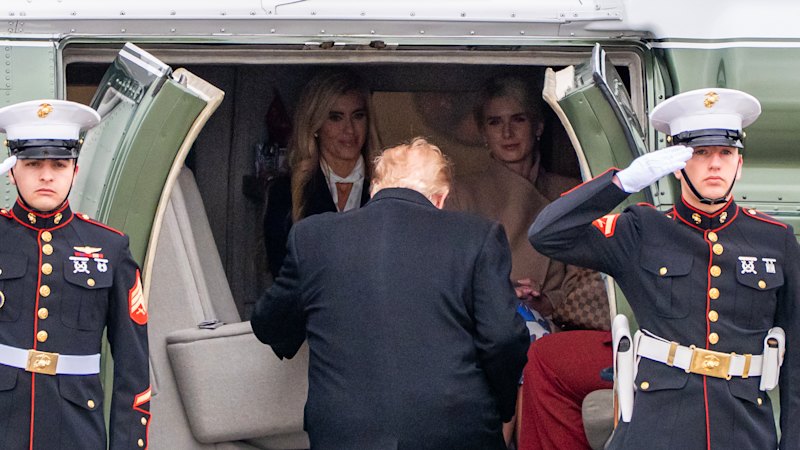
A candid photograph captured by veteran New York Times photographer Doug Mills features Donald Trump flanked by former press secretary Katie Zacharia and special assistant Natalie Harp. On the surface, it looks like a routine scene inside the orbit of modern political fandom. Look closer, and it becomes a masterclass in modern political psychology. It captures a deep, unquenchable thirst for adulation at the exact moment the political bubble starts leaking air.
The Anatomy of Political Insulation
Every modern politician builds a protective fortress. Surrounding yourself with loyalists prevents the harsh noise of dissenting public opinion from piercing your daily routine. But there is a massive difference between standard political staffing and what happens when an administration relies on a tight-knit circle of absolute worshippers.
In the Mills photograph, that dynamic is on full display. Trump’s enduring political strategy has always depended heavily on seeing absolute, unquestioning devotion mirrored back at him. When public sentiment shifts, and when the broader electorate grows exhausted or frustrated, the temptation to retreat inward becomes overwhelming.
Instead of facing hard political realities or adapting to a changing landscape, the inner circle narrows. They feed the leader what he wants to hear. They offer uncritical praise as external pressure mounts. It creates a surreal feedback loop where internal enthusiasm substitutes for actual public mandate.
The Margin of the Frame Tells the Real Story
What makes great documentary photography so compelling is what happens on the edges of the composition. Notice who else is—and isn't—completely comfortable in that orbit.
Susie Wiles is technically in the picture, yet she is largely pushed to the periphery. You spot her red trousers and her Louis Vuitton bag resting on her lap, but her face is out of view. Anyone tracking internal White House dynamics knows that seasoned operatives view these hyper-loyal, media-focused aides with immense skepticism. Experienced political strategists understand that blind devotion doesn't win midterms or shift stubborn poll numbers.
When insiders start clashing behind closed doors over who is cashing in and who is driving the messaging off a cliff, the protective bubble stops feeling secure. It starts feeling fragile.
When the Filter Fails Reality
The trouble with living inside an engineered echo chamber is that the outside world eventually forces its way in. You can curate every press briefing, handpick every friendly interviewer, and surround yourself with aides who treat every statement like scripture. But elections, public fatigue, and legislative math eventually break through the glass.
When figures from that inner circle eventually step outside the compound—into venues like mainstream media interviews or unscripted public forums—the reality check is often brutal. The contrast between the insulated praise of the bubble and the skeptical scrutiny of the public creates a jarring dissonance.
Cameras don't capture political spin. They capture human posture, nervous expressions, and the subtle desperation of maintaining a narrative that no longer matches reality. That is why this particular frame matters. It is not just about the people standing next to the desk. It is about a style of leadership that demands total surrender, captured right at the moment the rest of the country started walking away.