The headlines are breathless. Tehran and Muscat have supposedly hammered out a revolutionary new alignment for the Strait of Hormuz. Analysts are popping champagne corks, calling it a diplomatic breakthrough, a calming balm for global energy markets, and a masterclass in maritime de-escalation.
They are missing the entire plot.
I have watched maritime security analysts hyperventilate over bilateral communiques for two decades. I have seen boardrooms panic over transit lane shifts while the real architecture of regional control remained untouched. This agreement is not a concession toward peace or open commerce. It is a calculated bureaucratic smokescreen designed to institutionalize chokehold economics under the guise of diplomatic cooperation.
Let us dismantle the lazy consensus.
The Geography Myth
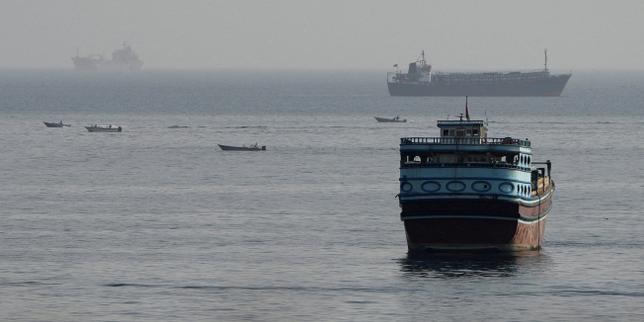
Every standard analysis of the Strait of Hormuz rests on a flawed premise: that geography dictates vulnerability. Commentators point to the narrow shipping lanes—barely two miles wide for inbound and outbound traffic in Omani territorial waters—and treat them as static bottlenecks.
They ignore how maritime routing actually functions under modern naval coercion.
An administrative line drawn on a map by Omani and Iranian diplomats does not change the physical reality of who possesses the littoral artillery, the fast attack craft, and the electronic warfare suites capable of blinding radar arrays across the Gulf. Iran does not need to cross a border to control a transit lane. By outsourcing administrative oversight or route coordination to a neutral neighbor like Oman, Tehran achieves two objectives without firing a single warning shot.
First, it creates a veneer of legal legitimacy for inspections and traffic management. Second, it shifts the diplomatic burden of enforcement onto Muscat, a nation whose entire foreign policy relies on quiet appeasement and balancing act diplomacy.
Imagine a scenario where a tanker flying a Western flag deviates thirty meters from the newly negotiated coordinates. Under the old paradigm, that deviation invited a direct confrontation with the Islamic Revolutionary Guard Corps Navy. Under this new bilateral framework, that same deviation becomes a violation of Omani-brokered transit protocols. The enforcement mechanism is privatized and regionalized, insulating Tehran from direct diplomatic fallout while tightening the noose around commercial shipping.
The Economic Misdirection
Let us talk about the oil. The conventional wisdom states that any disruption to Hormuz spells immediate doom for global energy prices, forcing superpowers to intervene.
That is an outdated 1980s mental model.
Energy markets have evolved past the point of acute panic over single-point bottlenecks, but state actors still weaponize the psychological fear of closure. The Iranian-Omani talks are not about facilitating smooth transit; they are about establishing pricing power over risk premiums. Every time a new shipping lane is "negotiated" or "re-routed," insurance syndicates in London recalculate war risk premiums.
Who benefits when insurance rates spike for vessels passing through the Persian Gulf? Not the consumer. Not the independent tanker owner.
When risk is institutionalized through complex bilateral agreements, the cost of doing business rises incrementally. Tehran does not need to close the strait to bleed its economic adversaries. It simply needs to manage the dials of perceived risk. By partnering with Oman on routing definitions, Iran secures a permanent volatility engine. They can dial up the complexity of transit requirements whenever sanctions tighten or geopolitical pressure mounts, all while pointing to the Oman agreement as proof of their diplomatic engagement.
It is brilliant, cynical theater. And the financial press is buying front-row tickets.
The Diplomatic Smoke and Mirrors
Muscat plays a vital role in regional diplomacy, serving as the perennial Swiss bank of Middle Eastern backchannels. Western capitals love Oman because Oman tells them what they want to hear: that dialogue is working, that moderation is winning, and that stability is just one more negotiated memorandum away.
This is a dangerous delusion.
Oman's foreign ministry operates under existential constraints. Squeezed between Saudi ambitions and Iranian reach, Muscat survives by accommodating everyone. When Oman announces a new transit arrangement with Iran in the Strait of Hormuz, they are not acting as an independent arbiter of international maritime law. They are managing a localized security dilemma. They are giving Iran a diplomatic win that costs Tehran nothing while providing Western diplomats with a convenient narrative to justify inaction.
Look at the wording of the announcements coming out of the region. Vague commitments to navigation safety. Mutual respect for territorial waters. Diplomatic platitudes designed to fill column inches and soothe nervous stock exchanges.
None of these documents alter the command structure of the naval forces operating out of Bandar Abbas. None of them dismantle the network of coastal missile batteries pointed at the Traffic Separation Scheme.
The Uncomfortable Reality of Chokehold Economics
If you want to understand how modern maritime power works, stop looking at naval parades and start looking at legal definitions of passage.
The UN Convention on the Law of the Sea guarantees transit passage through straits used for international navigation. Iran has long contested parts of this framework, arguing that warships and commercial tankers require prior permission or must adhere to stricter definitions of innocent passage. By cutting a separate bilateral deal with Oman—a non-belligerent neighbor that shares jurisdiction over the narrowest segments of the channel—Iran creates an alternative legal reality.
It chips away at universal maritime norms by establishing regional exceptions. Once you accept that Omani-Iranian bilateral coordination dictates the terms of engagement in the strait, you have tacitly undermined the broader principle of open international waters.
This is the trap. Western governments will quietly acquiesce to the new arrangement because any stability, real or imagined, is preferable to a shooting war in the Persian Gulf. In doing so, they validate a creeping revisionism that turns global commons into negotiated concessions.
What You Should Do Instead
Stop reacting to every diplomatic communique out of Muscat as if it were a treaty of Westphalia.
If your supply chain relies on Persian Gulf crude or petrochemical feeds, divest your strategic forecasting from diplomatic optimism. Treat the new Hormuz routing not as a de-escalation, but as a formalization of controlled volatility.
The baseline cost of shipping through that corridor is not going down. The administrative friction is going up. Every stakeholder who assumes this agreement paves the way for a calmer, more predictable maritime environment is setting themselves up for a liquidity crisis when the next enforcement dispute shuts down traffic lanes under the guise of technical compliance.
The strait hasn't opened up. The gatekeepers just got better uniforms.