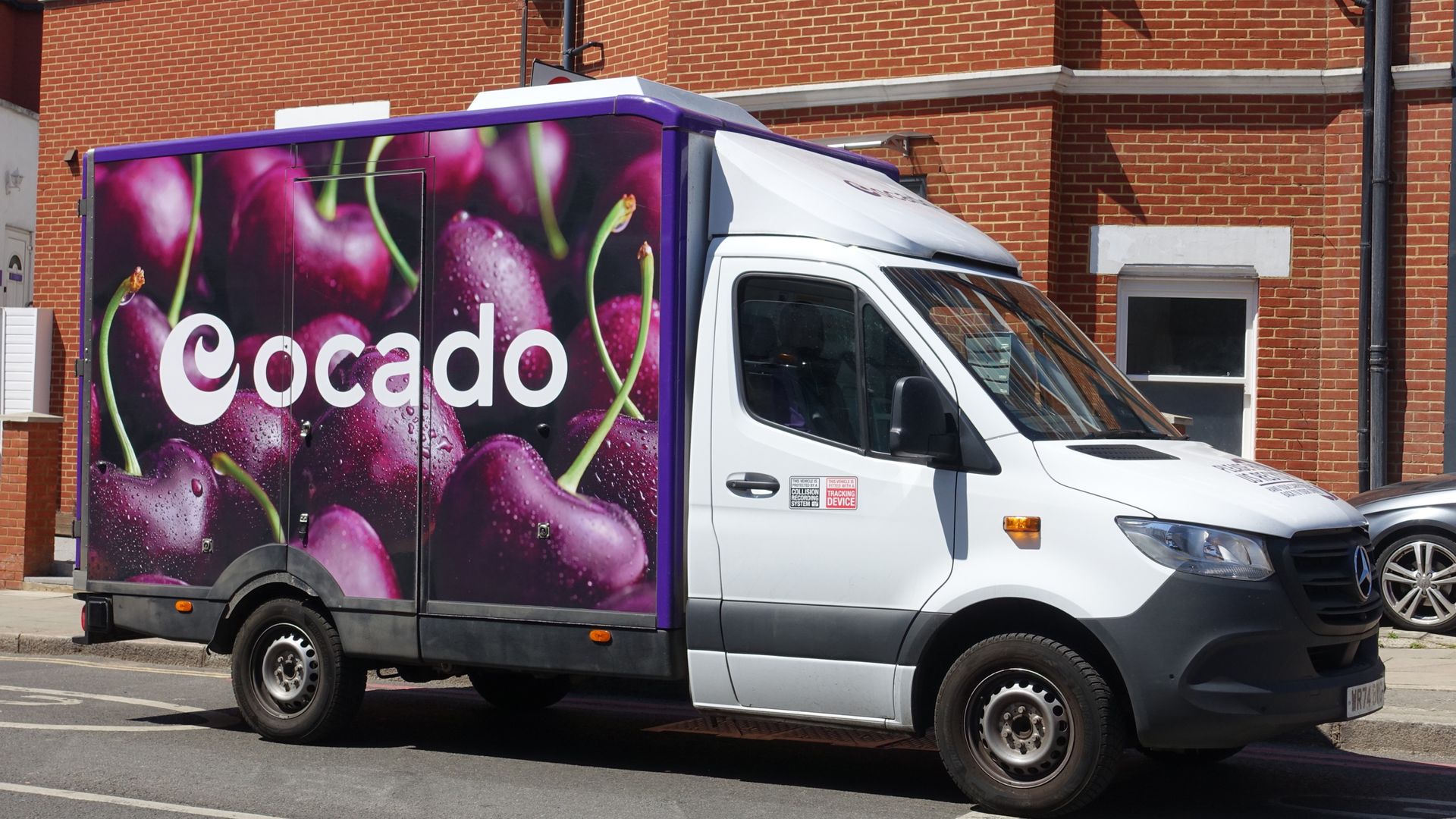
The announced search for a successor to Ocado Group’s co-founder and long-standing Chief Executive, Tim Steiner, marks the end of an era and the beginning of a fundamental identity transition. For over two decades, Ocado has operated under a dual identity: a domestic online grocer and a global logistics technology provider. The market valuation of the firm has long fluctuated based on which identity investors prioritized. By initiating an external executive search—reportedly sounding out figures like Niklas Heuveldop, Chief Executive of Ericsson’s cloud communications subsidiary Vonage—the board has signalled that Ocado’s future lies strictly in its enterprise software and automated infrastructure capabilities rather than its retail origins.
Replacing a founder-CEO who has steered a company through a massive capital-expenditure cycle requires more than standard corporate succession planning. It demands an executive who can pivot the organization from capital consumption to cash-flow optimization. The structural challenge facing the incoming leadership revolves around converting a pipeline of international Customer Fulfilment Centres (CFCs) into predictable, high-margin recurring revenue while managing the unit economics of automated logistics.
The Structural Bifurcation of Ocado's Business Model
To analyze the incoming executive's mandate, the organization must be decoupled into its two distinct economic engines. The strategic error of historical market analyses has been evaluating Ocado as a homogeneous entity.
- Ocado Retail: A joint venture with Marks & Spencer targeting the UK consumer market. This division is a traditional capital-intensive, low-margin grocery retail business. It is exposed to inflation, consumer spending shifts, and intense competitive pressures from physical supermarkets expanding their home delivery footprints.
- Ocado Smart Platform (OSP): The technology business arm that licenses proprietary hardware (automated grid robots) and software (AI-driven routing and warehouse management systems) to global grocery titans like Kroger in the US, Aeon in Japan, and Casino in France.
The core bottleneck for the business has been the asymmetry in capital allocation between these two divisions. OSP requires massive upfront research and development along with long-term engineering commitments to build out automated infrastructure for international partners. Meanwhile, the UK retail arm consumes substantial operational bandwidth.
The approach to sounding out a cloud communications executive like Heuveldop points directly to a desire to treat the Ocado Smart Platform as a pure-play Software-as-a-Service (SaaS) and Infrastructure-as-a-Service (IaaS) business. A legacy grocery executive would lack the technical authority to scale an international enterprise software footprint. Conversely, a pure-tech executive faces the steep challenge of understanding the low-margin realities of grocery logistics, where a fraction of a percent deviation in waste or delivery efficiency dictates profitability.
The Unit Economics of Automated Fulfilment
The primary operational metric for evaluating the new CEO will not be top-line revenue growth, but rather the path to sustained cash-flow positivity. The financial mechanics of an Ocado-style automated warehouse depend on a high fixed-cost, low variable-cost architecture.
Total Cost = Fixed Infrastructure Investment + Variable Operational Cost(Throughput)
The initial fixed expenditure required to construct a single CFC can run into hundreds of millions of pounds. This includes the physical grid, the proprietary robotics fleet, and the localized software integration. For a partner retail chain to achieve a return on investment, the facility must operate at near-maximum throughput capacity.
When international partners slow down their rollouts or underutilize existing facilities, Ocado’s revenue model suffers. The technology provider earns fees based on capacity and throughput. If a partner like Kroger slows down its expansion phase, Ocado's capital remains trapped in long-term deployment phases without generating the anticipated high-margin operational fees. The incoming CEO must master this B2B enterprise sales cycle, shifting the risk profiles of these contracts so that partners bear a greater share of underutilization penalties.
The Three Imperatives for the Incoming Leadership
The strategic roadmap for a successor to Tim Steiner involves three critical operational interventions designed to stabilize the balance sheet and restore investor confidence.
1. Contractual Renegotiation and Monetization Rigor
The first priority is the optimization of the current international client portfolio. Historical agreements signed during Ocado’s peak expansion era must be re-evaluated. The new executive will need to introduce strict minimum-throughput guarantees in partner contracts to protect Ocado from downside risk when grocery retailers scale back their e-commerce ambitions.
2. CapEx Deceleration
The business must transition from an aggressive build phase to an optimization phase. This requires capping international capital expenditures and focusing exclusively on modules that offer immediate software-driven efficiencies. Software updates to existing robot fleets yield immediate margins; building new physical locations does not.
3. Separation of the Retail Joint Venture
To achieve a clean market valuation as a technology firm, the new leadership must consider options for the structural separation of the UK retail business. As long as Ocado Group remains tethered to the operational realities of a UK supermarket chain, its equity valuation will suffer from a conglomerate discount.
Strategic Risk Boundaries
No leadership transition occurs in a vacuum, and any incoming executive faces immediate external headwinds. The most profound risk is the commoditization of warehouse automation. Competitors offering modular, non-proprietary automation solutions are entering the market at lower price points. While Ocado's system is highly sophisticated, many global grocers may opt for cheaper, "good enough" automation alternatives that do not require proprietary ecosystems or long-term lock-in agreements.
Furthermore, the transition away from a founder-led culture carries execution risks. Founder-CEOs often maintain relationships with international corporate partners based on personal trust and multi-year shared visions. An external corporate executive will need to institutionalize these relationships quickly to prevent account churn or contract stagnation.
The immediate strategic play for the board and the incoming executive is to position Ocado not as an innovative online shop, but as the indispensable operating system for global logistics. The success of the transition depends entirely on the speed with which the new CEO can convert unmonetized technology potential into recurring cash flow.