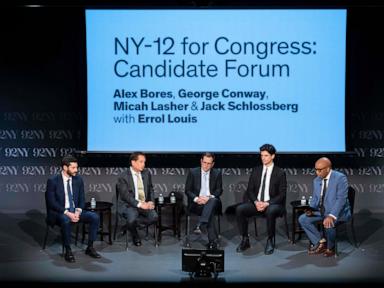
National headlines usually frame New York City politics as a standard progressive versus moderate slugfest. But during the PIX11 debate for the 12th Congressional District, something different happened. The race to replace retiring Representative Jerry Nadler turned into an aggressive proxy war over corporate influence, artificial intelligence regulations, and cryptocurrency millions.
This isn't your standard local campaign. The district covers the wealthiest parts of Manhattan, including the Upper East Side, Upper West Side, and Midtown. It's safely Democratic, meaning whoever wins the June 23 primary basically locks up the seat. Because of that, tech super PACs are pouring staggering amounts of cash into the race, turning a local debate into a referendum on who gets to write the future rules of the internet.
The Target on Alex Bores
The night immediately devolved into an intense, three-way clash centered on state Assembly Member Alex Bores. Bores is a former data scientist at Palantir who has positioned himself as a tech-literate lawmaker. He even sponsored New York state legislation requiring artificial intelligence developers to report safety incidents.
His opponents didn't waste any time. Within the first thirty seconds of the debate, Assembly Member Micah Lasher went straight for the throat. He claimed Bores is completely compromised by the tech industry cash flowing into the race.
"There’s one candidate on this stage who’s been standing up to Big Tech for more than a decade, one candidate on the stage who has voted consistently for regulation of artificial intelligence, one candidate on this stage who is not backed by any of the big AI companies," Lasher said. "That candidate is not Alex, that candidate is me."
Moments later, Jack Schlossberg joined the attack. Schlossberg, a social media commentator and the grandson of President John F. Kennedy, argued that the specific guardrails Bores wants to put on artificial intelligence are actually a corporate dream. He claimed the proposed rules would shut out open-source competition and give massive tech conglomerates too much permanent control over the market.
Millions from Anthropic and Crypto Titans
The anger on stage stems from the absurd amount of money flooding Manhattan mailboxes and airwaves. While a super PAC funded by OpenAI interests has spent millions to defeat Bores, a rival super PAC linked to executives at Anthropic has spent at least a million dollars to elect him.
Then there is the crypto angle. Tech billionaire Chris Larsen, the co-founder of Ripple, poured $3.5 million into a super PAC backing Bores. Pro-crypto groups have handed Bores an "A" rating, which Lasher used as proof that Bores won't look out for regular consumers when he gets to Washington.
The cash dynamic is so intense that it literally interrupted the broadcast. During a commercial break right after a tense exchange about tech money, three straight political ads aired. One was an attack ad from the anti-Bores Think Big PAC, claiming he's bought and sold. The next two were pro-Bores ads, including one featuring a literal robotic voice mocking "Trump’s megadonors" for trying to destroy his campaign.
Bores tried to flip the script, calling the attacks desperate and comparing them to right-wing talking points.
"The Trump disinformation is coming from inside the party," Bores shot back. He constantly reminded voters that he quit his data scientist job at Palantir years ago when the company signed an immigration enforcement contract with the first Trump administration.
The Circular Firing Squad Problem
While Lasher, Bores, and Schlossberg tore each other apart over tech policy, candidate George Conway spent the night playing the adult in the room. Conway, a high-profile lawyer and co-founder of the Lincoln Project, lamented the ugly tone of the evening.
"What we saw here tonight was something that Democrats sometimes do a little too well, which was a circular, or really a triangular firing squad, and I think that’s a shame," Conway said.
Conway’s frustration makes sense if you look at the polling data. A recent PIX11/Emerson College poll showed Lasher with a narrow lead, Bores close behind him, and Schlossberg sitting in third place. With just weeks left before voters head to the booths, nobody can afford to play nice. But the hyper-focus on artificial intelligence and cryptocurrency has left some wondering if the candidates are ignoring more immediate New York problems like housing costs, immigration enforcement, and basic affordability.
What Manhattan Voters Need to Watch Next
If you live in NY-12, don't expect the flood of mailers, text messages, and television ads to slow down before June 23. The cash is moving too fast. To cut through the noise, you need to look past the dramatic debate stages and track the actual policy differences.
- Check the Campaign Finance Filings: Watch the Federal Election Commission reports to see exactly which tech executives are funding the independent expenditure committees supporting Lasher or Bores.
- Evaluate the AI Platform Plans: Read the specific legislative texts Bores passed in Albany versus the broader corporate oversight proposals Lasher supports. Decide if you prefer a tech-insider approach to regulation or a traditional outsider hammer.
- Look at the Ground Game: Super PAC money buys television ads, but internal institutional support wins primaries in Manhattan. Pay attention to which local tenant groups, labor unions, and Democratic clubs are organizing actual boots on the ground during early voting.
The tech industry isn't just lobbying Washington anymore. They are trying to choose the people who go there in the first place. What happens next in Manhattan will set the blueprint for how tech cash shapes congressional elections across the entire country.



:max_bytes(150000):strip_icc()/how-many-types-of-dwarfism-are-there-2860725-v1-8dae2c531b4b47d9ae36ae404d3308a0.png)