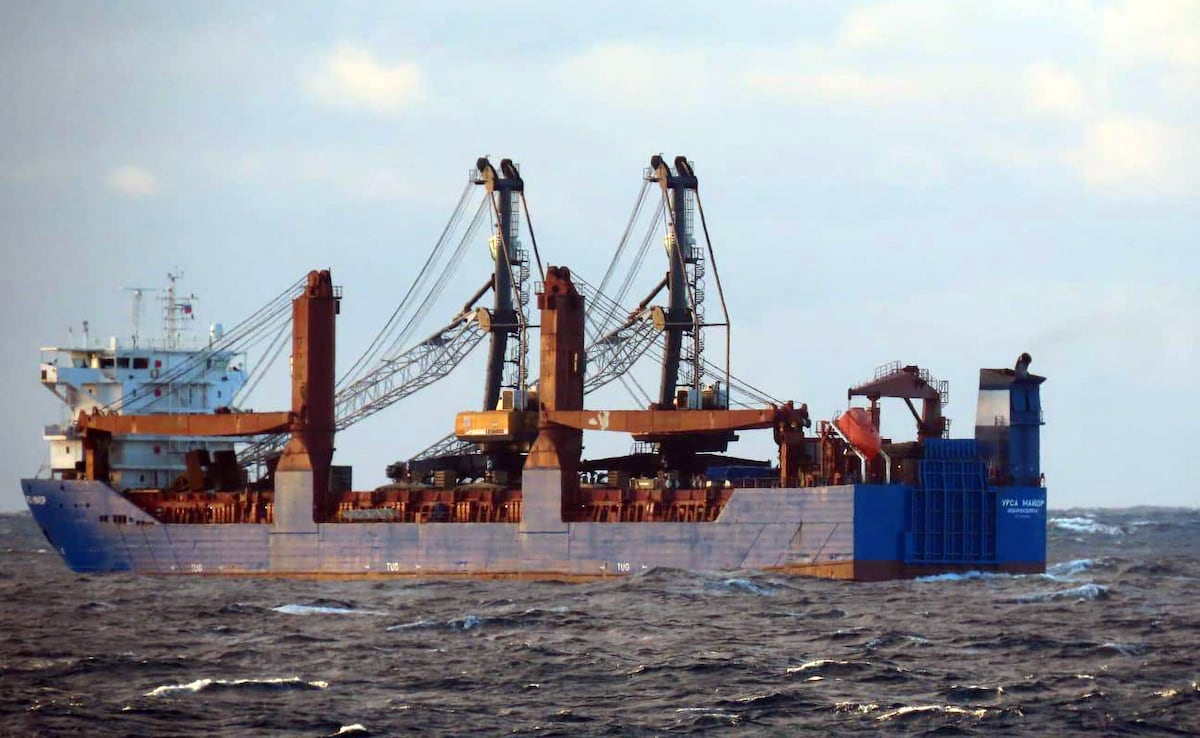
The world of illicit maritime trade isn't usually as flashy as a Hollywood thriller. Most of the time, it's just rusty hulls, forged paperwork, and a lot of waiting in gray waters. But the recent saga of the Lady R, a Russian-flagged cargo vessel, broke that mold. It didn't just carry cargo; it carried a massive geopolitical headache for every intelligence agency from Washington to Seoul. When a ship linked to sanctioned weapon transfers suddenly goes dark or makes an unscheduled pit stop, people notice. You should too. This isn't just about one boat. It’s about how the global security structure is cracking under the weight of a Moscow-Pyongyang alliance that nobody seems able to stop.
Why the Lady R Matters to Global Security
If you've been following the war in Ukraine, you know Russia has a massive hunger for artillery. They’re burning through shells at a rate their domestic industry can’t always match. Enter North Korea. Kim Jong Un has mountains of Soviet-era munitions that happen to fit Russian hardware perfectly. The Lady R is the physical link in this chain. It’s a vessel owned by MG-Flot, a company already under US sanctions for its role in transporting Russian military equipment. For a more detailed analysis into similar topics, we recommend: this related article.
When this ship moves between the Russian port of Dunay and North Korea’s Rajin, it isn't carrying grain or humanitarian aid. Intelligence reports and satellite imagery from groups like the Royal United Services Institute (RUSI) have consistently shown these ships loading and unloading containers that look suspiciously like ammunition crates. This isn't speculation. It's a logistical reality. The Lady R represents a blatant middle finger to the United Nations Security Council resolutions that Russia itself once voted to approve.
The Shell Game in the Sea of Japan
Tracking these ships is a nightmare for a reason. They use "dark" maneuvers. This involves turning off their Automatic Identification System (AIS) transponders. Normally, AIS is a safety tool so ships don’t ram into each other. For the Lady R and its sister ships like the Angara and the Maria, turning it off is a survival tactic. To get more details on this topic, in-depth analysis is available at NBC News.
They vanish. One day they're near Vladivostok, the next they’re "gone," only to reappear days later in a North Korean port with deep-sitting hulls, indicating they're carrying heavy loads. I’ve looked at the satellite passes. The patterns are consistent. They dock at specific piers in Rajin where rail lines lead directly into the North Korean interior. Then they sail back to Russia, often docking at military-controlled facilities. It's a shuttle service for the machinery of death.
The Limits of Sanctions
Sanctions only work if you care about being part of the global financial system. Russia and North Korea have decided they don't care anymore. They've built a closed loop. They don't need SWIFT. They don't need dollars. They trade in shells, fuel, and likely missile technology.
- Physical Interdiction: It’s nearly impossible. Stopping a Russian-flagged ship in international waters is an act of war.
- Port Bans: Most countries won't let these ships dock, but they don't need to. They only need two ports: one Russian, one North Korean.
- Financial Pressure: You can't freeze assets that are held in gold or physical goods.
What North Korea Gets in Return
Kim Jong Un isn't helping Putin out of the goodness of his heart. North Korea's economy is a disaster. They need food, they need oil, and most importantly, they need advanced tech. The "last voyage" of ships like the Lady R often involves a return trip. What’s in those containers heading back to Rajin?
Experts at the Center for Strategic and International Security (CSIS) worry about telemetry data for missiles or jet engine components. If Russia provides the "brains" for North Korea’s "brawn," the threat level in the Pacific shifts overnight. We’re seeing North Korean missiles being used on Ukrainian soil. That’s a live-fire testing ground for Kim’s weapons. He’s getting data on how his tech performs against Western air defense systems like the Patriot. That’s a terrifying trade-off for a few thousand shells.
The Failure of International Oversight
The UN Panel of Experts on North Korea used to be the gold standard for tracking these violations. Not anymore. Russia used its veto to kill the panel's mandate. They basically fired the police so they could keep committing the crime. This was a massive blow to transparency.
Without that official UN reporting, we’re left relying on commercial satellite imagery and open-source intelligence (OSINT). It’s enough to see what is happening, but it’s harder to build the international legal consensus needed to punish it. Russia’s move to dissolve the panel was a tactical masterclass in obstruction. It signaled to the world that the old rules are dead.
The Problem with "Shadow Fleets"
The Lady R is part of a larger "shadow fleet." These are vessels that operate outside the norms of international shipping.
- Old Hulls: Many are nearing the end of their lives, making them environmental risks.
- Fake Insurance: They often carry insurance from non-reputable or state-backed Russian firms.
- Flag Hopping: They change their country of registration frequently to stay one step ahead of bureaucratic bans.
When you're dealing with a ship like the Lady R, you aren't just dealing with a transport company. You’re dealing with a state-run smuggling operation.
Why You Should Care About These Shipping Routes
It’s easy to think of a rusty ship in the North Pacific as an "over there" problem. It’s not. The munitions delivered by these vessels extend the war in Ukraine. Every shell that reaches the front lines means more casualties and a longer path to any kind of peace.
On the other side of the world, the technology Russia sends back to Pyongyang increases the risk of a nuclear-capable ICBM that can reliably hit the US mainland. These aren't separate issues. They are two ends of the same dirty string. The Lady R isn't just a boat. It's a symptom of a new, aggressive axis that ignores borders and treaties.
How the West Is Trying to Respond
Since they can't easily board the ships, the US and its allies are playing a game of "name and shame." They release the satellite photos. They sanction the shell companies. They pressure ship-to-ship transfer hubs in places like the Mediterranean or the South China Sea.
But it’s a bit like playing Whac-A-Mole. You sanction one ship, and another one appears under a new name with a fresh coat of paint. The Lady R has become a symbol of this frustration. It’s a ghost ship that everyone can see but no one can stop.
Monitoring the Logistics
To really understand the scale, you have to look at the rail yards. In the Russian Far East, satellite shots have shown an explosion in rail activity near the ports where these ships dock. Massive piles of shipping containers appear and disappear in sync with the Lady R’s arrivals.
The logistics are getting smoother. They're getting faster. This isn't a desperate, one-time deal. It’s a permanent supply chain. It’s a bridge across the sea that bypasses every global trade rule in the book.
Tracking the Next Move
Don't expect this to stop because of a few angry statements at the UN. The Russia-North Korea partnership is a marriage of necessity. As long as Russia needs shells and North Korea needs fuel and tech, the Lady R and its peers will keep sailing.
If you want to stay ahead of this, watch the ports of Vostochny and Dunay. Watch for the AIS blackouts. When the ships go dark, the danger goes up. The international community needs to move beyond "monitoring" and start looking at how to physically or legally disrupt these corridors without sparking a broader conflict. It's a tightrope walk over an ocean of gunpowder.
The reality is that the Lady R isn't just a vessel. It's a floating piece of evidence that the post-Cold War era of cooperation is over. We’re back to a world of blocks, shadows, and secret shipments. Keeping your eye on the water is the only way to see what's coming next.
To stay informed, follow the updates from maritime tracking blogs and defense think tanks. Don't just look at the headlines. Look at the shipping lanes. The next major shift in the Ukraine war or the Pacific security balance will likely be carried on the deck of a ship just like the Lady R.