The roar inside the stadium does not sound like joy. It sounds like a collective intake of breath from a lungs that have been starved of oxygen for months.
Outside the gates, the world is fracturing. Back home, the streets are a gauntlet of tear gas, sirens, and the terrifying bravery of young citizens demanding to be heard. But here, under the blinding white canopy of the World Cup stadium, twenty-two men are chasing a leather ball across a patch of manicured grass.
To the casual observer flipping through channels in a comfortable living room half a world away, it is just a soccer match. A standard Group Stage fixture. Group B. Iran versus Wales. The scoreboard tracks the minutes and the goals, cold and objective.
The scoreboard is lying.
Every pass is laced with treasonous stakes. Every missed shot carries the weight of a fractured homeland. When the Iranian national team steps onto the pitch, they are not just athletes competing for a trophy; they are walking a tightrope stretched over a burning volcanic crater.
The Weight of a Silent Anthem
Consider the young man standing in the third row of the stands. Let us call him Arash. He saved for three years to afford this trip, working double shifts at a tech firm in Tehran while watching his local currency plummet against the dollar. His face is painted in green, white, and red. But around his wrist, he wears a band of solid black.
Before the whistle even blows, the true drama unfolds.
The stadium speakers blare the first notes of the Iranian national anthem. It is a song mandated by the regime, a melody that represents the very authorities currently cracking down on protesters back home. On the pitch, the players line up. Their faces are stone. Their lips do not move.
Total silence.
It is a staggering act of defiance, broadcast to millions of homes worldwide. In the stands, Arash feels a sob catch in his throat. Beside him, an older woman tears off her headscarf, her hands shaking as she holds up a sign that reads Woman, Life, Freedom. She is weeping openly.
This is the agonizing paradox of Iranian football. For decades, the national team—affectionately known as Team Melli—has been the one entity capable of uniting a fiercely polarized society. Taxi drivers, university professors, conservative grandmothers, and radical youth all bled the same colors when the World Cup arrived.
But history changed the calculus. The geopolitical landscape back home has shifted so drastically that even a game of soccer becomes a referendum on human rights. The players are trapped in an impossible vise. If they support the regime, they betray their families and fans. If they support the protesters, they face severe retaliation, asset seizure, or worse when they return to Iranian soil.
They chose silence. And that silence was deafening.
When the Pitch Becomes a Sanctuary
The match begins, and the tactical reality of the game offers a temporary escape.
Soccer is a beautiful game because of its geometry. Eleven moving parts working in synchronization to exploit space. Against a disciplined Welsh side led by seasoned veterans, the Iranian squad has to play with absolute precision.
But the tactical analysis fails to capture the raw, desperate energy vibrating through the grass.
Every tackle is frantic. Every sprint looks like a man running for his life. Because, in a way, they are. They are running away from the grim reality awaiting them at the end of the tournament, and running toward a brief moment of global visibility.
For ninety minutes, politics is supposed to be upstaged by sport. That is the official narrative FIFA loves to sell. The governing body insists on neutrality, banning political symbols and demanding that teams focus solely on the athletic competition.
But neutrality is a luxury of the safe.
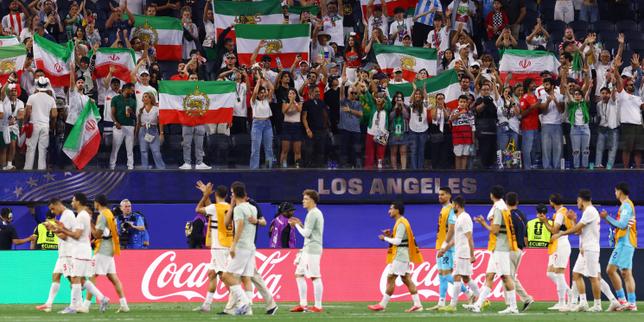
When your cousin is marching in the streets of Isfahan, avoiding rubber bullets, neutrality feels like complicity. The fans in the stadium know this. They turn the stands into a battlefield of symbolism. For every official flag provided by the tournament organizers, there are dozens of older, pre-revolutionary flags smuggled past security under coats and inside bags.
The stadium becomes a microcosm of a nation in exile, a temporary territory where Iranians can scream the things that would get them arrested at home.
The Anatomy of the Final Minutes
The game drags on, scoreless. The tension inside the stadium builds until it is almost toxic. The heat of the desert night presses down on the crowd, sticky and suffocating.
Ninety minutes pass. The fourth official raises the board indicating nine minutes of stoppage time.
In soccer, stoppage time is a twilight zone. Players are exhausted, their muscles screaming, their minds clouded by fatigue. It is usually when tactics break down and pure instinct takes over.
Then, the miracle happens.
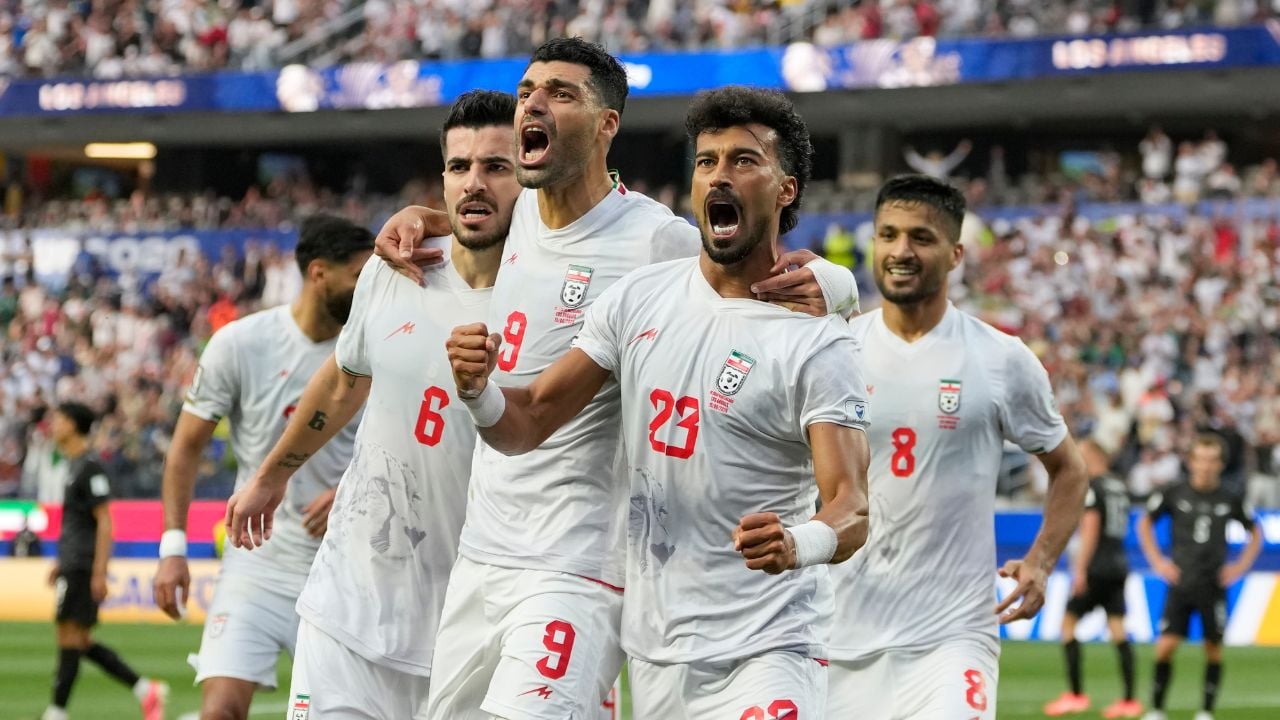
In the 98th minute, a loose ball bounces outside the Welsh penalty box. Roozbeh Cheshmi, a defensive midfielder who had faced intense criticism from fans just days prior for his perceived ties to the establishment, steps up. He strikes the ball with everything he has left.
A low, searing missile. It flies past the outstretched hands of the keeper and rattles the back of the net.
The stadium explodes.
It is an architectural event, a physical wave of sound that shakes the concrete beneath Arash’s feet. Players collapse to the ground, burying their faces in the turf. Some are laughing; others are sobbing uncontrollably.
Two minutes later, Ramin Rezaeian chips the ball over the keeper for a second goal, sealing a historical victory.
Consider what happens next: players embrace their coach, a man who has tried desperately to shield them from the political storm. Fans who were screaming insults at each other over political differences an hour ago are suddenly locked in tight, tearful embraces.
For a brief, shining moment, the division evaporates.
The Flight Back to Reality
But the euphoria of a World Cup win is a fleeting drug.
As the stadium lights begin to dim and the fans stream out into the Doha night, the reality of the world outside begins to settle back in like a heavy fog. Smartphones are pulled out of pockets. The roaming data connects, and the notifications start rolling in.
More arrests in Tehran. More protests in Tabriz.
The victory on the pitch changes nothing about the geopolitical reality. The three points in the group standings do not bring back those who have been lost. The players will still have to face the authorities. The fans will still have to return to a country struggling under the weight of economic sanctions and systemic oppression.
Yet, to dismiss the match as mere entertainment is to misunderstand the human spirit entirely.
The game did not upstage politics. It gave politics a human face. It showed the world that behind the headlines, the sanctions, and the diplomatic stalemates, there are millions of people who just want to breathe, to cheer, and to exist without fear.
Arash walks away from the stadium, his throat raw from screaming, his flag draped over his shoulders. He knows what awaits him when his flight lands back in Tehran next week. He knows the danger has not passed.
But as he looks back at the glowing stadium one last time, he carries something he did not have when he arrived. A memory of solidarity. A moment when his people were seen by the entire world, not as a threat or a statistic, but as human beings capable of profound, heartbreaking beauty.
The stadium lights finally click off, plunging the parking lot into shadow, leaving only the distant hum of traffic and the quiet, stubborn hope of a nation waiting for its dawn.