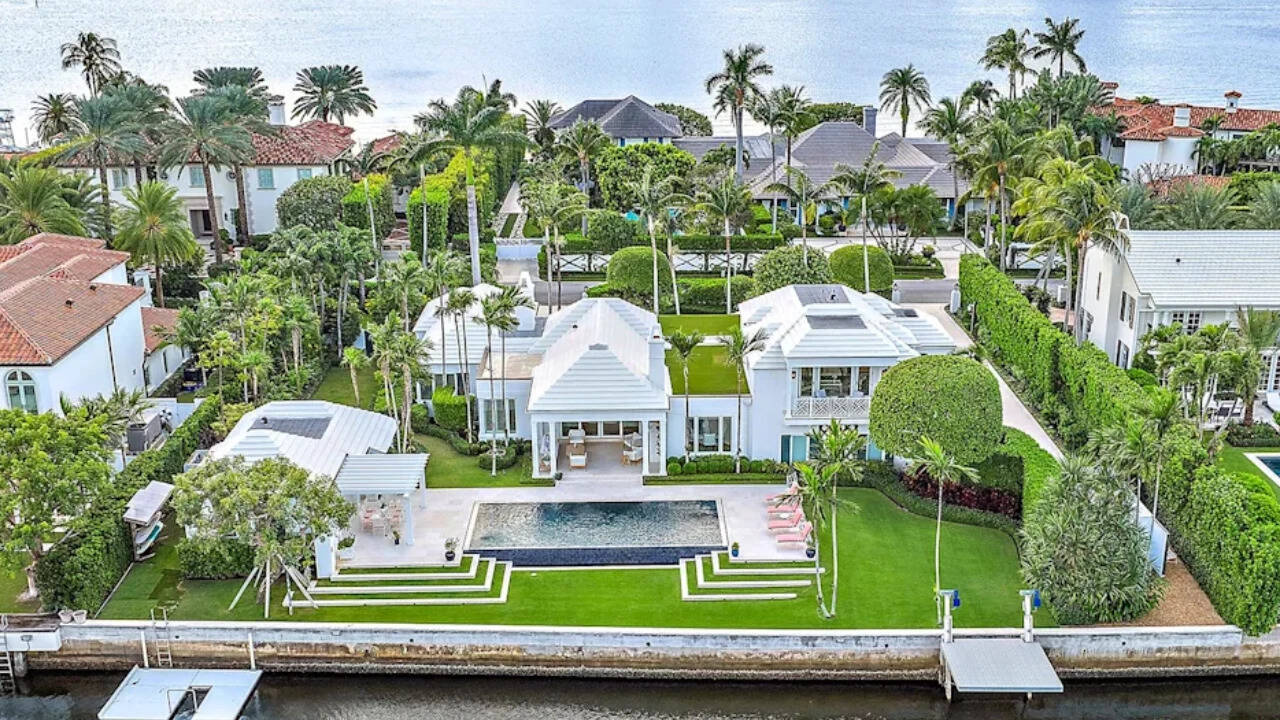
Everyone is staring at the headline numbers. A rundown Palm Beach property gets scooped up for nine million dollars, sits on the ledger for a blip, and then flips for twenty-five point four million. The financial press treats this like a masterclass in luxury asset accumulation. Commentators point to the square footage, the coastal migration wave, and the endless line of ultra-high-net-worth buyers fleeing high-tax states. They call it a triumph of vision.
They are completely, fundamentally wrong.
I have watched syndicators and wealth managers chase these coastal unicorns for decades, convincing themselves they are genius operators when they are really just buying lottery tickets during a historic liquidity bubble. That twenty-five million dollar price tag is not a testament to brilliant architecture, bespoke interior staging, or superior asset management. It is a monument to cheap debt, a distorted supply chain, and a desperate scramble for inflation hedges that have zero to do with real estate fundamentals.
Let us dismantle the lazy consensus.
The Flawed Premise of Coastal Value Creation
The mainstream narrative goes like this: buy prime dirt, pour capital into high-end renovations, cater to the billionaire class, and watch the appreciation compound. It sounds clean. It fits neatly into a pitch deck.
It also ignores the mechanics of modern capital destruction.
When a property triples in valuation within a compressed timeline without a proportional expansion in underlying utility, you are not looking at value creation. You are looking at a liquidity transfer. The previous owner did not leave money on the table out of ignorance; they sold because the carrying costs, insurance premiums, and systemic exposure in coastal flood zones reached an inflection point where holding became a liability.
Insurance markets in Florida are not just tightening; they are actively fracturing. Anyone ignoring the carrier retreats, escalating windstorm deductibles, and reinsurance crunches is looking at a balance sheet through rose-colored glasses. When you buy a twenty-five million dollar waterfront trophy, your biggest risk isn't a market downturn. It is the quiet withdrawal of underwriting capacity by institutional insurers who know what rising sea levels and storm intensity actually cost over a twenty-year horizon.
The Myth of the Infinite Buyer Pool
Ask any luxury broker about the target demographic for these mega-flips, and they will give you a rehearsed speech about tech founders, hedge fund titans, and global billionaires who view twenty-five million dollars as pocket change.
Here is the dirty secret of the ultra-prime market: the buyer pool is shockingly thin, and it is shrinking faster than the marketing brochures admit.
When interest rates were near zero, capital was free, and asset prices inflated indiscriminately. Every person with a leveraged portfolio felt like a visionary. Now that debt has a real cost, the calculus shifts from speculation to yield. A luxury home generating zero cash flow that costs six figures a year just to keep insured, air-conditioned, and guarded is not an investment. It is an expensive hobby masquerading as an asset class.
Imagine a scenario where global liquidity tightens by another ten percent over the next twenty-four months. The casual wealth that washed into South Florida looking for a sun-drenched parking spot for cash suddenly faces margin calls and portfolio rebalancing. Those twenty-five million dollar trophy properties do not find eager secondary buyers overnight. They sit. They bleed carrying costs. Sellers start slicing prices by millions, and the narrative of unstoppable coastal appreciation shatters.
I have seen developers blow millions on imported Italian marble and smart-home automation, convinced that luxury finishes insulate them from macroeconomic gravity. They don't. When the music stops, marble is just heavy rock you can't liquidate to make payroll or service debt.
What You Should Be Doing Instead
If you are looking at these headlines and thinking about deploying capital into high-end residential real estate, stop. You are fighting the last war.
The smart money isn't chasing coastal trophy flips where the margin for error is razor-thin and the insurance markets are actively hostile. The real alpha right now lies in unglamorous, high-density infill plays in secondary markets with actual economic diversification—places where population growth is driven by job creation, not tax migration alone.
Stop buying properties based on what they look like on Instagram. Start underwriting them based on how they survive a five-year credit squeeze, a fifty percent hike in property insurance, and a buyer pool that no longer cares about your custom wine cellar.
The next time you see a nine-million-dollar shell flip for twenty-five million, don't applaud the genius of the buyer.
Check their debt structure, look at their reinsurance binder, and ask yourself who is going to be holding the keys when the tide finally comes in.