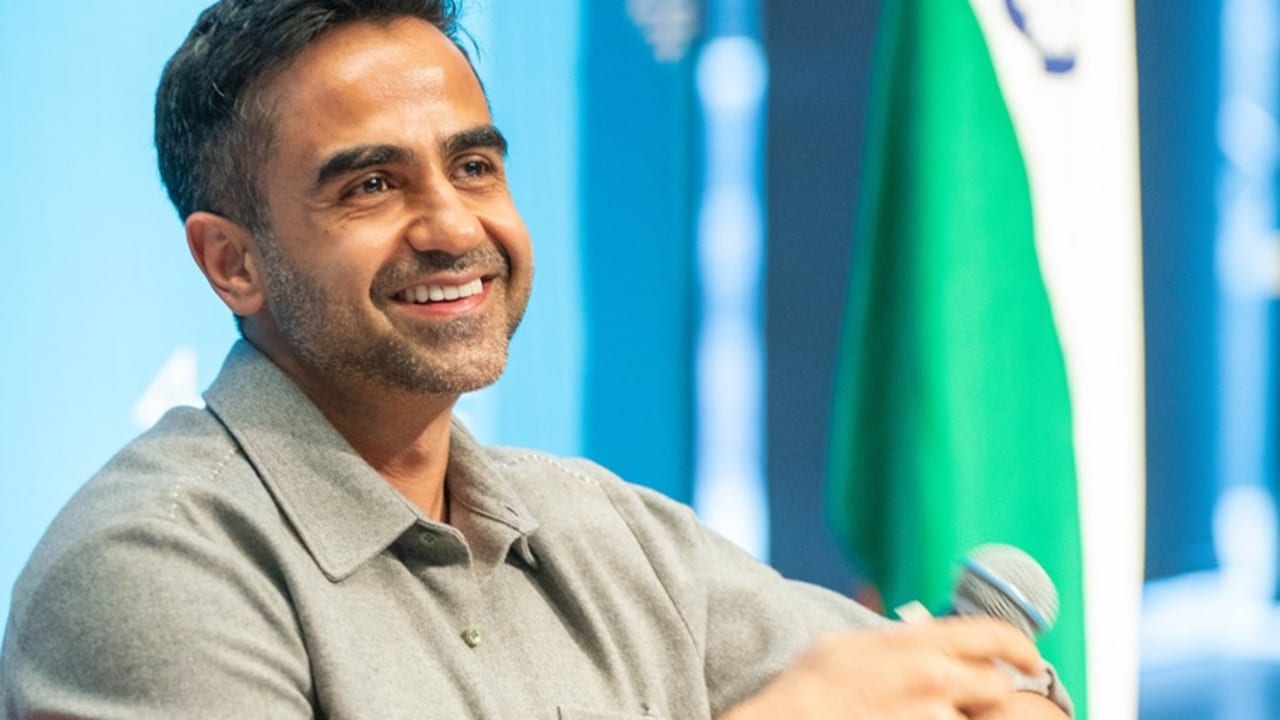
When Nikhil Kamath took the stage at the NDTV World Summit, he did not arrive as a conventional Wall Street or Dalal Street executive reading from a sanitized corporate script. He arrived as a high-school dropout who traded equities at seventeen while earning ₹8,000 a month at a call center, turned a bootstrapped discount broker into a financial juggernaut, and now commands a personal net worth estimated at $3.2 billion. His summit appearance gave the audience a window into how an operator who built his fortune on retail trading volume now views artificial intelligence, consumer brands, state-level competition, and the uncomfortable math of his own core industry.
Most coverage of an executive summit talk reads like a stenographer's log. Speakers say X, moderators nod, and readers leave with a handful of soundbites and zero understanding of the incentives underneath. Looking closely at Nikhil Kamath and Zerodha requires separating public stagecraft from balance-sheet reality. Discount broking made the Kamath brothers billionaires, yet the very structure of retail trading makes standing still a slow bleed unless a firm reinvents how it captures customer money.
The Stage Versus the Balance Sheet
At the NDTV World Summit, Kamath argued that India faces low odds of winning a capital-intensive race against the United States and China to build frontier artificial intelligence models from scratch. Instead, he pointed toward open-source models and application-layer businesses that cut compute costs, protect enterprise data privacy, and solve real commercial problems. He also noted that internet access and AI tools have shrunk the practical advantage of a formal college degree for a motivated seventeen-year-old, while urging Indian founders to aim at massive overseas consumer markets like the United States rather than settling for domestic comfort.
Those remarks sound refreshing to anyone tired of grandiloquent speeches about overnight tech dominance. They also carry a quiet tension. A billionaire investor telling young builders to skip bloated credentials and target global consumers speaks from a position where capital, brand equity, and institutional access already exist. For a teenager in a small town without a safety net, trial and error without credentials still carries real friction, even when educational tools are cheap or free.
Meanwhile, back at Zerodha, the numbers tell a more sobering story than any keynote address. In FY25, Zerodha posted ₹8,847 crore in revenue—down 11.5 percent year-on-year—and ₹4,237 crore in net profit, down 22.9 percent from FY24, even as its EBITDA margin climbed to 63.78 percent. Those are still staggering profitability figures for an unlisted, bootstrapped company owned by the Kamath family. Still, the direction of travel matters. Peak-cycle windfalls do not last forever when market momentum cools or regulatory friction rises.
Why Discount Broking Is a Treadmill
Broking does not compound the way people assume finance compounds. Clients can open an account today, trade actively this month, and go quiet next quarter when markets turn choppy. Zerodha co-founder and CEO Nithin Kamath has been unusually candid about this dynamic, noting that a broker often has to keep running just to stay in place, and that annual maintenance charges only contribute roughly two percent of revenue.
A hypothetical example illustrates the trap. Imagine a retail trader who places frequent trades during a roaring bull market and generates steady transaction fees for a broker. When volatility dries up or retail participation cools after a market peak, that trader's activity can drop sharply overnight, pulling transaction-linked revenue down with it even if the account stays open.
That vulnerability explains why the broking sector has been forced to rethink its revenue mix. Margin trading facility (MTF) lending gave Zerodha a more predictable interest stream—roughly ten percent of revenue after launching in December 2024—yet Nithin Kamath openly questioned whether MTF is a healthy product for most retail customers and warned about the systemic contagion risks of high leverage across the industry. Even zero-commission equity delivery, long a crown jewel of Zerodha's customer promise, came under scrutiny in late 2025 as shifting economics forced leadership to weigh whether charging for delivery might eventually become necessary.
Assets, Leverage, and the Battle for Stickiness
If trading volume is fickle, Assets Under Management and net worth buffers become the real battleground. By mid-2026, Zerodha highlighted roughly ₹1 lakh crore in customer AUM brought over from IL&FS and positioned itself at the top on total retail and HNI holdings, while also pointing to a net worth of around ₹11,000 crore required at its scale. That capital requirement acts as a barrier against smaller rivals, turning balance-sheet strength into a competitive shield.
At the same time, rivals have pressed hard on customer acquisition in regions where account growth has proved more resilient, and product expansion has become essential. Zerodha has moved deliberately into adjacent territory rather than relying solely on order flow:
- Asset management and passive funds: Building out Zerodha Fund House with index funds and ETFs to capture long-term investor allocations.
- Everyday savings and retirement products: Adding fixed deposits and National Pension Scheme offerings organically, alongside growing NRI onboarding.
- Capital markets and advisory: Securing a merchant banking license via Zerodha Corporate Advisors in 2026 and backing adjacent platforms such as Tijori Finance and Ditto.
- Cash reserves: Sitting on a reported ₹22,679 crore cash pile in FY25 to absorb cyclical slowdowns and fund long-horizon bets.
None of these moves guarantees effortless dominance. Mutual fund management is a slower, margin-compressed game than active trading. Merchant banking brings reputational and execution scrutiny. And expanding into lending or new financial lines requires strict discipline so short-term yield never compromises customer trust.
One Founder, Many Bets
Watch Nikhil Kamath closely and you see a businessman spreading his energy across several distinct arenas at once. Beyond Zerodha, he has built a public profile through high-profile podcasting, steered investments and founder initiatives through True Beacon, Gruhas, and WTFund, and pushed into consumer brand ambitions. Recognition such as being named to TIME100 Next India in 2026 underscores how far his reach extends beyond trading terminals.
That breadth is a double-edged sword. Cross-pollinating ideas across consumer startups, policy debates, and capital markets can sharpen an investor's instincts. Yet division of attention is a legitimate question in any founder-led empire, especially when core broking faces tighter margins, fierce competition, and occasional technical hiccups during peak market volatility.
When Kamath talks about learning from China's competitive state-level leasing and development model or pushing Indian consumer brands to win in global markets, he is framing growth as an execution problem rather than a sympathy contest. Investors and founders listening to him do not need to treat every remark as gospel—especially where structural hurdles around capital, regulation, or execution remain messy—but they would be foolish to ignore the underlying warning. Easy cyclical tailwinds never last, and the companies that survive the next downturn are the ones that build durable customer trust and real balance-sheet resilience before the storm hits.
Nikhil Kamath Talks About Building India's Next Economy
This video directly features Nikhil Kamath's NDTV World Summit 2026 appearance discussing India's economic priorities, AI opportunity, and lessons from China.