Waking up to the sound of air raid sirens has become a grim baseline for millions living in Ukraine. When a wave of nighttime bombardments hits Kyiv, the immediate aftermath is rarely just a set of cold numbers on a screen. Behind reports of casualties and damaged residential buildings lies a city grappling with unrelenting psychological pressure. People don't just hear the explosions; they feel the shockwaves rattling their windows, driving them down into cold concrete subway stations and makeshift basement shelters.
The strategy behind these nocturnal attacks is painfully clear. Striking major urban centers under the cover of darkness magnifies the sense of vulnerability. It disrupts emergency services, overburdens hospitals, and tests the endurance of an already exhausted population. When an aerial assault leaves multiple people dead and dozens injured in the capital, the ripple effects stretch far beyond the immediate blast radius. Water supplies get cut off, power grids flicker and die, and ordinary families face another morning trying to piece their lives back together amidst shattered glass and debris.
How Aerial Warfare and Air Defenses Have Evolved
The mechanics of these strikes have shifted dramatically over the course of the conflict. Early phases saw massive columns of armor pushing toward city limits, but today's reality is defined by long-range capabilities, ballistic missiles, and swarms of loitering munitions. Military analysts note that the airspace above Kyiv represents one of the most heavily contested zones on the planet.
Ukraine's air defense networks work around the clock, intercepting a high percentage of incoming threats. Yet, the sheer volume and speed of modern ballistic weaponry mean that absolute interception remains nearly impossible. When debris falls from intercepted missiles, it still causes widespread destruction on the ground. This constant cat-and-mouse game between incoming vectors and counter-measures forces defense planners to adapt continuously. Every single night brings new tactical variations, testing whether interceptor stockpiles can keep pace with sustained production lines on the opposing side.
International Intelligence Sharing and Early Warning Systems
The precision of modern air raid warnings relies heavily on a complex web of radar data, satellite intelligence, and international cooperation. When incoming threats launch from distant platforms or naval vessels, allied intelligence networks often provide early alerts to Ukrainian command centers. This advanced warning gives citizens critical minutes to seek shelter, directly saving countless lives. However, hypersonic and ballistic missiles travel at speeds that leave very little reaction time, turning every warning into a frantic race against the clock.
The Human Cost Behind the Statistics
It is easy to get lost in the macro-level geopolitics of the war, but every single casualty represents a shattered family, a disrupted career, and an abrupt end to ordinary human plans. When news outlets report on casualties following a night of heavy shelling, those numbers stand for teachers, engineers, children, and grandparents who were sleeping in their beds just hours prior.
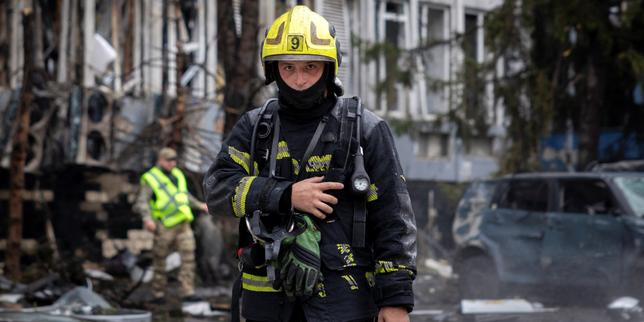
Emergency responders face impossible choices during these nights of terror. As air defense systems flash across the darkened skyline, firefighters rush toward burning apartment blocks before secondary strikes can hit. Medical personnel operate under emergency lighting, treating trauma wounds while sirens wail outside. This institutional resilience is remarkable, yet it exacts a punishing toll on the mental health of first responders who see the worst of human devastation on a daily basis.
Protecting Critical Infrastructure Before Winter
Air raids rarely target random locations. Urban centers like Kyiv face sustained pressure on vital infrastructure, including power stations, water treatment plants, and heating networks. The timing of these bombardments is rarely accidental. As seasonal temperatures drop, disabling energy grids becomes a deliberate method of compounding human suffering.
Repair crews move with astonishing speed, patching up substations and restoring power lines before entire neighborhoods freeze. Yet, the margin for error shrinks with every heavy strike. Living through a modern conflict means understanding that electricity and heating are not permanent guarantees. Households keep emergency generators ready, store bottled water, and learn to adapt to rolling blackouts as a routine part of existence.
The Economic and Logistical Shockwaves
Beyond the immediate human toll, nighttime missile strikes deal severe blows to the local economy. Every time a blast wave rips through a commercial district, small businesses lose inventory, offices shutter for repairs, and supply chains stutter. Local entrepreneurs operate in an environment where long-term business planning is nearly impossible. Insurance markets struggle to price risks in an active combat zone, forcing companies to rely on state-backed guarantees or internal capital reserves.
What the Latest Escalations Mean for Diplomatic Efforts
Every spike in overnight violence reverberates far beyond the borders of Ukraine, directly impacting international diplomatic channels. Whenever civilian casualties mount in Kyiv, world leaders issue condemnation, but the underlying political calculus remains stubbornly complex. International mediators push for trilateral talks and localized truces, trying to find a diplomatic off-ramp, while military escalation on the ground continues to outpace negotiations.
The friction between diplomatic appeals and battlefield realities creates a frustrating stalemate. Leaders in capitals from Washington to Brussels weigh the urgency of supplying more advanced anti-missile batteries against concerns over escalation. Meanwhile, citizens on the ground watch these geopolitical maneuvers with a mix of hope and skepticism, knowing that diplomatic breakthroughs mean little until the air raid sirens actually stop.
Navigating Daily Life Under Constant Threat
Resilience in Kyiv is not an abstract concept; it is a daily discipline. People go to work, universities hold classes in underground shelters, and cafes reopen within hours of a strike clearing the streets. This refusal to let daily life completely grind to a halt serves as a powerful psychological shield against terror.
Yet, this endurance should not be romanticized as effortless. Chronic sleep deprivation, constant anxiety, and the grief of losing friends or neighbors weigh heavily on the collective psyche. Coping mechanisms range from community mutual aid networks to digital apps tracking incoming alerts in real-time. Surviving in a city under siege requires a very specific kind of mental fortitude, one that balances hyper-vigilance with the stubborn desire to maintain normalcy.
The Role of Local Communities and Mutual Aid
When official emergency services are overwhelmed by simultaneous strikes across multiple districts, grassroots solidarity fills the gap. Neighborhood groups mobilize within minutes of an explosion, bringing hot tea, blankets, and tools to clear rubble from blocked doorways. This decentralized network of mutual aid forms the backbone of urban survival. People who barely knew their neighbors before the conflict now coordinate shifts, share bomb shelter supplies, and look after elderly residents living alone in upper-floor apartments.
The ongoing bombardments of Kyiv demonstrate that the conflict remains deeply volatile. Until the fundamental drivers of this war shift, the capital's residents will continue to face the grim lottery of the night skies, relying on their air defenses, their resilience, and each other to endure whatever comes next.