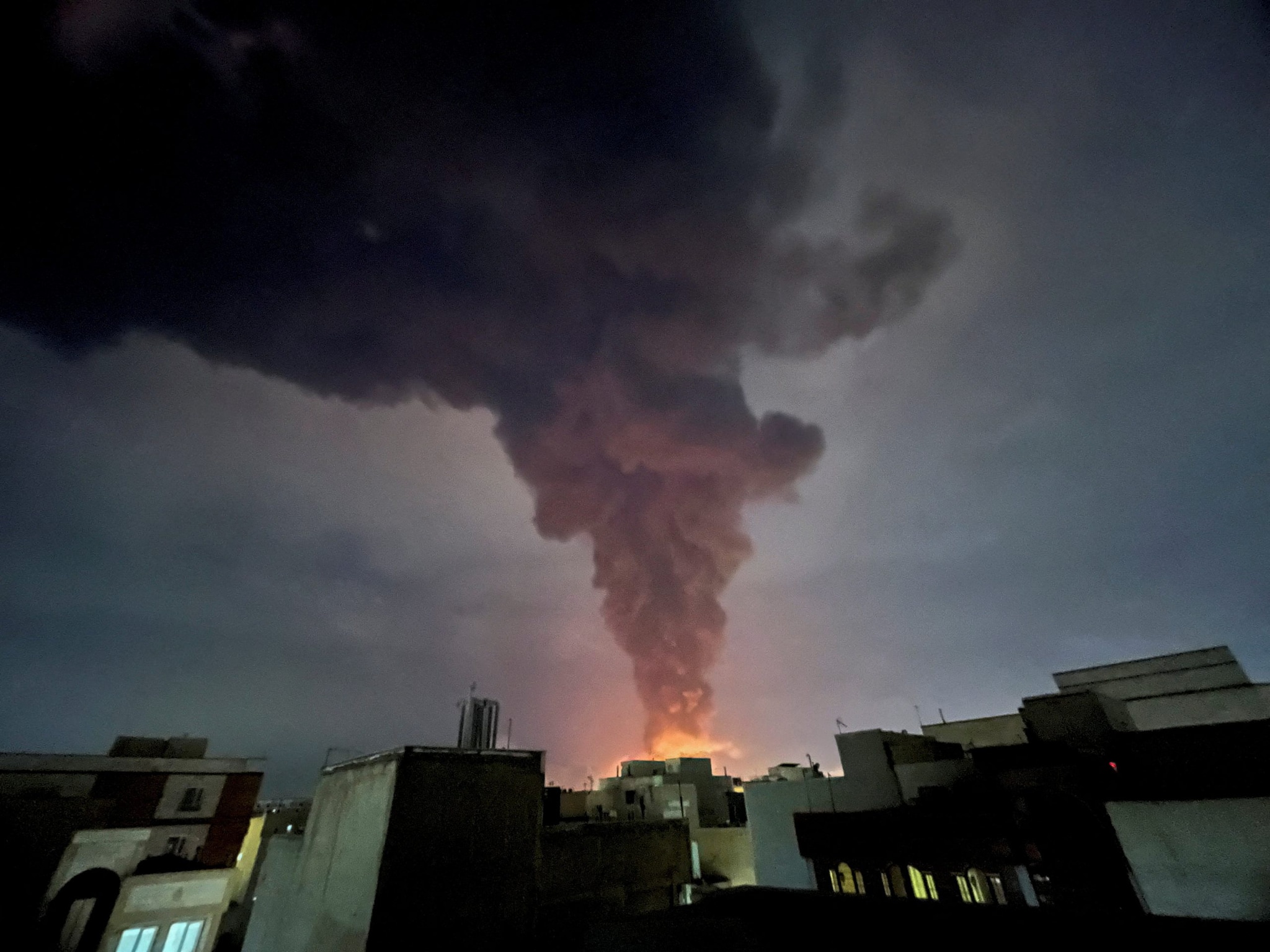
The screen in the corner of the kitchen flickers with a map of the Middle East, a jagged geometry of red icons blooming over the Negev desert and the outskirts of Tel Aviv. Most people see geopolitics. They see ancient animosities and the cold calculus of missile trajectories. But if you look closer—past the fire in the sky—you see the invisible threads that tether a thermostat in Ohio to a tanker navigating the Strait of Hormuz.
We live in a world of profound, terrifying connectivity.
When the news broke that Iran had launched a direct assault on Israel, the immediate reaction was visceral. Fear for human life. Fear for regional stability. Yet, beneath that layer of immediate tragedy lies a secondary, more abstract terror that affects every person reading this: the potential for the single greatest disruption in the history of global energy.
Daniel Yergin, a man who has spent his life charting the pulse of the world’s oil, didn't use hyperbole lightly when he flagged this moment. He wasn’t just talking about a spike at the pump. He was talking about the systemic collapse of the assumptions that keep our modern lives moving.
The Ghost in the Machine
Consider a hypothetical family in a suburb outside of Lyon. Let’s call them the Martins. They aren't following the telemetry of ballistic missiles. They are worried about the cost of heating their home as winter lingers. They are worried about the price of the bread in the basket, which relies on diesel-powered trucks to reach the shelf.
For the Martins, the conflict in the Middle East is a ghost in their machine.
If the conflict escalates to a point where the Strait of Hormuz is throttled, we aren't looking at a "market fluctuation." We are looking at a cardiac arrest of the global economy. Approximately 20% of the world's total petroleum liquids consumption passes through that narrow neck of water every single day. Imagine a fifth of the blood in your body suddenly hitting a clot.
The math is brutal.
The 1973 oil embargo changed the world. The 1979 Iranian Revolution sent shockwaves through every Western economy. But those were different eras. Today, our "just-in-time" supply chains mean we have no padding. We have no fat. We are a lean, hyper-efficient organism that dies the moment the flow stops.
The Myth of Energy Independence
For years, we’ve been told a comfortable lie. We’ve been told that because of domestic production or the rise of renewables, we are insulated from the fires of the Middle East. It is a seductive thought. It is also wrong.
Oil is a global fungible commodity. It doesn't matter if you produce every drop you use in your own backyard; if the global price doubles because of a war ten thousand miles away, you pay the global price. The market is an ocean. You cannot splash in one corner without the ripples reaching the furthest shore.
When Israel and Iran move from a "shadow war" to a direct kinetic confrontation, the premium on every barrel of oil reflects the risk of the unthinkable. The risk isn't just a destroyed refinery. It’s the closing of the gates.
The Human Toll of an Abstract Number
We often talk about "Brent Crude" as if it’s a character in a spreadsheet. It isn't. It is the cost of a mother’s commute to work. It is the ability of a small business to keep the lights on. It is the difference between a surplus and a deficit for developing nations that spend their meager reserves just to keep their tractors running.
If Yergin is right—if this is the "biggest disruption in history"—we aren't just talking about expensive gas. we are talking about food insecurity. We are talking about the potential for civil unrest in countries where the margin for survival is razor-thin.
The volatility we see on the news tickers isn't just financial data. It is the sound of the world's collective anxiety.
The Fragile Balance
Why is this time different? In the past, there was always a "swing producer"—a country like Saudi Arabia that could turn a tap and flood the market to stabilize prices. But geopolitics has fractured. The alliances of the 20th century are fraying.
In this new reality, a single miscalculation by a drone operator or a stray missile hitting a sensitive facility doesn't just trigger a military response. It triggers a cascade of algorithmic trades that can wipe out billions in value in seconds.
We are watching a high-stakes poker game where the chips are our daily lives.
The reality of the Iran-Israel escalation is that we have moved past the era of contained conflicts. We are now in the era of the "systemic shock." This is the point where the geopolitical meets the geological. We are fighting over the remnants of the Carbon Age while trying to build the bridge to whatever comes next, and the bridge is currently on fire.
The Silence After the Blast
There is a specific kind of silence that happens after a massive explosion. It’s a ringing in the ears, a momentary suspension of the world. As the missiles flew over the Al-Aqsa Mosque and the sirens wailed in the desert, that silence was felt in boardrooms in Manhattan and at kitchen tables in Mumbai.
We are waiting to see if the world’s energy heart can handle the pressure.
The stakes are invisible until they aren't. They are invisible until the gas station has a "No Fuel" sign draped over the pump. They are invisible until the grocery bill makes you gasp. They are invisible until the lights flicker and stay dark because the complex web of global trade has finally snapped under the weight of human ego.
We have built a magnificent, towering civilization on the back of a dragon. Most of the time, the dragon sleeps. We go about our business, we plan our vacations, and we argue about the trivial. But every so often, the dragon stirs. It shifts its weight. It breathes a small puff of smoke.
And in that moment, we remember exactly how high up we are, and how thin the air has become.
The "biggest disruption in history" isn't a headline. It’s a warning. It is a reminder that our comfort is a fragile gift, held together by the hope that the people behind the buttons understand that when they pull the trigger, they aren't just hitting a target—they are hitting us all.
The sky over the Middle East may be clear tonight, but the pressure in the pipes is still rising.