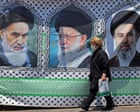
The vibration of a phone on a nightstand at 3:14 a.m. has a specific, violent frequency. In Tehran, that sound no longer signals a mundane update or a late-night thought from a friend. It carries the weight of geography.
When the windows rattled across the Iranian capital following overnight airstrikes, the immediate reaction wasn't a rush to the state news channels. It was a flurry of encrypted messages between ordinary citizens, diplomats, and regional analysts, everyone asking variations of the same terrifying question: Is this the flashpoint?
For months, the regional dialogue had been tethered to a fragile, almost desperate hope. Diplomats in immaculate suits had been pacing the corridors of neutral European hotels, trying to stitch together a ceasefire and a roadmap for Middle East peace. The public followed the headlines with cautious optimism. But statecraft is a house of cards built on the assumption that everyone wants to keep the wind out. Overnight, someone opened the door, and the wind rushed in.
Now, those peace talks are floating face down in the water.
Iran’s subsequent announcement that it needs to "reassess" its position isn't just a bureaucratic pivot. It is a fundamental shift in the tectonic plates of global geopolitics. To understand why a few hours of midnight explosions can unravel months of meticulous diplomacy, we have to look past the official press releases and look at how trust is broken in real-time.
The Mirage of the Negotiating Table
Consider how a peace talk actually functions. It is easy to view these summits as grand gatherings of historical figures making sweeping gestures. The reality is far more tedious. It is a grueling exercise in risk management.
Imagine two bitter rivals standing on opposite sides of a chasm, trying to build a bridge. They don't start by laying the heavy concrete; they start by tossing across a single piece of twine. If the other side holds it, you tie a thicker rope. Step by step, you build the capacity to bear weight.
Before the strikes, that twine was being held. It was frayed, certainly. The rhetoric from both sides remained hostile, as public posturing often does. But beneath the noise, the backchannels were humming. There was an unspoken agreement that a wider, catastrophic regional war was a scenario to be avoided at all costs. The talks were designed to codify that mutual survival instinct.
Then came the explosions.
When munitions hit targets inside a nation’s borders, the logic of the negotiating table evaporates. It doesn’t matter if the strikes were precise, or if they targeted specific military installations rather than civilian centers. The psychological barrier has been breached. For Iran’s leadership, continuing to sit at a peace table hours after an attack isn't viewed as diplomacy; it is framed as capitulation.
The word "reassess" is a classic piece of diplomatic theater. It is a polite way of saying the old rules are dead, and the new rules haven't been written yet. It buys time, but it also signals to the world that the twine has been cut.
The Human Cost of Geopolitical Stasis
While the analysts quantify the damage in terms of radar systems destroyed or airspace violated, the true cost is measured in human anxiety.
Take a hypothetical, but entirely representative, family living in the suburbs of Tehran. Let's call the father Dariush. He is a high school chemistry teacher. He doesn't read deep intelligence briefings, but he reads the currency markets. He watches the prices of basic groceries fluctuate based on the tone of a speech delivered thousands of miles away.
For Dariush and millions like him across the region—whether in Iran, Lebanon, or Israel—the breakdown of peace talks isn't an intellectual disappointment. It is a material threat. It means the savings account shrinks a little faster. It means looking at your children and wondering if you should find their passports, just in case.
The tragedy of modern conflict is that the people who carry the consequences are rarely the ones who make the choices. When a government states it needs to rethink its strategy, the citizens know that means more uncertainty, more economic strain, and more sleepless nights listening for the low rumble of aviation engines.
The psychological toll creates its own momentum. Fear breeds hawkishness. As the public grows more anxious, the pressure on leaders to project absolute, unyielding strength intensifies. The political space for compromise shrinks until it becomes an existential risk for any politician to suggest peace.
The Broken Dialect of Deterrence
The core problem lies in a concept that military strategists love to throw around: deterrence.
The theory is simple enough. You hit your opponent hard enough to convince them that hitting you back will cost more than it's worth. It is a calculation based entirely on logic.
But humans are not logical creatures, especially when pride, sovereignty, and survival are at stake.
What one side views as a calibrated, defensive measure designed to restore deterrence, the other side views as an unprovoked escalation that demands a response. It is a vicious cycle of misinterpretation. One country takes an action to prevent a war, and that exact action becomes the catalyst for the war they wanted to avoid.
Look at the historical precedents. The buildup to major regional conflicts rarely starts with a declaration of total war. It starts with a series of smaller, tit-for-tat actions where each participant genuinely believes they are just responding to the previous provocation. They believe they are holding the line.
By striking overnight, the actors involved shifted the calculation from a quiet diplomatic compromise to a public test of wills. In the Middle East, a public test of wills is a dangerous game where nobody can afford to look like they blinked first.
The Ripple Effect Beyond the Borders
It would be a comforting illusion to think this impasse is contained within the region. It isn't. The world is too small for that now.
The moment Iran announced its need to reassess the peace talks, oil markets in London and New York reacted. Supply chains that rely on the stability of maritime choke points suddenly looked a little more vulnerable. Wheat prices shifted. Insurance premiums for global shipping containers ticked upward.
The breakdown of these talks matters because the modern world is interconnected by invisible threads of commerce and energy. A spark in a military complex outside an Iranian city can light a fire under inflation rates in South America or Europe.
But more than the economic fallout, the collapse of this diplomatic effort represents a broader failure of the global security architecture. It reveals that the institutions and international frameworks we rely on to prevent total breakdown are increasingly toothless. When the big moments arrive, the diplomacy is pushed aside in favor of kinetic action.
We are left watching a high-stakes poker game where the players have stopped talking to each other and are now just staring down the barrel of the chips they have left.
The Long Journey Back to the Room
How do you salvage a conversation after the building has been shaken?
It won't happen next week. It probably won't happen next month. The immediate future will likely involve a period of cold silence, punctuated by defiant rhetoric and perhaps further kinetic exchanges. Both sides need to satisfy their domestic audiences that they have not been intimidated.
But eventually, the reality of geography returns. Iran and its neighbors are not moving. They are bound to the same piece of earth, sharing the same air and the same vulnerable infrastructure. The alternative to talking is a conflict that promises no winners, only varying degrees of devastation.
When the talks eventually resume—and history suggests they always do, even if under a different name or in a different city—the starting point will be much lower. The trust won't just be low; it will be non-existent. The negotiators will have to spend months just trying to get back to the point they were at the afternoon before the strikes.
Until then, the region waits. The diplomatic notes will be drafted in language designed to sound firm and uncompromising. The press secretaries will deliver their briefings with practiced neutrality.
But out in the streets, away from the ministries and the bunkers, the people will keep one eye on their phones and the other on the horizon, waiting to see if the night brings the sound of diplomacy, or the sound of glass shattering in the dark.