Smoke does not smell like politics. It smells like burnt rubber, wet tarmac, and cheap copper wire.
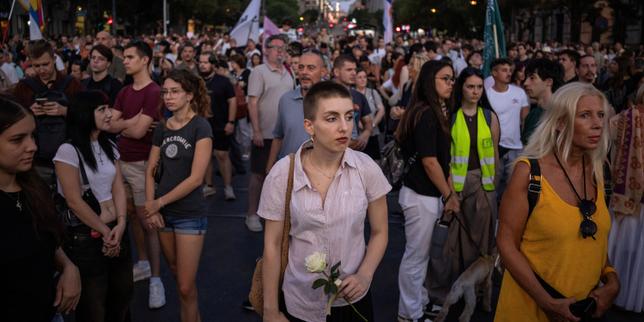
On a Tuesday evening in Portsmouth, the air turned gray long before the sun went down. If you stood three blocks away from the intersection where the barricades went up, you would not have heard speeches or slogans at first. You would have heard the heavy, rhythm-less percussion of boots hitting gravel, the sharp snap of breaking glass, and the collective, low-frequency roar of a crowd that has forgotten how to speak in sentences.
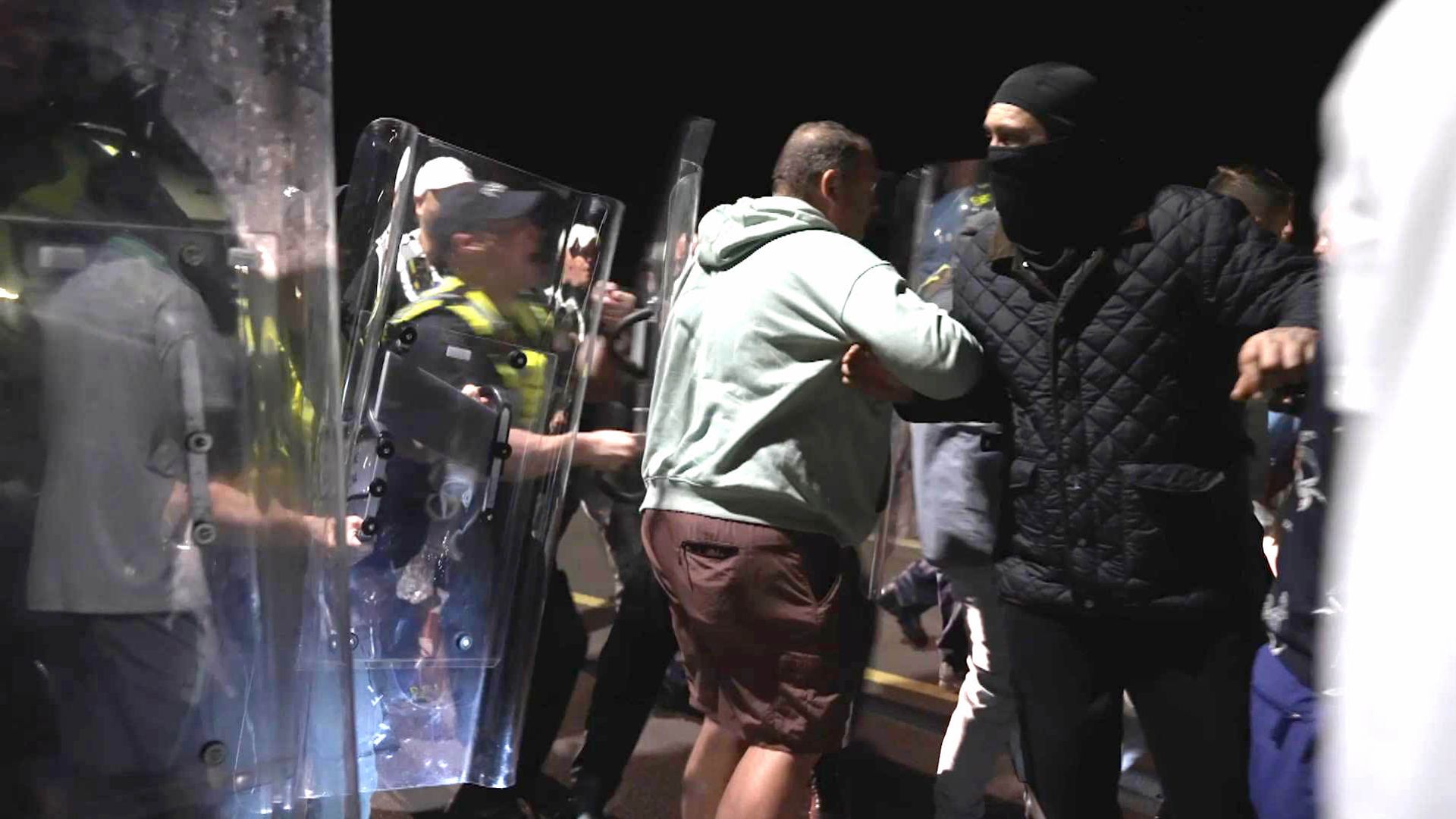
Police officers stood behind polycarbonate shields, their boots planted firmly against the curb, absorbing a barrage of concrete fragments and stolen traffic cones. A police van, its windows starred with fractures, idled in a choking cloud of smoke. Sirens did not wail anymore; they simply wailed in exhaustion, a continuous, mechanical whine echoing off red-brick Victorian terraces.
People call this an anti-migrant protest. Official reports log it cleanly. Vehicles damaged: twelve. Officers injured: eight. Arrests made: nineteen. The numbers are tidy. They fit into a spreadsheet, a morning news bulletin, a thirty-second clip on a delayed feed.
The numbers are also a complete lie about what actually happened.
To understand why a quiet coastal city turns on itself, you cannot start with the riot police or the placards. You have to start with the silence that preceded it. For months, the local economy had been bleeding slow, unremarked drops. The fish market down by the camber had shrunk to a handful of stalls. The community center with the peeling blue paint on its doors had its funding cut for the third consecutive year. When people feel like ghosts in their own hometowns—when they watch the fabric of their daily survival unraveling thread by thread—they begin to look for something solid to blame. Or, failing that, something to break.
Imagine, for a moment, a man named Arthur. (To be clear, Arthur is a composite sketch, a lens to focus light onto a diffuse social failure, not a verified individual). Arthur is fifty-four years old. For twenty-eight years, he worked the line at the naval dockyards until automation and shifting contracts quietly erased his position. He does not hate foreigners; twenty years ago, he shared a pint and a packet of crisps with sailors from half a dozen nations down at the Lord Nelson. But Arthur is tired. He is tired of bills that arrive thicker than his monthly pension credit. He is tired of walking down Commercial Road and hearing languages he cannot translate, seeing storefronts he does not recognize, feeling like an alien in the postcode where his grandfather was born.
When agitators drove into Portsmouth that Tuesday afternoon in rented vans, handing out pre-printed signs and shouting slogans calibrated to trigger ancient tribal fears, they did not create Arthur’s anger. They harvested it. They acted like lightning rods, channeling years of stagnant wages, crumbling public services, and institutional neglect into a single, combustible point of impact.
This is the part we constantly miss in the aftermath of civil unrest. We treat the symptom as the disease. We debate the tactics of the crowd control units, we argue over sentencing guidelines for property destruction, and we issue stern, institutional press releases about community cohesion. Meanwhile, the underlying pressure cooker remains sealed on a high burner.
History has a cruel habit of repeating its worst choreography. Whenever societies experience rapid demographic shifts combined with economic contraction, the human reaction follows a predictable, tragic script. First comes anxiety—the quiet, gnawing sense that the ground is shifting beneath your feet. Then comes polarization, where neighbors stop waving across the garden fence and start eyeing each other through ideological crosshairs. Finally, the eruption.
The bricks thrown in Portsmouth did not fly out of a vacuum. They were heavy with the weight of unheeded warnings.
Consider what happens next in the news cycle. The smoke clears. The broken glass is swept into green municipal dustbins. Politicians step up to microphones to condemn the violence in terms of absolute moral clarity. Local community leaders hold solemn roundtables, promising better dialogue, renewed outreach, and cultural exchange programs. Everyone agrees that extremism has no place in our society.
And then everyone goes back to sleep.
The funding doesn't return to the community center. The dockyard jobs don't materialize. The structural anxieties that made Arthur susceptible to a demagogue's megaphone remain entirely unaddressed. We treat the disease with aspirin and wonder why the fever keeps coming back higher each time.
We are living through a profound crisis of belonging. Across Western democracies, millions of people feel stranded between a globalized economy that rewards rootlessness and a local reality that feels increasingly precarious. When you tell a struggling working-class community that their economic stagnation is just the price of progress, you are speaking a language they cannot eat. When you dismiss their cultural anxieties as mere bigotry without examining the material scarcity driving them, you slam the door on any possibility of genuine resolution.
The officers who went home bruised and bleeding on that Tuesday night didn't fix the city's problems by holding the line. The protesters who smashed those vehicle windows didn't reclaim their futures by setting fire to a van. Everybody lost. The city lost its fragile sense of safety. The migrants living quietly in local bed-and-sits lost whatever fragile peace they had managed to carve out. And the truth lost another round against simple, seductive rage.
Until we find the courage to look past the smashed glass and confront the quiet rot of abandonment underneath, Portsmouth will not be an exception. It will be a preview.
The street is quiet now. The soot has been power-washed off the tarmac, leaving only faint, gray stains on the asphalt like dried tears. But if you walk down that same street after midnight, when the streetlights flicker and the salt air rolls in from the Solent, you can still hear the phantom echo of boots on gravel. A city holding its breath, waiting to see what happens when the pressure builds again.