The glass didn’t just break. It shrieked.
For the guests inside the Fairmont on The Palm, the evening had been a choreographed sequence of luxury. Gold-leafed lattes, the rhythmic slosh of the Arabian Gulf against the shore, and the distant, neon hum of a city that refuses to sleep. Dubai is built on the promise of the impossible—islands shaped like trees, buildings that pierce the clouds, and a level of safety so absolute it feels like a physical law.
Then came the percussion.
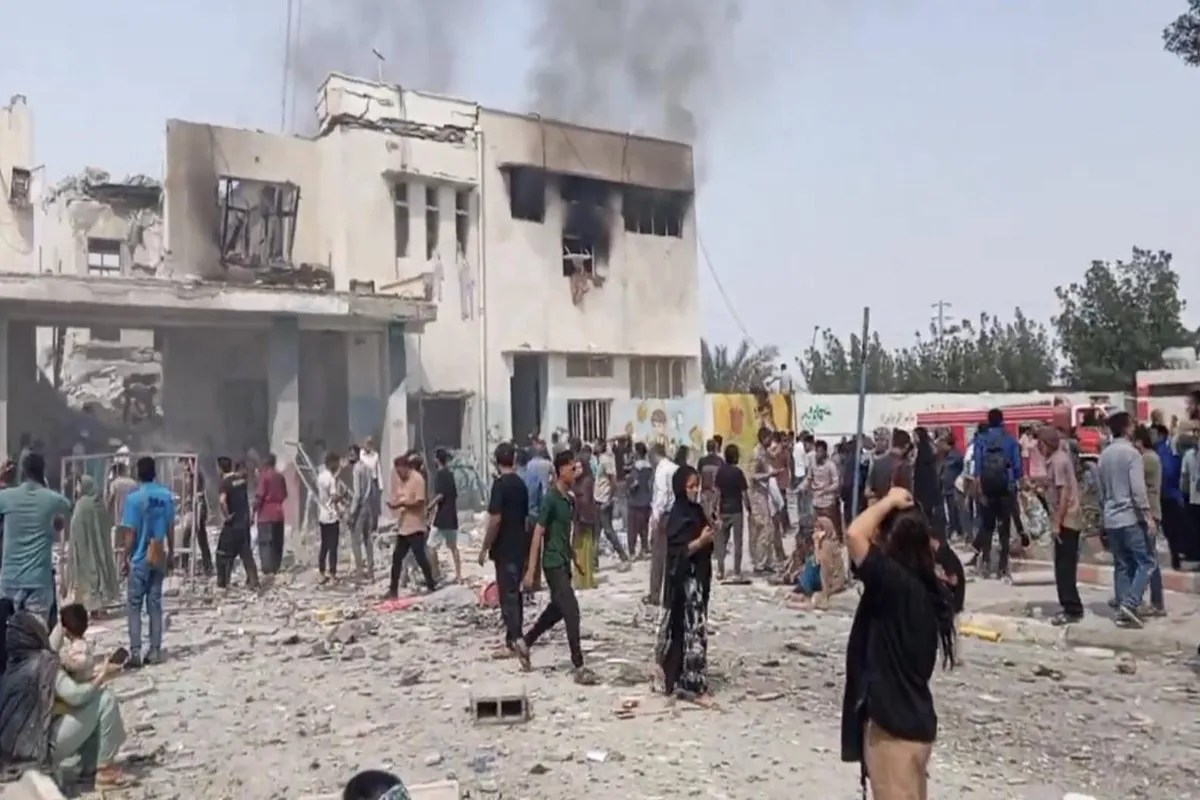
It wasn't the sound of a firework or a blown transformer. It was a deep, chest-thumping thud that signaled the arrival of something foreign. High up the flank of the Fairmont, a plume of orange bloomed against the midnight blue of the sky. The air, usually thick with the scent of expensive oud and sea salt, suddenly turned acrid with the smell of burning composite and scorched insulation.
Reports began to filter through the digital ether: a missile. A drone. An "attack" on the very heart of the emirate's vacation crown. In an instant, the narrative of the world’s most secure playground was under siege.
The Architecture of Panic
Imagine you are on the fourteenth floor. You have just spent three thousand dollars for a weekend of total disconnection. The sheets are Egyptian cotton. The lights are dimmed via a bedside tablet. Then, the walls shudder.
Hypothetically, let’s call him Elias. He is a consultant from London, here to celebrate an anniversary. When the impact hit, he didn't check the news. He didn't look for a "game-changer" or a "holistic solution." He looked for his shoes. That is the human reality of a geopolitical event. It isn't a headline; it is the frantic search for a pair of loafers in a room filling with the faint, terrifying haze of smoke.
Elias represents the thousands of people who found themselves standing on the manicured sands of the Palm Jumeirah, looking up at a landmark that was, quite literally, on fire. The "missile" narrative spread faster than the flames. In the age of instant uploads, a grainy video of a fireball becomes a global truth before the fire department can even hook up a hose.
But the truth of that night wasn't found in the initial panic. It was found in the physics of the building and the speed of the response.
The Myth of the Unreachable
The Palm Jumeirah is a marvel of engineering, but it is also a logistical nightmare for emergency services. It is a single trunk with a series of fronds, a golden cage that offers one way in and one way out. When the Fairmont erupted, the fear wasn't just about the fire. It was about the isolation.
Critics have long pointed to Dubai’s rapid vertical growth as a vulnerability. If a missile—or even a high-altitude drone—can strike the Palm, the entire concept of the city’s "impenetrable" status evaporates. We are talking about a city that sells its soul on the basis of being a sanctuary.
Security isn't just about guards at the door. It’s a psychological contract.
You pay the premium to stay at the Fairmont because you believe the world’s chaos cannot reach you there. When the flames licked the side of the building, that contract was burned. The stakes were never just about property damage or insurance claims. The stakes were the very idea of Dubai as a safe harbor in a region often defined by its volatility.
Consider the ripple effect. A single strike on a hotel isn't just a fire; it’s a direct hit to the tourism economy. It’s a message sent to every expat and investor: We can touch you.
The Anatomy of the Event
As the smoke cleared, the "missile" story began to fray. In the heat of the moment, every explosion is a bomb; every fire is an attack. This is the exhaustion of living in a 24-hour news cycle where we are primed for the worst-case scenario.
Logic eventually reclaimed the ground. Security analysts and local authorities pointed to the reality of technical failures, or perhaps the terrifyingly mundane cause of a localized electrical fault that mimicked the violence of a strike. Yet, the "missile" tag stayed in the headlines. Why? Because a fire is a tragedy, but a missile is a story.
We crave the drama of the conflict even as we fear it.
The Fairmont's facade, designed to reflect the sun in a dazzling display of opulence, became a screen for our collective anxieties. If a missile could hit the Fairmont, it could hit the Burj Khalifa. It could hit the desalination plants. It could turn the lights off on the world’s most ambitious experiment in urban living.
But look closer at what actually happened. The fire didn't consume the building. The safety protocols—the "boring" stuff that engineers sweat over for years—actually worked. The sprinklers engaged. The fire-rated doors held. The evacuation was a somber, orderly procession of people in bathrobes and evening wear, guided by staff who had been trained for a day they hoped would never come.
The Invisible Guard
The real story of the Fairmont fire isn't the explosion. It’s the silence that followed.
In Dubai, the state controls the narrative with a grip as tight as the foundations of its skyscrapers. Within hours, the sensationalist claims were being scrubbed, countered, and reframed. This is the "Dubai Way." You don't just put out the fire; you put out the rumor.
There is a specific kind of tension in a city that demands perfection. When something breaks—really breaks—the repair happens in the dark. By the time the sun rose over the Gulf the next morning, the charred section of the building was already being assessed for a cover-up. Not a cover-up of a crime, but a cover-up of a flaw.
The guests were moved. The refunds were processed. The gold-leafed lattes returned to the menu.
But for those who stood on the beach and watched the orange glow, the illusion has changed. They saw the skeleton of the dream. They realized that even on an island built of reclaimed sand and guarded by the latest technology, the world is still a place where things can burn.
The Fragility of the Oasis
We live in an era where we believe we have conquered the elements and the "others" who might do us harm. We build walls, we install sensors, and we fly drones to watch the drones.
The Fairmont event—whether it was a freak accident or something more sinister—serves as a reminder of the thinness of the veil. We are all Elias, searching for our shoes in the dark, hoping that the Egyptian cotton and the marble bathrooms are enough to keep the reality of a chaotic world at bay.
The "missile" might have been a ghost of our own making, a product of a world where we expect the sky to fall at any moment. Or it might have been a warning.
As the cleaners swept up the last of the glass on the Palm, the city returned to its frantic, beautiful pace. The cranes continued to swing. The tourists continued to tan. But if you look closely at the Fairmont's side, where the new glass doesn't quite match the old, you can see the scar.
It’s a small mark. Almost invisible.
But it’s there, reminding anyone who bothers to look that even the most beautiful mirage can be scorched by a single spark.
The desert always tries to take back what was stolen from it. Sometimes, it uses the wind. Sometimes, it uses the heat. And sometimes, it just waits for us to realize that we are never as safe as we have paid to be.
The sun sets now over the Palm, casting long, distorted shadows of the fronds across the water, looking for all the world like a hand reaching out to grab something it can't quite hold.