The hum of a refrigerator is a comforting sound. It signals stability. It means the power is on, the food is cold, and the world is functioning as it should. But in the quiet suburbs of a city waiting for the sirens, that hum feels like a countdown.
London is calling for calm. It is a phrase we have heard for decades, issued from polished mahogany podiums by men and women in sharp suits who speak in the measured tones of diplomacy. They use words like "de-escalation" and "restraint." They map out "red lines" on digital screens. But for the family sitting in a darkened living room in Haifa, or the doctor exhausted by a thirty-hour shift in a makeshift clinic in Beirut, these words are ghosts. They have no weight. They provide no shelter.
West Asia is no longer just simmering. The pot has boiled over, and the scalding water is hitting the floor.
The Geography of Fear
When the UK Foreign Office issues a statement urging a regional "step back," they are looking at a map of strategic interests and shipping lanes. They see the Red Sea—a vital artery of global commerce—and the jagged borders of Lebanon, Israel, Yemen, and Iran. They see the math of a global economy.
But look closer.
Imagine a merchant sailor on a container ship nearing the Bab el-Mandeb strait. He isn't thinking about the "expansion of conflict" as an abstract geopolitical trend. He is looking at a radar screen, wondering if the next blip is a drone or a bird. He knows that a single missile can turn a billion-dollar cargo into a floating pyre. When the UK and its allies launch retaliatory strikes against Houthi positions in Yemen, it is an attempt to keep that sailor safe. It is an attempt to keep your coffee, your smartphone, and your car parts moving across the ocean.
The stakes are invisible until they aren't. We feel them when the price of gasoline ticks up at the local station. We feel them when we realize that the "rules-based order" we took for granted is being rewritten in real-time by ballistic trajectories.
The Sound of Diplomacy vs. The Sound of Steel
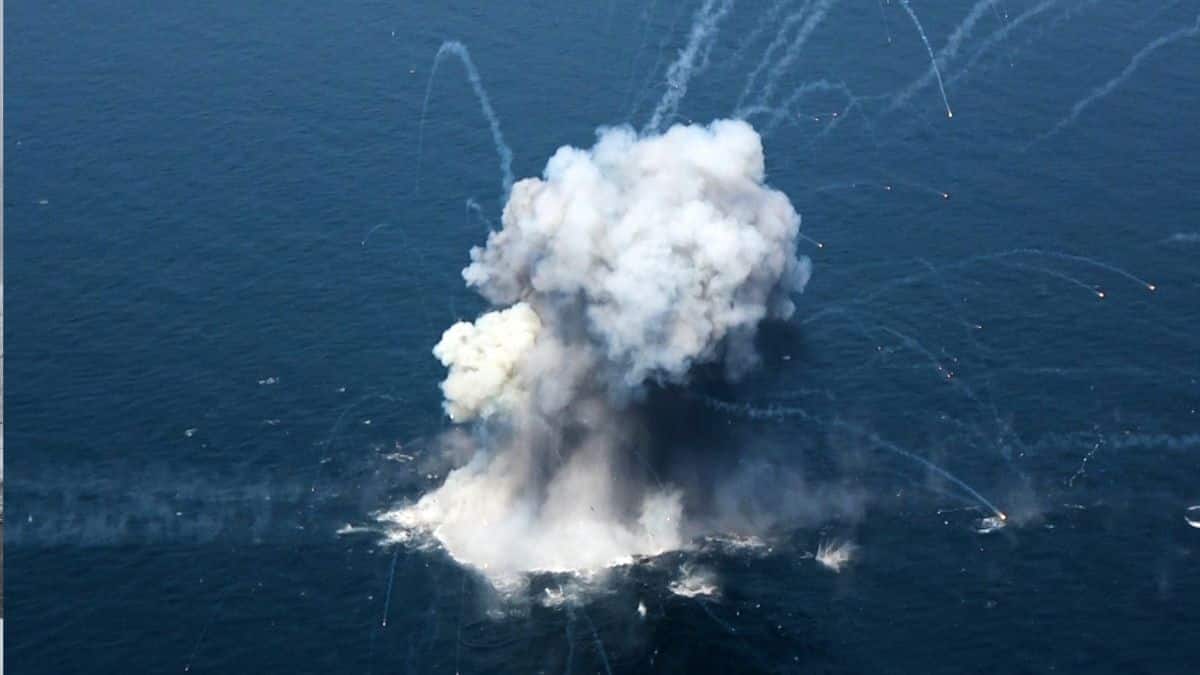
The recent expansion of strikes across the region—from the mountains of Yemen to the borderlands of Lebanon—represents a failure of language. Diplomacy is the art of talking until the urge to hit someone passes. Right now, everyone is talking, but everyone is hitting, too.
British officials are in a precarious position. They are trying to hold a shield over the global economy while simultaneously begging for the sword to be put away. It is a paradox. You cannot strike a target to "deter" violence without becoming part of the cycle of violence yourself. It is like trying to put out a fire with a controlled explosion; sometimes it works, and sometimes the wind shifts.
Consider the "Hypothetical Citizen" of this crisis. Let’s call her Layla. She lives in a city where the sky is often blue, but lately, it has been streaked with the white trails of interceptor missiles. Layla doesn’t care about the G7’s communique. She cares about whether she should fill her bathtub with water in case the pipes are hit. She cares about the fact that her children have learned to distinguish the sound of a supersonic jet from the sound of a thunderclap.
For Layla, the "West Asia conflict" isn't a headline. It is the vibration in her windows.
Why the Middle Is Disappearing
The tragedy of the current escalation is the death of the middle ground. In the halls of Westminster, the rhetoric is about "defending international law." In the capitals of the region, the rhetoric is about "resistance" or "national survival." There is no room for "maybe" anymore.
When a conflict expands, it doesn't just grow in size; it grows in complexity. It becomes a web where every strand is connected. You pull one—a strike in Damascus—and a bell rings in Tehran. You pull another—a blockade in the Red Sea—and a factory in Germany slows down. The UK’s call for calm is an admission that we are running out of strands to pull before the whole web snaps.
The logic of the strike is simple: Stop them from hitting us.
The logic of the retaliation is identical: They hit us, so we must hit back.
It is a closed loop. A circle of fire.
The Invisible Toll on the Human Spirit
We often talk about "infrastructure damage." We count the craters and the downed drones. We rarely count the cost of the adrenaline that never leaves the bloodstream.
The people living through this expansion of conflict are enduring a form of chronic stress that re-wires the brain. When you don't know if the next week brings a ceasefire or a regional war, you stop planning for the future. You stop investing. You stop dreaming. This is the true "hidden cost" that the UK and other Western powers are trying to avert, even if they don't use those words. They know that a region in total collapse is a vacuum that sucks the rest of the world into it.
Is calm even possible?
The UK’s strategy involves a delicate dance: support the right to self-defense while publicly shaming any action that goes "too far." It is a tightrope walk over an abyss. The problem is that "too far" is a subjective measurement. For the person who lost their home yesterday, "too far" happened a long time ago.
The Mechanics of Escalation
To understand why this feels different from the skirmishes of the past, we have to look at the technology. This is not the warfare of 1991 or even 2003. This is the era of the low-cost drone and the high-precision missile.
A drone that costs $20,000 can be used to threaten a ship worth $200 million. This asymmetry is what makes the current conflict so volatile. It gives smaller groups the power to disrupt global systems. It forces superpowers to play a game of whack-a-mole where the moles have wings and GPS guidance.
When the UK urges calm, they are talking to states. But the actors on the ground aren't always states. They are ideologies. They are movements. They are people who feel they have nothing left to lose. You cannot negotiate with a person who believes the end of the world is a desirable outcome.
The Weight of the Silence
There is a specific kind of silence that follows a statement from a government spokesperson. It is the silence of the "wait and see."
The UK has signaled that it will not stand by while shipping lanes are closed. It has signaled that it stands with its allies. But it has also signaled—desperately—that it does not want a front-row seat to World War III. This is the tension in every press release. Every word is chosen to be firm enough to deter, but soft enough to avoid being a provocation.
But words are becoming thin.
As the strikes expand, the space for diplomacy shrinks. We are witnessing the slow-motion collision of two different worldviews. One view sees the world as a series of problems to be managed through trade and law. The other sees the world as a battlefield where honor and territory are the only currencies that matter.
The Road Back from the Brink
What does "calm" actually look like? It doesn't look like peace. Not yet.
It looks like a night where no drones are launched. It looks like a day where the Red Sea is boring again. It looks like Layla finally deciding to stop filling her bathtub with emergency water.
The UK’s pleas for restraint are, in essence, pleas for boredom. We want the Middle East to be "off the front page." We want the news to be about interest rates and weather patterns again. But you cannot wish away a fire once it has caught the curtains. You have to fight it, or you have to let it burn itself out. The current strategy is to try and contain the flames to one room.
The risk is that the house is old, the wood is dry, and the wind is picking up.
The sun will rise tomorrow over the Mediterranean, the Red Sea, and the Persian Gulf. It will illuminate the same broken buildings and the same warships. The diplomats will return to their desks. The sailors will scan their radars. And the families will listen to the hum of their refrigerators, praying that the sound remains constant, a small, vibrating proof that for one more day, the world hasn't ended.
We are all waiting for the sky to return to its natural color. Until then, we listen to the voices in London and Washington and Tehran, hoping that someone, somewhere, finds the word that finally stops the steel.
Would you like me to analyze the specific economic impacts of these shipping disruptions on your local region?