The sky over Tehran does not usually scream. It is a city of high-altitude hums—the low vibration of millions of air conditioners in summer, the distant grind of traffic on the Hemmat Expressway, and the call to prayer that anchors the day. But on a night that felt like any other, the rhythm of the Iranian capital was shredded by a sound that defies simple description. It is a tearing noise. It is the sound of the air itself being forced out of the way by something moving much faster than sound was ever meant to travel.
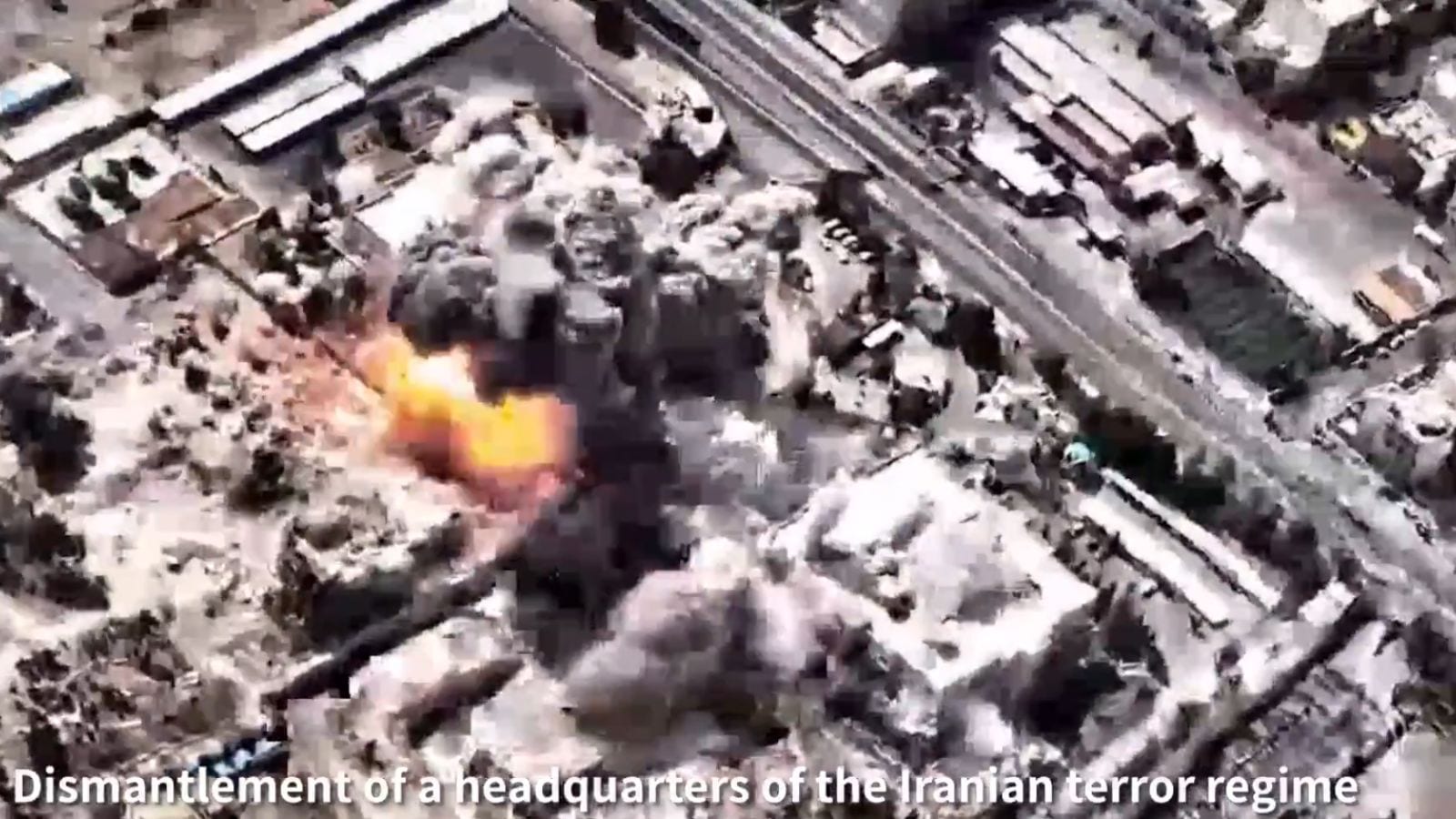
When the footage began to circulate, released by the Israel Defense Forces, it wasn't just another grainy clip of a desert explosion. It was a digital window into the "heart of Tehran." For those watching from a distance, it looked like a video game. For those on the ground, it was the moment the theoretical became visceral.
The Ghost in the Machine
Modern warfare has shed its heavy skin. We are no longer in an era where thousands of boots must cross a border for a message to be sent. Instead, the message arrives via a screen in a darkened room hundreds of miles away, where a thumb twitch translates into a fireball over a sovereign capital.
Consider a hypothetical resident—let’s call her Samira—living in a middle-class apartment in the eastern districts of Tehran. She is scrolling through her phone, perhaps checking the price of saffron or a niece's graduation photo, when the windows rattle in their frames. This isn't the rumble of a passing truck. It is a sharp, percussive slap.
She goes to the balcony. She sees the glow. What she doesn't see, and what the IDF video only hints at, is the sheer, terrifying precision of the math involved. To strike the "heart" of a city like Tehran requires more than just explosives; it requires a mastery of the invisible. It requires GPS coordinates refined to the centimeter, terrain-matching algorithms that "see" the mountains surrounding the city, and electronic warfare suites that blind the very sensors meant to protect the skyline.
The video shows the crosshairs steadying. There is no wobble. No hesitation. Just the cold, blue-tinted reality of a target identified and then erased.
The Weight of a Cloud
We often talk about "surgical strikes" as if they are clinical procedures, clean and devoid of mess. This is a comforting lie. There is nothing clean about the displacement of tons of concrete and steel in a populated area. The stakes are not just the buildings destroyed—often described as "military infrastructure" or "production facilities"—but the psychological architecture of an entire nation.
When a missile hits a target in a capital city, it isn't just destroying a warehouse. It is dismantling the illusion of a closed door. It tells every person in that city that the walls they thought were thick are actually made of glass.
The technical achievement is staggering. To fly through some of the most contested airspace in the world, bypass multi-layered Russian-made defense systems like the S-300, and deliver a payload to a specific coordinate in a city of nearly nine million people is a feat of engineering that would have been science fiction twenty years ago.
But the technical is always tethered to the human.
The engineers who designed the guidance systems, the pilots who may have flown the sorties, and the analysts who picked the targets all operate in a world of data points. Yet, on the other end of those data points are people who now have to live with the knowledge that the sky can open up at any moment.
The Invisible Border
Boundaries used to be physical. You had a wall, a river, or a line of soldiers. Today, the border is a frequency. It is a signal.
The strike on Tehran represents a shift in how we perceive distance. In the past, the "heart" of a country was the safest place to be. It was the inner sanctum, protected by layers of periphery. Now, the periphery is irrelevant. The heart is just as vulnerable as the hand.
This creates a peculiar kind of modern anxiety. It is the "everywhere-ness" of the threat. If a strike can happen in the center of the most protected city in the country, then the concept of a "front line" has effectively dissolved. We are all living on the front line now, whether we are in a cafe in North Tehran or an office in Tel Aviv.
The technology used in these strikes—stealth capabilities, stand-off munitions, and real-time satellite feedback—has turned the world into a giant, transparent map. There are no more hiding places. If you can be seen, you can be reached. And in 2026, everyone can be seen.
The Echo in the Silence
The morning after such a strike is always the strangest part. The smoke clears. The video is replayed a million times on social media, analyzed by pundits and retired generals who speak about "deterrence" and "strategic signaling."
But for Samira and her neighbors, the morning is about the silence. It is a heavy, expectant silence. They look at the sky differently. They look at their phones differently. The video released by the IDF isn't just a record of a military action; it is a permanent change in the narrative of a city.
We live in a time where the spectacle of destruction is delivered in high definition, often with a soundtrack of wind rushing past a camera lens. It is easy to become desensitized. It is easy to forget that behind every pixel of that "heart of Tehran" video is a street where people walk their dogs, a shop where someone is buying bread, and a child who is asking why the windows shook.
The real power of the strike wasn't the heat of the explosion. It was the coldness of the video. It was the demonstration that, in the modern world, the distance between "here" and "there" has been reduced to a single click.
The "heart" of a city is not its geography. It is the collective sense of safety of its people. And once that is pierced, no amount of rebuilding can truly patch the hole. The sky stays quiet, but the city remembers the scream.
The crosshairs move on. The feed cuts to black. But the ripples in the water remain, spreading out from the center of the map until they touch every shore.
Would you like me to analyze the specific missile technologies mentioned in recent regional defense reports?