The metal bulkheads of a guided-missile destroyer don't just hold back the ocean; they hum. It is a low-frequency vibration that settles in the marrow of your teeth, a constant reminder that you are encased in a billion-dollar machine floating on five miles of dark water. For the sailors stationed in the Red Sea over the last year, that hum has been punctuated by something far more visceral. The bone-rattling thud of an interceptor missile leaving its cell. The silent, suffocating heat of a combat information center where the air conditioning struggles to fight off the warmth generated by pulsing radar arrays.
We talk about modern warfare in terms of "assets" and "strategic repositioning." We use sanitized language to describe the movement of the U.S. Navy’s 5th Fleet headquarters as if it were a corporate office shifting its zip code to save on taxes. But assets don't bleed. Strategic repositioning doesn't involve the frantic packing of personal photos and the sudden realization that the place you called "home port" is no longer safe.
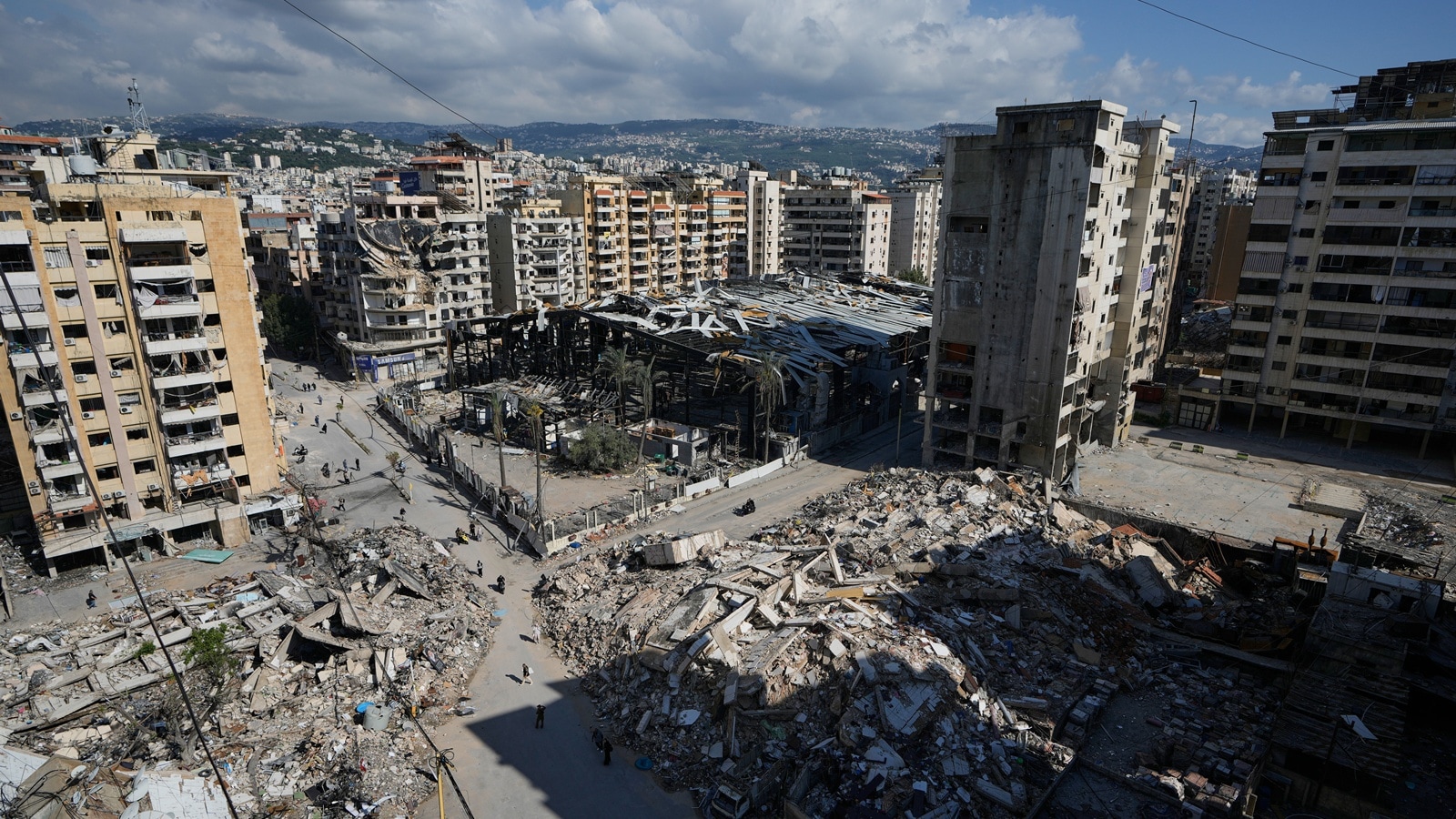
The data points are stark. Over 200 structures across a sprawling geopolitical chessboard have been reduced to scorched earth and twisted rebar. These aren't just buildings. They are the physical anchors of a region that has forgotten what stability feels like. When a drone strikes a facility, the report lists "structural damage." It doesn't mention the smell of ozone, the way the dust hangs in the air for hours, or the look on a young petty officer's face when they realize the horizon is no longer empty.
The Invisible Geography of Conflict
Map coordinates are deceptive. They suggest that war happens there, in a specific desert or on a precise patch of blue. In reality, the conflict between the U.S. and Iranian-backed forces has rewritten the geography of the Middle East. It has created a phantom front line that moves with the wind and the range of a loitering munition.
Think of the 5th Fleet headquarters. For decades, it was a fixed point of American power, a naval nerve center that projected a sense of permanence. When that nerve center is forced to pivot, to shrink its footprint or pull back its most vital components, the message isn't just logistical. It is a confession. It is an admission that the old rules—the ones where a massive hull and a high-tech flag were enough to deter a strike—have evaporated.
The structures lost in this quiet, grinding war represent more than just brick and mortar. Imagine a warehouse in a remote corner of the desert. To a satellite, it is a rectangle. To the people on the ground, it is the storage site for the very sensors that keep them from being blindsided. When 200 of these points vanish from the map, the "eyes" of a superpower begin to blink.
The Architecture of Vulnerability
We have entered an era where the expensive is being defeated by the cheap. This is the central tension of the current standoff. A multi-million dollar defense system is triggered to knock down a drone that costs less than a used sedan. It is a mathematical nightmare.
Suppose you are a commander looking at a radar screen. You see a swarm. Not one or two targets, but dozens. Each one is a potential catastrophe. You have to decide, in seconds, which ones are worth the expenditure of a missile that costs as much as a small hospital. This isn't just a technical challenge; it's a psychological assault. It's the slow erosion of confidence. Every successful strike on a structure, every forced relocation of a command post, is a tiny chip taken out of the image of invincibility.
The "hidden toll" isn't just the cost of the concrete. It is the cost of the constant, high-alert posture. Humans aren't built to live in a state of perpetual "red." Muscles tighten. Sleep becomes a luxury. The sailors and soldiers on the front lines of this shadow war are operating in a grey zone where the rules of engagement are written in real-time and the enemy is often a ghost on a screen.
Displacement of Power
When the Navy moves a headquarters, it isn't just moving desks. It is shifting the center of gravity. This movement creates a vacuum. In the world of international relations, power is as much about perception as it is about firepower. If the most advanced navy in history is seen pulling back its administrative and command hubs because they are too vulnerable to drone strikes, the neighbors take notice.
The 200 destroyed structures are a ledger of intent. Each one represents a moment where the "other side" decided the risk of escalation was worth the reward of a hit. And they kept deciding it. Over and over.
We often view these events through the lens of a evening news scroll. Strike reported. No casualties. We move on. But for those inside the blast radius, the lack of "casualties" doesn't mean there was no cost. There is the cost of the lost intelligence. The cost of the severed communication line. The cost of the three days spent digging through rubble to find a single hard drive that might contain the keys to the next week's safety.
The Human Logic of the Machine
Consider the technician whose job is to maintain the very structures being targeted. They aren't "combatants" in the traditional sense. They are mechanics, engineers, and IT specialists. They wake up in a trailer, drink mediocre coffee, and go to work on systems that are supposed to be the best in the world.
Then the siren goes off.
That siren is a physical weight. It’s the sound of the gap between "safe" and "unsafe" closing to zero. When we talk about the Navy HQ being "forced to flee," we are talking about these people. We are talking about the loss of the familiar. The displacement of human lives is the real story beneath the headlines of tactical shifts.
The technology has outpaced the strategy. We built a world where power was projected through size and scale. Now, size and scale are just larger targets. The 5th Fleet’s maneuvers are a frantic attempt to adapt to a world where the smallest player can land a punch on the biggest one. It is a game of hide-and-seek played with hypersonic missiles and cardboard drones.
The Silence After the Blast
There is a specific kind of silence that follows a modern explosion. It’s not the ringing in the ears—that’s there too—but a social silence. It’s the moment when everyone looks at each other and realizes that the world they woke up in is gone.
The 200 structures are not coming back anytime soon. The headquarters won't just "move back" when the news cycle changes. This is the new baseline. We are watching the dismantling of an old order, one structure at a time, one forced relocation at a time.
The sea doesn't care about our headquarters. It doesn't care about our drones or our "integrated defense layers." It just sits there, vast and indifferent, while humans scramble to protect their fragile boxes of air and electronics.
As the sun sets over the Red Sea, the hum of the ship remains. But tonight, the hum feels different. It feels like a heartbeat that's running just a little too fast. The horizon is beautiful, but no one is looking at the sunset. They are looking at the radar, waiting for the one dot that doesn't belong, the one dot that could turn their floating home into the 201st structure on the list.
The water remains dark. The sailors remain awake. The map is being redrawn by fire.


