The silence in a command center isn’t actually silent. It’s a hum of cooling fans, a soft clicking of mechanical keyboards, and the low, rhythmic breathing of people who have forgotten what sunlight feels like. Somewhere in the dark, a finger hovered over a glass screen. Thousands of miles away, in the ancient, dust-choked corridors of Tehran, the air was about to catch fire.
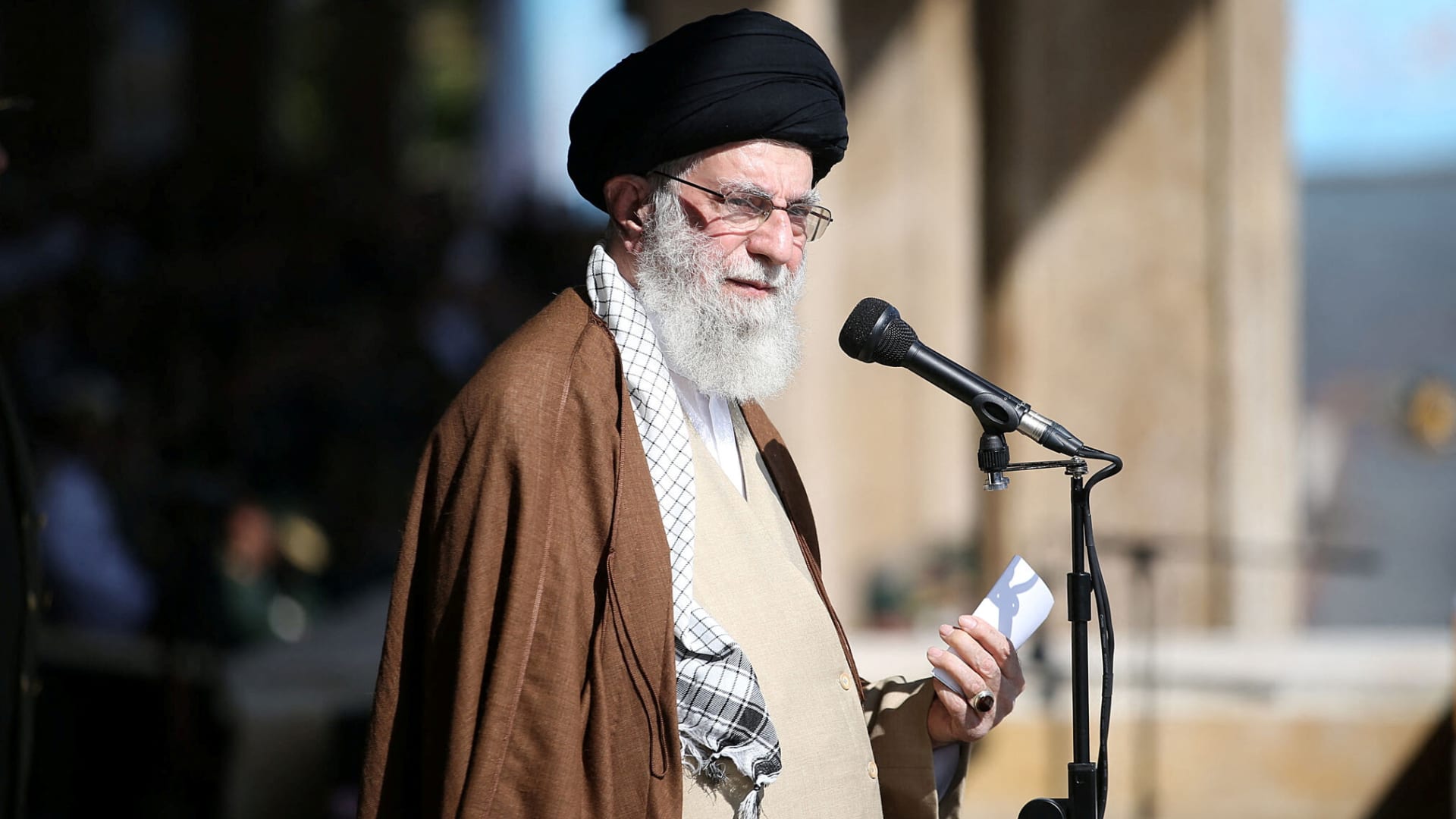
When the news broke that Donald Trump had confirmed the death of Ali Khamenei following a series of precision strikes, the world didn’t just react. It shuddered. This wasn't just another headline in a decade defined by noise. It was the sound of a tectonic plate snapping.
The Ghost in the Machine
We often talk about war as if it’s a game of Risk, played with plastic pieces on a flat map. It isn't. Modern warfare is an exercise in terrifying, invisible math. To understand how we reached this flashpoint, you have to look past the political rhetoric and into the cold, blinking eyes of the technology that made it possible.
For years, the standoff between Washington and Tehran was a slow-motion car crash. Sanctions. Proxies. Rhetorical fireballs thrown across the digital void. But the strikes that neutralized the Supreme Leader weren't just about raw power. They were about the terrifying evolution of "surgical" intervention.
Imagine a needle being threaded from across an ocean, while the person holding the thread is traveling at Mach 5. That is the reality of the kinetic energy weapons and autonomous systems used in the operation. There was no "fog of war" here. The sensors saw everything. They saw the heat signatures of the guards, the structural weaknesses of the bunkers, and the exact moment the heart of the Islamic Republic stopped beating.
A City of Whispers
On the ground in Tehran, the reality is far messier than a satellite feed. Consider a hypothetical shopkeeper named Amin. He doesn't care about the intricacies of the Joint Comprehensive Plan of Action or the range of a Tomahawk missile. He cares about the bread on his shelf and the fact that, for the first time in his life, the portrait of the man who ruled his world is no longer a permanent fixture of the future.
The death of a dictator is never just a political event. It is a psychological earthquake. For decades, Khamenei was the sun around which the entire Iranian state orbited. When the sun goes out, the planets don’t just sit still. They fly off into the dark.
The streets weren't filled with immediate celebration or immediate mourning. They were filled with a paralyzing, suffocating uncertainty. What happens to the Revolutionary Guard when the head is severed? What happens to the teenager in Isfahan who just wants to access the unfiltered internet without the threat of a morality police van idling on the corner?
The Precision Paradox
We’ve reached a point where we can kill with such accuracy that we’ve convinced ourselves war can be clean. This is a lie. Even if a missile hits its target with zero "collateral damage"—a term invented to make the death of bystanders sound like a rounding error—the fallout is massive.
The strikes weren't just aimed at a man; they were aimed at a system of regional influence that stretched from the Mediterranean to the Gulf of Aden. By removing the linchpin, the United States didn't just win a battle. It opened a vacuum.
Nature hates a vacuum. Politics fears one.
The technical mastery required to execute such a strike is staggering. We are talking about integration of signals intelligence, AI-driven pattern recognition, and stealth capabilities that make the F-35 look like a crop duster. But the more precise our weapons become, the more we are tempted to use them. We’ve replaced the blunt instrument of traditional war with a scalpel, forgetting that even a scalpel can cause a patient to bleed out if you cut the wrong artery.
The Digital Aftermath
Within minutes of the confirmation, the internet became the new front line. The Iranian government’s "Halal Internet"—their attempt to wall off their citizens from the world—strained under the weight of a million frantic searches.
This is where the human element meets the digital. People weren't just looking for news; they were looking for hope, or perhaps just a sign that they wouldn't be the next ones to pay the price for their leaders' ambitions.
The irony is thick. The very technology used to locate and eliminate the Supreme Leader is the same technology being used by the Iranian youth to organize, to bypass censors, and to finally, maybe, breathe.
The Cost of Certainty
Donald Trump’s announcement was vintage—blunt, triumphant, and devoid of the nuance that diplomats usually wrap around such moments. To his supporters, it was the ultimate "America First" victory. A clear threat, a clear action, a clear result. No more "strategic patience."
To his critics, it was a match dropped into a warehouse full of gasoline.
But beneath the partisan bickering lies a deeper, more uncomfortable truth. We are entering an era where the world’s most powerful figures can be deleted like a line of bad code. This changes the fundamental nature of sovereignty. If no bunker is deep enough and no guard detail is large enough to stop a drone directed by an algorithm, then the old rules of engagement are dead.
The Silence of the Aftershock
The morning in Tehran broke with a strange, heavy light. No one was in the streets, yet everyone was awake.
It’s the silence of a person who has lived their entire life under a shadow, only to have it suddenly vanish. It isn't peace. It’s the breathless pause before the next storm. For the first time in nearly four decades, the Islamic Republic has to ask itself who it is without its Supreme Leader.
And the rest of the world has to ask itself: what have we done?
The technology that brought us to this moment—the drones, the satellites, the encrypted communications—is all just metal and light. It is cold. It is efficient. It is indifferent to the people who now have to rebuild their world from the ashes of a single, precise strike.
As the sun climbs over the Alborz Mountains, the dust begins to settle. The hum in the command centers fades, and the world waits. The old order is gone, but the new one is nowhere to be found.
The screen goes dark. The finger pulls back. The silence remains.