Midnight smells like bleach, damp cotton, and the sharp, metallic tang of unspent potential. In the neon-lit corridors of a children's ward, time usually marches to the steady, rhythmic bleep of heart monitors. That sound is a promise. It is an electronic heartbeat declaring that the youngest among us are safe beneath the fluorescent hum.
Until the hum stops.
Smoke does not always announce itself with a roar. Sometimes it crawls. It whispers through the vents, pooling silently along the linoleum before anyone notices the heat chewing through the drywall.
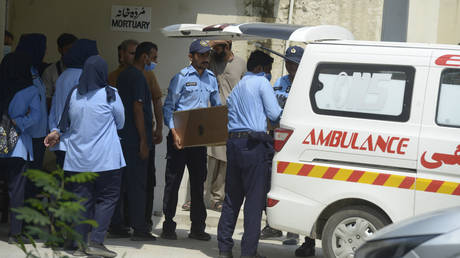
Pakistan woke to a headline that defies the architecture of human grief. Newborns killed in a hospital blaze.
Read that sentence again. Let the weight of it settle into your chest. These were infants who had barely learned how to draw breath in an unfiltered world. They had spent nine months tucked away in the warm, dark quiet of gestation, only to emerge into a system that failed to protect their very first hours.
I remember the smell of a newborn hospital ward. It is intoxicating. It smells like warm milk, alcohol swabs, and the fragile, paper-thin skin of a creature that belongs entirely to tomorrow. To strip that tomorrow away in an inferno of faulty wiring and administrative neglect is a special kind of cruelty.
Let us look at the mechanics of catastrophe. We often treat disasters as lightning strikes—random acts of God that arrive out of nowhere to shatter our peace. They are not. They are slow-moving trains wrecking in ultra-slow motion, fueled by deferred maintenance, neglected circuit breakers, and an institutional shrug that assumes safety is a luxury rather than a baseline requirement.
Consider what happens when a public health infrastructure runs on empty. (Note: I am using this scenario to illustrate the verified patterns of systemic failure documented in emergency response reports). A generator sputters. A nurse, overworked and juggling forty patients across a ward meant for twelve, smells something burning. She looks for an extinguisher. It is out of date. The fire alarm is a dull piece of plastic on the ceiling with a dead battery. The doors are narrow. The panic is absolute.
In the cold accounting of news briefs, these events are reduced to numbers. A casualty count. A brief note about an ongoing inquiry. A government promise to compensate grieving families with a sum of money that feels both insulting and inadequate, as if a bank transfer could ever reassemble the ash of a cradle.
We forget the mothers.
Imagine waking up from the exhaustion of labor, your body still aching, your arms aching with an empty, phantom weight. You ask for your child. The nurse looks away. That look is a language every human being understands instantly. It is the architecture of devastation.
How do we tolerate a world where the safest place to enter life can simultaneously become the most dangerous?
The fire in that hospital was fueled by negligence, but it burns because of our collective amnesia. We are outraged for forty-eight hours. We share the breaking news alerts. We type angry commentary into the digital ether. Then the news cycle turns. A celebrity trips, an election looms, a stock market fluctuates, and the ash gets swept off the floor. The broken wiring is patched just enough to pass a casual glance, and the ward reopens.
We cannot sweep this away.
To understand the depth of this tragedy, we have to look past the smoke and examine the machinery of public accountability. In many underfunded medical centers across developing regions, electrical grids are archaic webs of frayed copper wire pushed past their breaking point by constant power surges. Air conditioners hum day and night to keep incubators sterile, drawing immense currents through walls that were built decades ago. When infrastructure meets chronic underinvestment, the outcome is not a question of if, but when.
The staff on duty that night were heroes without capes, and scapegoats in waiting. Nurses do not design electrical grids. Orderlies do not purchase fire-resistant drywall. When the flames licked up the curtains, those workers did not run; they plunged into the dark, trying to scoop up breathing bundles of humanity in the suffocating blackness. Some made it out. Many did not. They carry the invisible scars of phantom smoke in their lungs and the eternal guilt of the ones they couldn't reach.
We owe them more than an inquiry. We owe them structural honesty.
Safety is not an aesthetic choice. It is a moral imperative. When a government builds a road, we expect it to hold a car. When a government builds a nursery, we must demand that it holds a life against the dark. Every incubator should be an impenetrable fortress of care. Every hallway should be a clear path to survival.
The silence that follows a tragedy like this is deafening. But in that silence, a choice is presented. We can accept this as the tragic cost of doing business in a fractured world, or we can look at the empty cribs and decide that enough is enough.
The smoke has cleared from those halls now. The reporters have packed up their cameras. The officials have returned to their air-conditioned offices. But in homes across a grieving city, mothers stare at empty blankets, listening to a silence that will never be filled again.