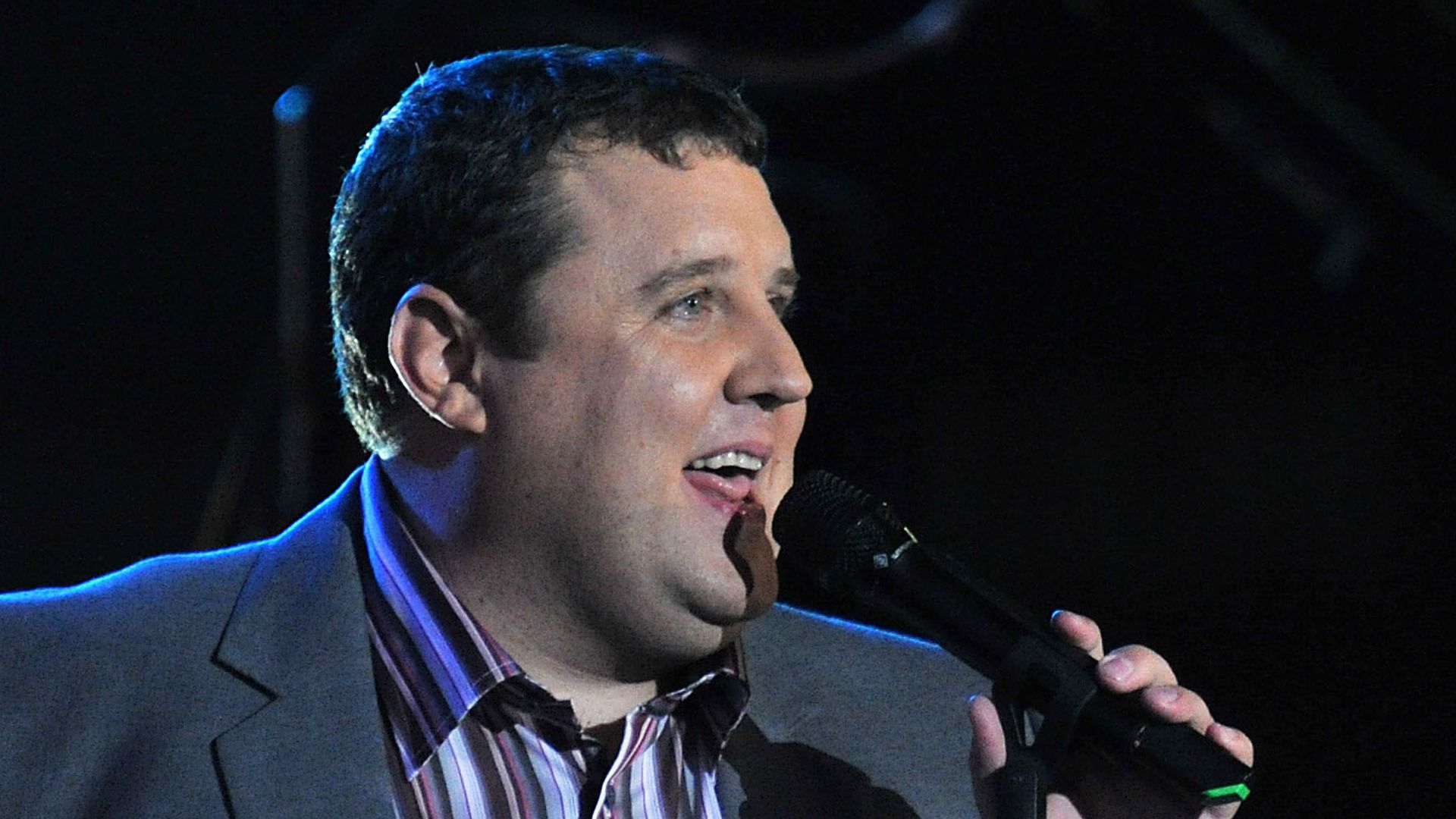
The air inside Manchester’s Co-op Live arena was thick with that specific, electric hum of ten thousand people waiting for a punchline. Peter Kay was on stage. For a city that has seen its fair share of rain and harder times, Kay represents more than just a comedian; he is a living, breathing piece of Northern soul, a man who can turn a mundane conversation about garlic bread into a communal roar of recognition. People had saved for months for these tickets. They had travelled from across the country, navigated the labyrinth of Manchester’s tram system, and paid for overpriced lagers just to feel that specific ache in their ribs that comes from a night of unrelenting joy.
Then the lights didn't just dim. They changed.
Panic has a specific sound. It isn't always a scream. Sometimes, it is the low, confused murmur of thousands of people trying to reconcile a festive atmosphere with the sudden, jarring appearance of security staff gesturing toward the exits. It is the sound of plastic cups hitting the floor and the frantic scuffle of feet on concrete. The announcement was brief, professional, and terrifyingly vague. An evacuation. For the "safety and security" of everyone present.
The laughter vanished, replaced by the cold, biting wind of a Manchester night and the haunting realization that the world outside the arena walls is often much darker than the one Kay builds on stage.
The Anatomy of a Hoax
While the crowds spilled out onto the streets, shivering and clutching their phones to find loved ones or call Ubers, a much smaller, quieter drama was unfolding behind the scenes. The police were not just managing a crowd; they were hunting a ghost.
A bomb threat is a peculiar kind of weapon. It requires no gunpowder, no shrapnel, and no physical presence. It is a crime of pure information—a toxic injection of fear into a public space. For the Greater Manchester Police, the stakes could not have been higher. This is a city that carries the permanent scars of the 2017 Arena bombing. Every unattended bag, every cryptic phone call, and every sudden evacuation carries the weight of a history that no one in Manchester is allowed to forget.
The facts eventually crystallized. This wasn't a sophisticated plot or a grand conspiracy. It was a 32-year-old man. Following the evacuation and the subsequent sweep of the massive, state-of-the-art venue, officers tracked the source of the threat. They arrested him on suspicion of communicating false information—a sterile, legal way of saying he stole a night of joy from twenty thousand people and replaced it with the cold sweat of a terror threat.
The Invisible Toll on the Human Spirit
We often quantify these events in terms of logistics. We talk about the cost of the police response, the lost revenue for the venue, or the administrative nightmare of rescheduling a show of this magnitude. But those are the easy things to measure. The real damage is invisible.
Think of a hypothetical couple, let’s call them Sarah and Mark. They’ve had a brutal year. They lost a parent in the autumn, and the stress of work has been a slow-grinding stone. This night was their circuit breaker. They were three songs and four jokes into the set, finally feeling the tension leave their shoulders, when the house lights came up. For people like Sarah and Mark, the evacuation isn't just a nuisance. It is a reminder that safety is an illusion. It is the theft of a rare moment of peace.
When a hoaxer picks up the phone, they aren't just breaking the law. They are committing an act of emotional vandalism. They are betting on the fact that our institutions are required to take them seriously—and they are right. The police cannot afford to be cynical. They cannot gamble with lives on the off-chance that the voice on the other end of the line is just a bored, malicious individual looking for a twisted sense of power.
The Weight of the Decision
Imagine being the individual responsible for making the call to empty that room. You are looking at a sea of happy faces, knowing that within sixty seconds, you are going to turn their night into a nightmare. You know the headlines that will follow. You know the "not again" sentiment that will ripple through the city.
The decision to evacuate is a heavy, crushing burden. It is informed by a complex web of risk assessment protocols, but at its heart, it is a human choice made under immense pressure. In the wake of the arrest, there is a sense of justice, yes, but it is a hollow sort of victory. The man in custody may face the full force of the law, but he cannot give back the lost hours or erase the spike of adrenaline that hit every parent in that room who suddenly thought of their children.
The Co-op Live arena is a marvel of modern engineering, designed to be one of the best acoustic spaces in the world. Yet, on that night, its most profound sound was the silence it left behind.
Beyond the Blue Lights
The aftermath of a bomb hoax leaves a residue of exhaustion. The police spent hours ensuring the building was safe, their resources diverted from other parts of the city where real emergencies were unfolding. The comedy fans went home, many of them sitting in silence in their cars, the jokes they had heard earlier now feeling like they belonged to a different day entirely.
Manchester is a city that prides itself on resilience. It is a place that "comes together," a phrase that has become a mantra in the years following its greatest tragedies. But resilience is a muscle, and muscles can grow tired when they are forced to flex against ghosts.
The man arrested will eventually have his day in court. The legal system will parse his motives—whether it was a cry for attention, a warped sense of humor, or something more pathological. But for the thousands who stood on the pavement outside the arena, the motive matters less than the effect. They were reminded, once again, how fragile our public spaces can be.
The tragedy of the hoax is that it uses our own humanity against us. It leverages our care for one another and our commitment to safety as a way to cause chaos. It turns a night of "garlic bread" and childhood nostalgia into a grim exercise in emergency exit navigation.
As the sun rose over the Etihad Campus the following morning, the arena stood tall, a silent giant of glass and steel. The police cordons were gone. The crowds had dispersed. Peter Kay would eventually return to finish the job, to reclaim the space for laughter. But for one night, the punchline was missing, stolen by a single phone call and the long, dark shadow of a lie.
The lights go back up, the tours continue, and the jokes are told again, but the memory of that sudden, cold silence remains—a reminder that in the modern age, the loudest noise isn't always the one that makes the most impact. Sometimes, it’s the sound of a room full of people suddenly holding their breath.
The city waits for the next show, hopeful that this time, the only thing that will be contagious is the laughter.