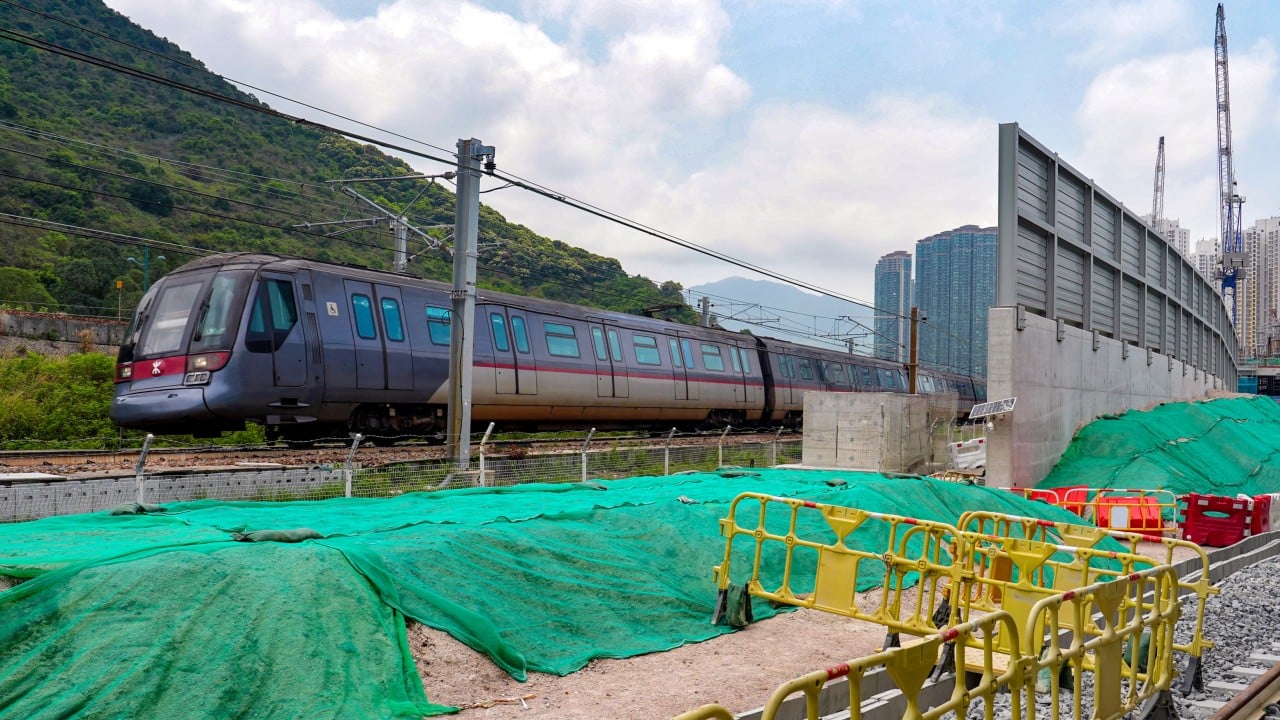
The last train smells of rain, damp newspapers, and the fading scent of a million different lives. It is 1:00 AM. In the belly of the Tung Chung Line, the fluorescent lights flicker against the windows, reflecting the tired faces of shift workers and late-night dreamers heading toward the edges of Lantau Island. For these passengers, the track is a given. It is a steel ribbon that exists simply because it always has. They do not think about the silence that follows when the power cuts out.
But this Sunday night, the silence will be different. It will be intentional.
While the rest of Hong Kong sleeps, a small army in orange vests will descend into the tunnels. They aren’t just fixing a track or oiling a hinge. They are performing open-heart surgery on the city’s nervous system. The MTR Corporation is pulling the plug on the existing signalling system for the Tung Chung Line to install the digital architecture of the future. It is a high-stakes gamble against the clock.
The Ghost in the Machine
Most people view a train line as a collection of cars and rails. It isn't. A modern railway is actually a conversation. Every second, the trains are whispering to the tracks, and the tracks are shouting back to a central brain. Where am I? How fast am I going? Is there anyone in front of me?
The current signalling system on the Tung Chung Line has been having this conversation for decades. It is reliable, but it is old. It remembers a Hong Kong that was less crowded, less hurried. As the city grows—as the new Oyster Bay station begins to take shape and the Tung Chung East extension carves its way through the earth—the old system is running out of breath. It can’t keep up with the demands of a population that refuses to wait an extra sixty seconds for a platform.
The upgrade scheduled for this Sunday night is the transition to a Communications-Based Train Control (CBTC) system.
Think of the old system like a series of fixed blocks. A train occupies a block of track, and no other train can enter that block until the first one leaves. It creates a safe, but rigid, buffer of empty space. The new CBTC system is different. It uses "moving blocks." It allows trains to know exactly where they are in relation to one another down to the centimeter. They can tuck in closer, moving like a synchronized flock of birds rather than a line of heavy trucks.
The Two-Hour Crisis
The MTR is usually a miracle of efficiency, operating with a 99.9% on-time rate. To maintain that, they usually only have a "Golden Window" of about two hours each night—between the last train and the first dawn departure—to do all maintenance.
You cannot replace a brain in two hours.
This is why the service is being cut short this Sunday. The Tung Chung Line will stop running early. For the average commuter, it’s a nuisance. For the engineers, it’s a frantic race. They have to disconnect the old copper-based logic and hook up the fiber-optic future, all while knowing that if they fail, hundreds of thousands of people will be stranded Monday morning.
Consider a technician named David. He isn't real, but he represents the hundreds who will be in the tunnels. David knows that a single loose connection, a single line of code that doesn't compile, or a sensor that refuses to handshake with the central server means the "Blue Line" on the map stays grey when the sun comes up. He is working in a humid, dark environment where the air is heavy with the smell of ozone and old grease. The pressure isn't just professional; it's civic.
The Invisible Stakes of a Growing City
Why do this now? Why not wait?
Hong Kong is expanding westward. The Tung Chung East reclamation project is transforming the shoreline, adding tens of thousands of homes. If the MTR doesn't upgrade the "brain" of the line now, those new residents won't just have a long commute—they’ll have an impossible one.
The upgrade isn't just about speed. It’s about capacity. By switching to this digital heartbeat, the MTR can eventually squeeze more trains onto the same tracks. It’s the difference between a two-lane road and a multi-level highway, all without laying a single new inch of steel.
But the transition is fraught. We have seen what happens when these upgrades go wrong. In years past, software glitches during signalling transitions have brought the city to a standstill, creating seas of people at interchange stations like Lai King or Nam Cheong. The anxiety in the control room on Sunday night will be thick enough to touch. They aren't just testing software; they are testing the social contract.
A Sunday Night Sacrifice
The MTR has announced that special bus services will run to bridge the gap. It’s a messy solution for a city that prides itself on being frictionless. There will be confusion. There will be people staring at their phones, frustrated that their routine has been broken.
But there is a certain beauty in the disruption. It serves as a rare reminder of the colossal effort required to keep a metropolis in motion. We spend our lives gliding over these systems, oblivious to the complexity beneath our feet. We assume the doors will open. We assume the lights will stay on.
Sunday night is the moment the machine reveals its mortality.
As the engineers finish their work and the first "test" train is sent down the line in the pre-dawn darkness, a technician will hold his breath. He will watch the monitor. He will wait for the green blip to move across the screen, signaling that the conversation between the train and the track has resumed—this time in a faster, clearer, more modern tongue.
By 5:00 AM, most of us will still be asleep. The orange vests will be packed away. The smell of ozone will linger in the tunnels, but the platforms will begin to fill. A teenager with headphones will lean against the glass, unaware that the train he is riding is thinking in a whole new way.
The city’s heart will beat again, slightly faster, slightly stronger, and entirely unnoticed.
The silence of the tunnel is over. The noise of the future has begun.